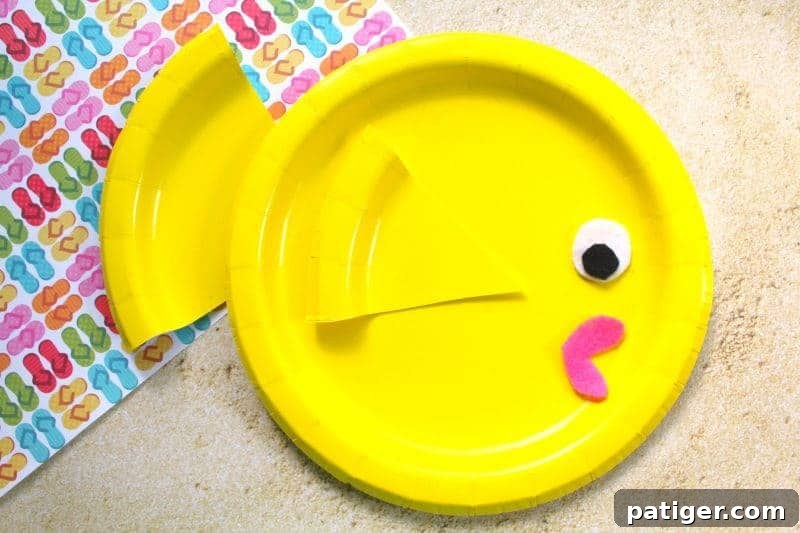
Dive into a world of creativity and summer fun with an incredibly simple yet captivating craft idea perfect for children of all ages: the Bright and Colorful Paper Plate Fish Craft! This delightful activity is an ideal project for home-based learning, a sunny afternoon at a summer camp, or an engaging session in preschool. Designed to be both easy and enjoyable, this charming fish craft primarily uses readily available materials like paper plates, craft felt (or paper), and a dab of glue, transforming everyday items into a vibrant aquatic masterpiece.
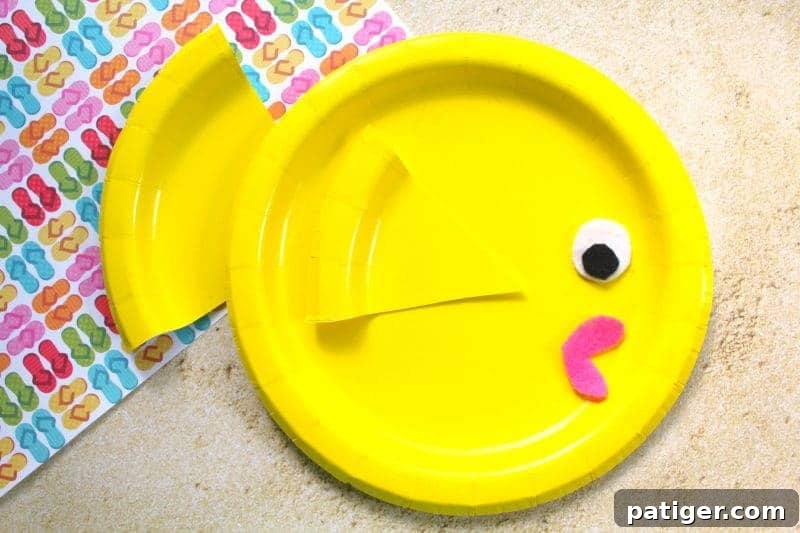
If you’re on the lookout for an engaging and sunny summer craft idea that guarantees smiles and sparks imagination, then you are absolutely going to adore this cute paper plate fish. It’s more than just a craft; it’s an opportunity for little hands to explore textures, colors, and the joy of creation.
This craft stands out for its simplicity, making it incredibly well-suited for preschoolers and young children, whether they are crafting at home under parental supervision or as part of a structured activity in a school or daycare setting. Its straightforward nature ensures that even the youngest crafters can achieve a sense of accomplishment.
Do you remember the adorable paper plate pineapples we crafted not too long ago? We found ourselves with a few vibrant yellow paper plates leftover from that tropical adventure. Rather than letting them go to waste, we were inspired to embark on another fantastic paper plate project to creatively use them up. This fish craft proved to be the perfect solution, proving that creativity can often spring from what you already have on hand.
One of the beauties of this craft is its flexibility. You have the option to begin with pre-colored paper plates, which instantly add a pop of brightness to your fish. Alternatively, if you have plain white paper plates, you can turn the initial step into an extra artistic endeavor by letting the children color or paint them first. This not only adds another layer of personalization but also extends the creative process, allowing kids to experiment with different shades and patterns. Both approaches yield wonderful results, so feel free to use whatever is most convenient or inspiring!
For the delicate facial features – the mouth and eye pieces – we opted for colorful felt pieces. Felt provides a soft, tactile dimension to the craft. However, don’t feel limited by this choice! You can just as easily use craft foam for a slightly more rigid and textured look, or simply construction paper for a classic, budget-friendly option. The key is to use whatever craft materials you have readily available, ensuring the craft remains accessible and stress-free.
To ensure a smooth and safe crafting experience, especially for younger participants, it’s highly recommended that an adult completes steps 1 and 2. This involves carefully cutting out all the necessary pieces – the fish’s fins, lips, and eye components – and presenting them to the little ones. By pre-cutting, you eliminate the need for sharp scissors in tiny hands, allowing your child to focus solely on the fun part: assembling and pasting the pieces together. Of course, a little assistance with glue application or precise placement can still be provided if necessary, fostering a collaborative and enjoyable crafting environment.
Dive into Creation: Paper Plate Fish Craft Supplies
Gathering your materials is the first exciting step in bringing your underwater friend to life. This craft is designed with simplicity and accessibility in mind, often utilizing items you might already have in your craft drawer or easily available at any local store. Here’s what you’ll need to embark on your paper plate fish adventure:
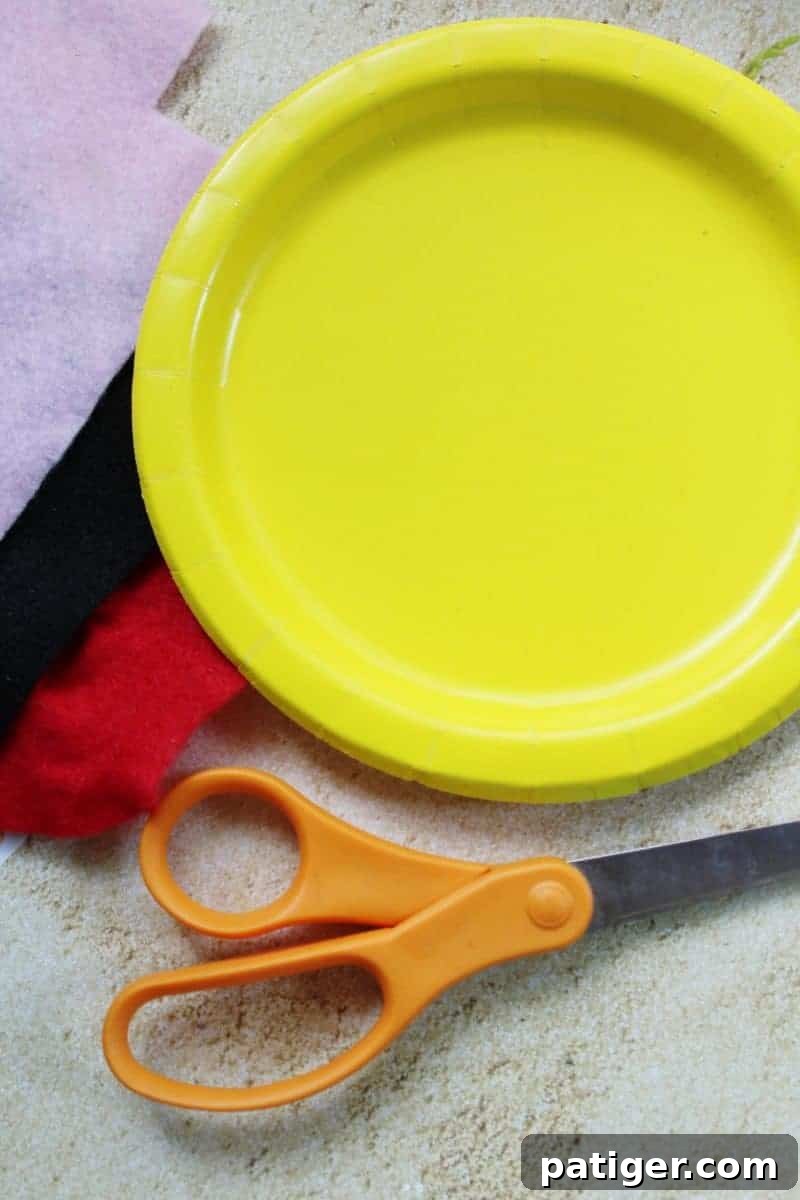
- 2 Paper Plates: These will form the body and fins of your fish. Feel free to use pre-colored plates (yellow, orange, blue work wonderfully for fish!) or plain white ones. If you choose white plates, this offers a fantastic opportunity for children to personalize their fish even further by painting or coloring them before assembly.
- Scissors: A sturdy pair of craft scissors will be needed for cutting the paper plates and the detail pieces. Adult supervision is crucial when using scissors, especially with young children, or adults can pre-cut all the pieces for little hands.
- White, Black, and Pink Felt: These colors are perfect for creating the classic fish eye (white for the base, black for the pupil) and cheerful lips. If felt isn’t available, don’t worry! Craft foam or even colored construction paper are excellent alternatives that work just as well and can provide different textures to your finished fish.
- Craft Glue: A good quality craft glue or school glue (like Elmer’s Glue) is essential for securely attaching all the pieces. Look for non-toxic options, especially when crafting with children. A glue stick can also work for paper elements, but liquid craft glue often provides a stronger bond for felt or foam.
Having all your supplies ready before you begin will make the crafting process smooth and enjoyable, allowing you and your child to fully immerse yourselves in the creative journey of making a vibrant paper plate fish!
Crafting Your Aquatic Friend: How to Make a Paper Plate Fish
Now that you’ve gathered all your materials, let’s dive into the simple, step-by-step process of transforming ordinary paper plates into an extraordinary paper plate fish! This guide is designed to be easy to follow, ensuring a successful and fun crafting experience for both children and the adults assisting them.
-
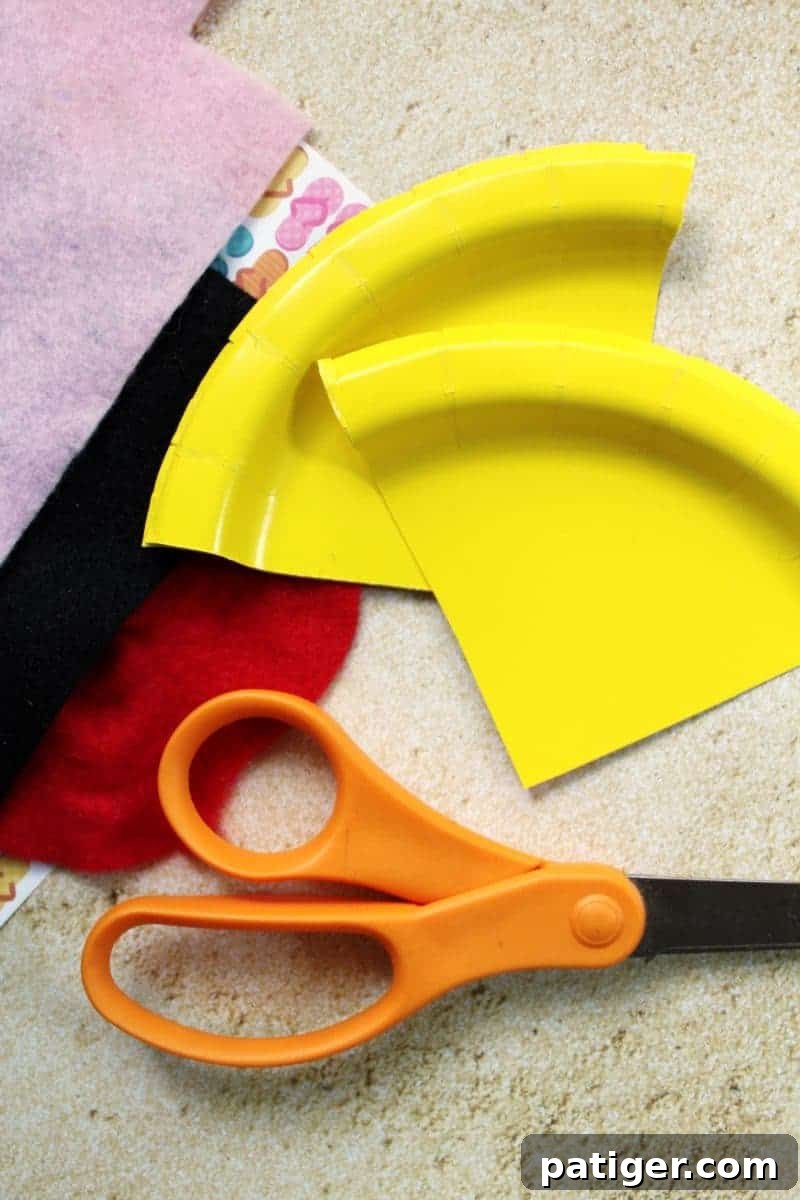
Prepare the Fins and Tail: Begin by taking one of your paper plates. With your scissors, carefully cut this plate into several wedge shapes. These wedges will ingeniously serve as the fins and tail of your fish. The width of these wedges can vary – you can make them as wide or as narrow as you wish, allowing for unique fin designs. Remember, these don’t have to be perfectly uniform; the beauty of handmade crafts lies in their charming imperfections! For younger children, an adult should definitely handle this cutting step.
-

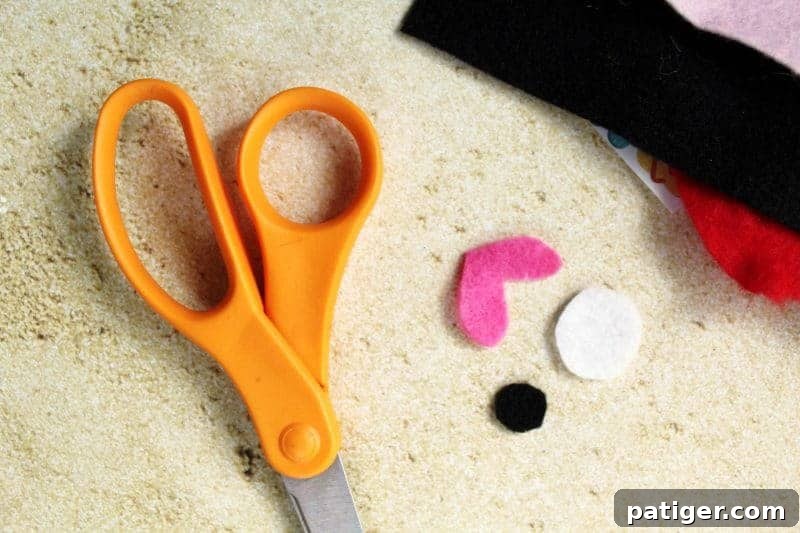
Craft the Fish’s Facial Features: Next, it’s time to bring personality to your fish by cutting out the details for its face from your felt, craft foam, or construction paper. You’ll need:
- Pink lips: Cut a charming, curved shape resembling a fish’s pout.
- A white circle: This will form the base of the fish’s eye. Make it a size that looks proportionate to your paper plate.
- A smaller black circle: This will be the pupil, placed inside the white circle to give your fish a watchful gaze.
Encourage creativity here – perhaps your fish wants long eyelashes made from thin strips of black felt, or maybe some cute little freckles! Again, adults should handle the cutting of these smaller, more intricate pieces for young children.
-
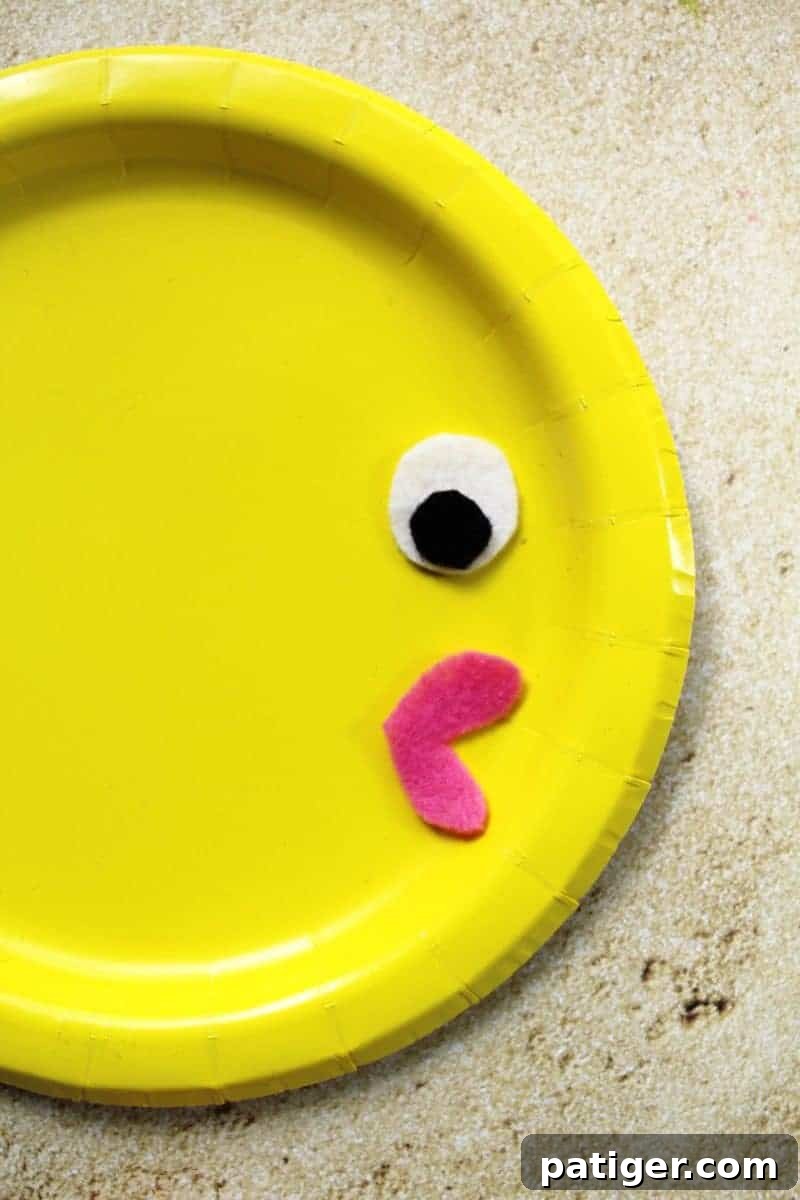
Assemble the Face: Now, let’s bring your fish’s face to life! Take each facial feature you’ve just cut out and add a small dab of craft glue to the back. Carefully position and press each piece onto the main paper plate (which will be your fish’s body) as shown in the example images. Start with the white eye base, then add the black pupil on top. Finally, place the pink lips below the eye. Hold each piece in place for a few seconds to ensure the glue adheres well. Remember, a little glue goes a long way – too much can make the paper soggy or take longer to dry.
-
Attach the Fins and Tail: It’s time to give your fish its swimming power! Take the paper plate wedges that you cut out in step 1. Apply a line or dab of glue along the straight edge of each wedge. Carefully press these wedges onto the side and back of your fish’s body, arranging them to look like swimming fins and a flowing tail. You can experiment with placement – some on the top, some on the bottom, and a larger one at the back for the tail. Once all the fins are in place, gently press them down to ensure a secure bond.
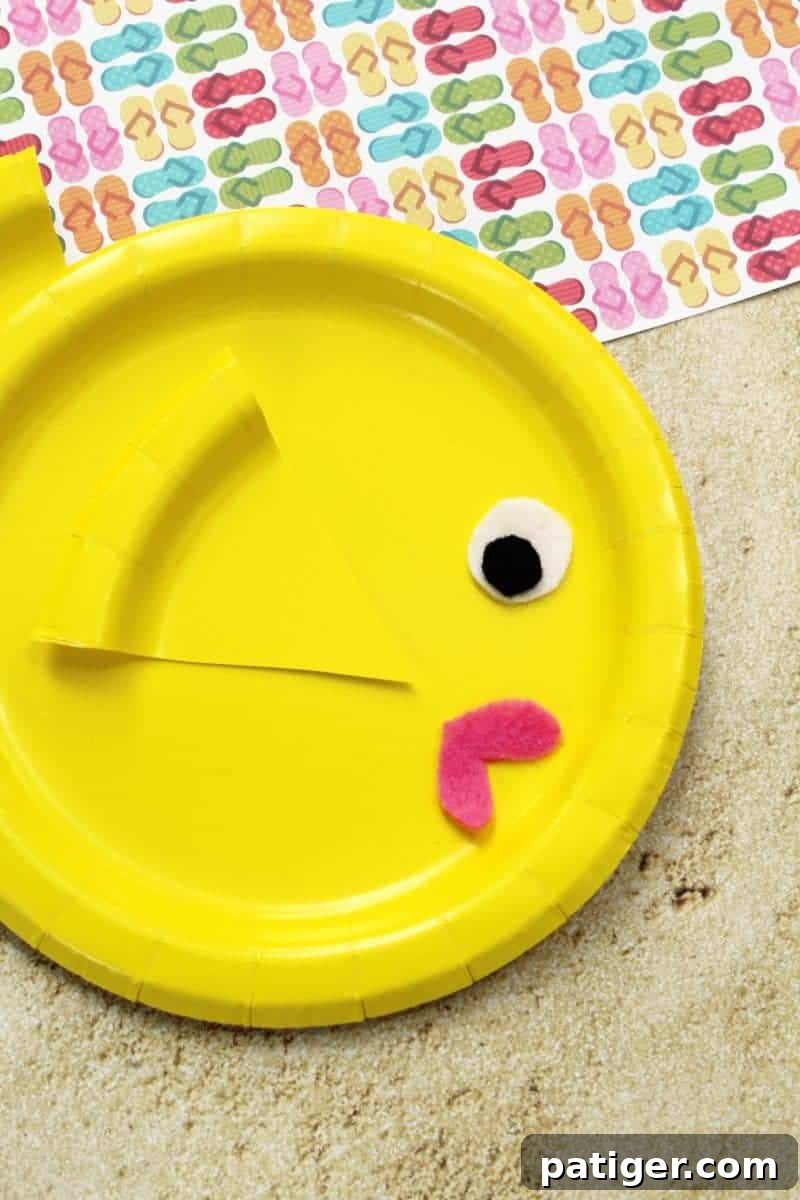
With all the pieces in place, your vibrant paper plate fish is almost complete! Now, simply allow the craft to dry completely before displaying your child’s wonderful creation for everyone to enjoy. Drying time will vary depending on the type of glue used and the thickness of the materials, but usually, an hour or two is sufficient. Once dry, your paper plate fish is ready to swim into action, whether it’s hanging on a wall, decorating a shelf, or inspiring imaginative play!
Creative Variations to Explore with Your Paper Plate Fish
While the basic paper plate fish craft is charming on its own, there’s always room to let creativity swim even further! Here are some ideas to add unique twists and personalize your fish:
- Textured Scales: Instead of leaving the paper plate plain, glue on small circles or half-circles cut from different colored paper or even fabric scraps to create a scaled effect. You can also use glitter glue to draw scales.
- Googly Eyes: For an extra dose of fun and personality, replace the felt or paper eyes with self-adhesive googly eyes. They add a playful, animated look!
- Glitter and Sparkle: After the glue dries, let your child decorate their fish with glitter glue, sequins, or small adhesive jewels to make it sparkle like a real underwater treasure.
- 3D Elements: Attach pipe cleaners for antennae or use crumpled tissue paper for bubbles around the fish.
- Different Fish Species: Encourage children to research different types of fish and try to mimic their unique patterns and fin shapes. Think clownfish stripes, angelfish patterns, or even a rainbow fish with shiny scales.
- Under the Sea Scene: Turn your paper plate fish into part of a larger diorama! Use a shoebox as a background, paint it blue, and add other paper plate sea creatures, seaweed cut from green paper, and “bubbles” made from cotton balls.
- Fish Mobile: Create several paper plate fish and suspend them from a hanger or a stick with string to make a vibrant ocean-themed mobile for a child’s room.
Benefits of This Easy Craft for Children’s Development
Engaging in crafts like the paper plate fish offers much more than just a fun activity; it provides significant developmental benefits for young children:
- Fine Motor Skills: Cutting, gluing, and precisely placing small pieces helps strengthen hand muscles and improves dexterity, crucial for writing and other daily tasks.
- Hand-Eye Coordination: Aligning the eyes, lips, and fins requires children to coordinate what their eyes see with what their hands do.
- Creativity and Imagination: Choosing colors, deciding on facial expressions, and adding personal touches encourages imaginative thinking and self-expression.
- Following Instructions: Working through the step-by-step guide helps children develop the ability to follow directions and complete tasks.
- Patience and Focus: Waiting for glue to dry, carefully cutting shapes, and assembling the pieces fosters patience and improves concentration.
- Color and Shape Recognition: Identifying different colored felt or paper and recognizing circles, wedges, and curved shapes reinforces early learning concepts.
- Sense of Accomplishment: Completing a craft project gives children a wonderful sense of pride and boosts their self-esteem.
Safety Tips for Crafting with Little Ones
Always prioritize safety when crafting with children. Here are a few tips:
- Supervision: Constant adult supervision is recommended, especially when scissors or glue are being used.
- Scissors: For very young children, adults should do all the cutting, or use child-safe scissors with rounded tips.
- Non-Toxic Materials: Ensure all glues, paints, and markers are labeled non-toxic, as children often put their hands near their mouths.
- Ventilation: If using any materials with a strong odor, ensure you are crafting in a well-ventilated area.
Frequently Asked Questions About the Paper Plate Fish Craft
Here are some common questions parents and educators might have about making this easy paper plate fish craft:
Q: What’s the best type of glue to use for this craft?
A: Craft glue or school glue (like Elmer’s Glue) works perfectly for this project. They are generally non-toxic and provide a strong enough bond for paper plates and felt/paper pieces. A glue stick can work for paper, but liquid glue is better for felt or foam.
Q: Can toddlers participate in making this craft?
A: Absolutely! With adult assistance for all the cutting steps, toddlers can enjoy applying glue and pressing the pre-cut pieces into place. It’s a great way for them to practice fine motor skills and tactile exploration.
Q: How long does this craft typically take to complete?
A: The active crafting time, including cutting (if an adult is doing it) and assembly, usually takes about 15-30 minutes. You’ll then need to factor in drying time for the glue, which can be anywhere from 30 minutes to a couple of hours, depending on the glue and humidity.
Q: What if I don’t have felt for the facial features?
A: No problem at all! Craft foam or colored construction paper are excellent and readily available alternatives. They work just as well and offer slightly different textures. You could even draw the features on with markers if preferred.
Q: How can I make the fish stand up?
A: To make your fish stand upright, you can glue a small strip of paper plate (folded into an L-shape or rolled into a cylinder) to the back of the fish as a stand. Alternatively, if you make two identical fish bodies and glue them together around the edges (leaving a small opening), you can insert a craft stick to make it a puppet.
Shop Paper Plate Fish Craft Supplies
Craft Foam AssortmentYellow Paper PlatesElmer’s Glue
We truly hope that the kiddos in your life enjoy creating and playing with this easy and delightful paper plate fish craft! It’s a wonderful way to brighten up any day and celebrate the joys of imaginative play.
Explore More Ocean-Themed Fun for Kids:
If your children loved diving into this paper plate fish craft, they’re sure to enjoy these other fantastic ocean and fish-themed activities that encourage creativity and exploration:
- Under the Sea Ocean Slime: Create mesmerizing, squishy slime that captures the magic of the deep blue sea. It’s a fantastic sensory experience!
- Under the Sea Banana Treats: Whip up some delicious and healthy snacks with an adorable aquatic twist. Perfect for fueling little crafters and explorers.
- Paper Plate Jellyfish Craft: Similar to our fish, transform another paper plate into a vibrant jellyfish using colorful streamers or yarn for tentacles.
- DIY Seashell Art: Gather seashells and let kids paint, glue, and decorate them to create unique keepsakes from the beach.
- Handprint Crab Art: Use red paint and your child’s handprints to make cute crab characters on paper, adding googly eyes for extra charm.
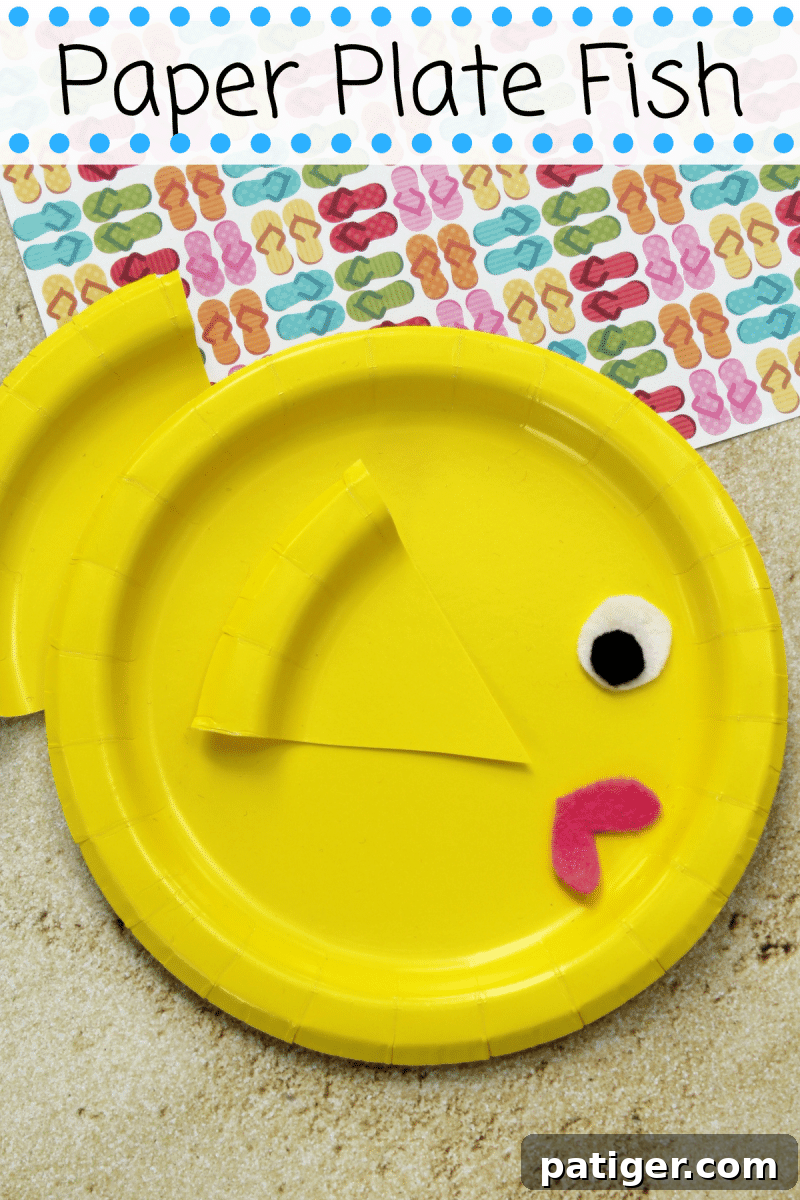
Pin This Idea for Later!
Don’t let this fantastic craft idea swim away! Pin it to your favorite craft or summer activities board on Pinterest so you can easily find it whenever inspiration strikes for your next creative session with the kids.
Share your delightful creations with us on social media – we love seeing how families bring our craft ideas to life!