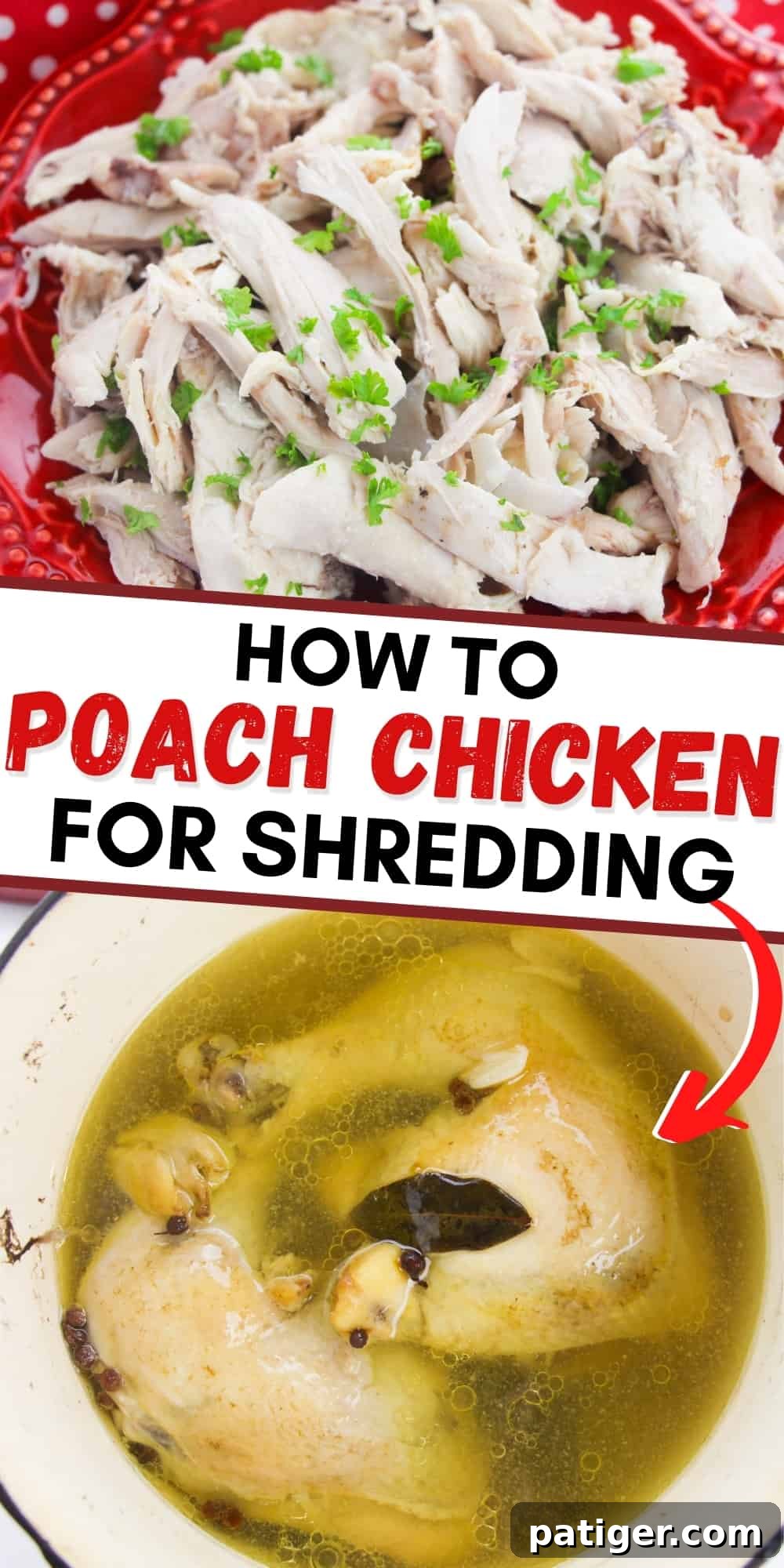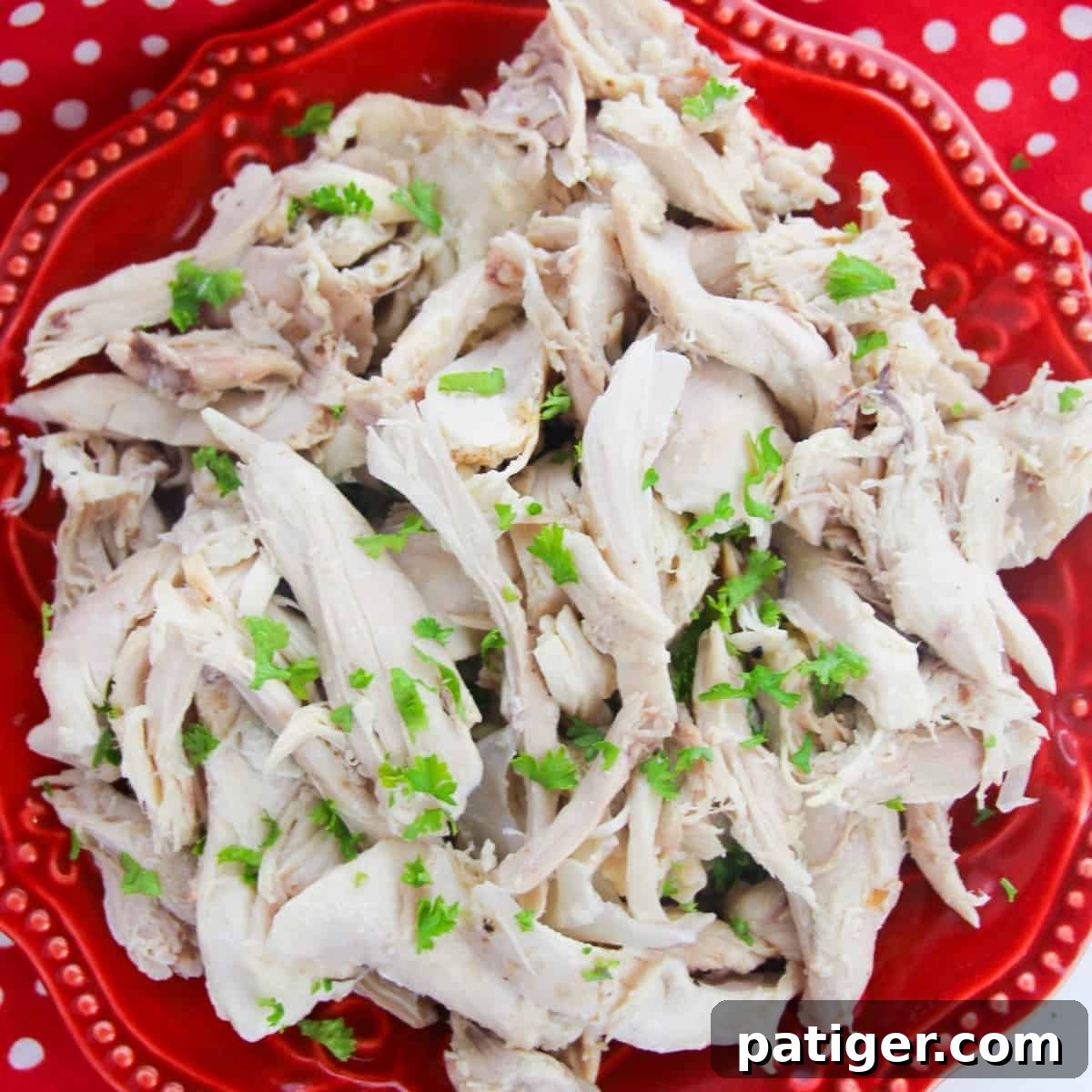
Unlock the secret to consistently tender, juicy, and flavorful shredded chicken with this comprehensive guide to poaching. This incredibly simple cooking method transforms ordinary chicken into a versatile ingredient, perfect for elevating your favorite chicken salads, enriching comforting casseroles, and simplifying countless other delicious dinner creations. Say goodbye to dry, bland chicken and hello to perfectly cooked poultry that’s a true game-changer for any home cook.
When I discover a great deal on chicken at the grocery store, I seize the opportunity to stock up and prepare a large batch. Whether I’m using my trusty slow cooker or opting for this classic stovetop poaching method, having a stash of pre-shredded chicken on hand is an absolute lifesaver. It’s the ultimate secret weapon for busy parents and meal prep enthusiasts alike.
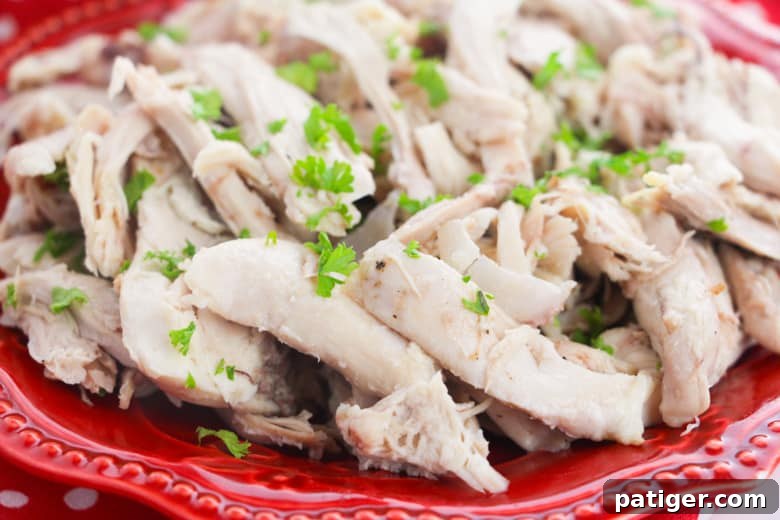
Once cooked and shredded, I meticulously portion the tender chicken into individual meal-sized servings before storing them in the freezer. This proactive approach dramatically streamlines dinner preparation during hectic weekdays, ensuring that a wholesome meal is always just a few steps away. As a busy mom, this strategy brings invaluable peace of mind and frees up precious time.
This perfectly poached shredded chicken becomes the foundation for an array of delightful dishes. I frequently use it to craft a creamy Chicken Ritz Casserole, a hearty Chicken and Rice Casserole, or a comforting Chicken and Dumpling Casserole. It’s also fantastic in a fresh Chicken Salad with Grapes and Pecans, or any other recipe calling for pre-cooked chicken. Its versatility knows no bounds!
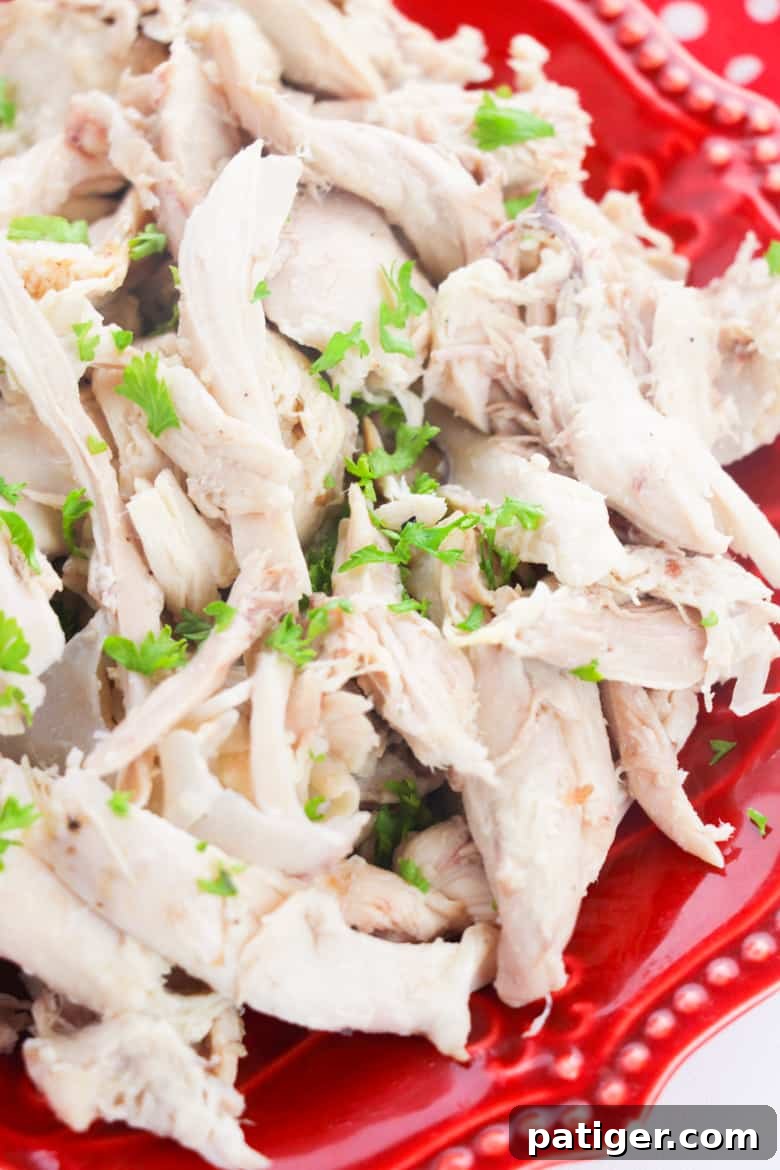
Whether you choose chicken leg quarters, succulent chicken breasts, or quick-cooking tenderloins, this poaching method yields consistent, delicious results. In this guide, I will walk you through every essential step, share invaluable tips for perfection, and answer common questions to ensure your poached shredded chicken turns out flawlessly every single time.
Why Poach Chicken for Shredding? The Benefits
Poaching chicken is an often-underestimated cooking technique that offers a multitude of benefits, particularly when preparing chicken for shredding. It’s not just about cooking chicken; it’s about optimizing its texture, flavor, and versatility. Here’s why you should embrace poaching for your shredded chicken needs:
Unmatched Tenderness and Juiciness
Unlike baking or pan-frying, which can sometimes lead to dry chicken, poaching cooks the chicken gently in liquid, keeping it incredibly moist. The controlled, low-temperature cooking prevents the muscle fibers from seizing up, resulting in a remarkably tender texture that practically melts in your mouth. This means your shredded chicken will never be tough or chewy.
Healthy and Lean Cooking
Poaching is one of the healthiest ways to cook chicken. It requires minimal added fats and relies on water or broth to cook the meat thoroughly. This makes it an excellent choice for health-conscious individuals or anyone looking to reduce their calorie and fat intake without sacrificing flavor or satisfaction. The fat from the chicken renders into the poaching liquid, but the chicken itself remains lean.
Incredibly Versatile for Meal Prep
Poached shredded chicken is a true culinary chameleon. Its neutral yet flavorful profile makes it adaptable to almost any cuisine or dish. From light summer salads and hearty winter soups to vibrant tacos and comforting casseroles, having a batch of shredded chicken ready simplifies meal prep throughout the week. It’s perfect for those busy days when you need a quick, nutritious protein source.
Enhances Natural Chicken Flavor
While often seen as a bland cooking method, poaching actually allows the natural flavor of the chicken to shine through, especially when infused with aromatics like garlic and bay leaves. The poaching liquid itself absorbs delicious chicken essence, which can then be saved and used as a flavorful broth for other recipes, minimizing waste and maximizing taste.
Selecting the Best Chicken for Poaching
The beauty of poaching is that it’s highly adaptable to various cuts of chicken. While the recipe primarily focuses on chicken quarters, almost any chicken part can be successfully poached and shredded. Here’s a look at your options:
Chicken Quarters
These include the thigh and drumstick, offering a richer flavor and moister meat compared to breast meat. They are excellent for poaching as the bone and skin (which can be removed after cooking) contribute to a more flavorful poaching liquid. The dark meat stays incredibly juicy.
Chicken Breasts
Boneless, skinless chicken breasts are a popular choice for their lean protein content and ease of shredding. They cook relatively quickly but require careful attention to avoid overcooking, which can lead to dryness. If using breasts, consider cutting larger ones into smaller pieces for more even cooking.
Chicken Thighs
Similar to quarters, boneless or bone-in chicken thighs are fantastic for poaching. They offer a great balance of flavor and moisture and are more forgiving than breast meat if you accidentally cook them a minute or two longer than ideal.
Chicken Tenderloins
These smaller, more delicate cuts cook the fastest. They are perfect when you need shredded chicken in a hurry, but be extra vigilant about cooking times to maintain their tenderness.
Regardless of the cut you choose, ensure your chicken is fresh and of good quality. Adjust cooking times according to the size and thickness of your chicken pieces. Bone-in cuts generally take longer than boneless ones.
Essential Ingredients for Poached Shredded Chicken
The magic of this recipe lies in its simplicity. With just a few staple ingredients, you can create incredibly flavorful and tender shredded chicken. Here’s what you’ll need:
- Chicken Quarters (or preferred cut): As discussed, you can use any cut, but bone-in chicken quarters offer excellent flavor. For this recipe, I often use 2-3 quarters. If using large chicken breasts, you may need to adjust the quantity to achieve the desired yield.
- Bay Leaves: These fragrant leaves are a secret weapon in poaching. They impart a subtle, herbaceous, and slightly floral aroma that deeply enhances the chicken’s flavor without overpowering it. Remember to remove them before shredding the chicken, as they are not meant to be eaten.
- Garlic: Using 4-6 cloves of crushed garlic is crucial. Crushing the garlic helps release its potent oils and pungent flavor, allowing it to infuse beautifully into the poaching liquid and subsequently, the chicken. This creates a wonderfully aromatic and savory base.
- Salt: Essential for seasoning the chicken from within. Don’t be shy with the salt; it helps to brine the chicken slightly as it cooks, contributing to both flavor and moisture retention. You can always add more to taste after shredding.
- Peppercorns: Adding about ½ tablespoon of whole black peppercorns provides a subtle, warm spice note to the poaching liquid. These are preferable to ground pepper, as they release their flavor gradually and won’t make your broth cloudy.
- Water: The primary poaching liquid. You’ll need about 3 cups, or enough to completely submerge your chicken pieces. While water works perfectly, for an even deeper flavor, you can substitute some or all of the water with chicken broth or stock. This is a great way to boost the overall savory profile of your shredded chicken.
Step-by-Step Guide: How to Make Poached Shredded Chicken
Creating perfectly juicy and tender pulled chicken is incredibly straightforward with this method. Follow these simple steps for delicious results every time.
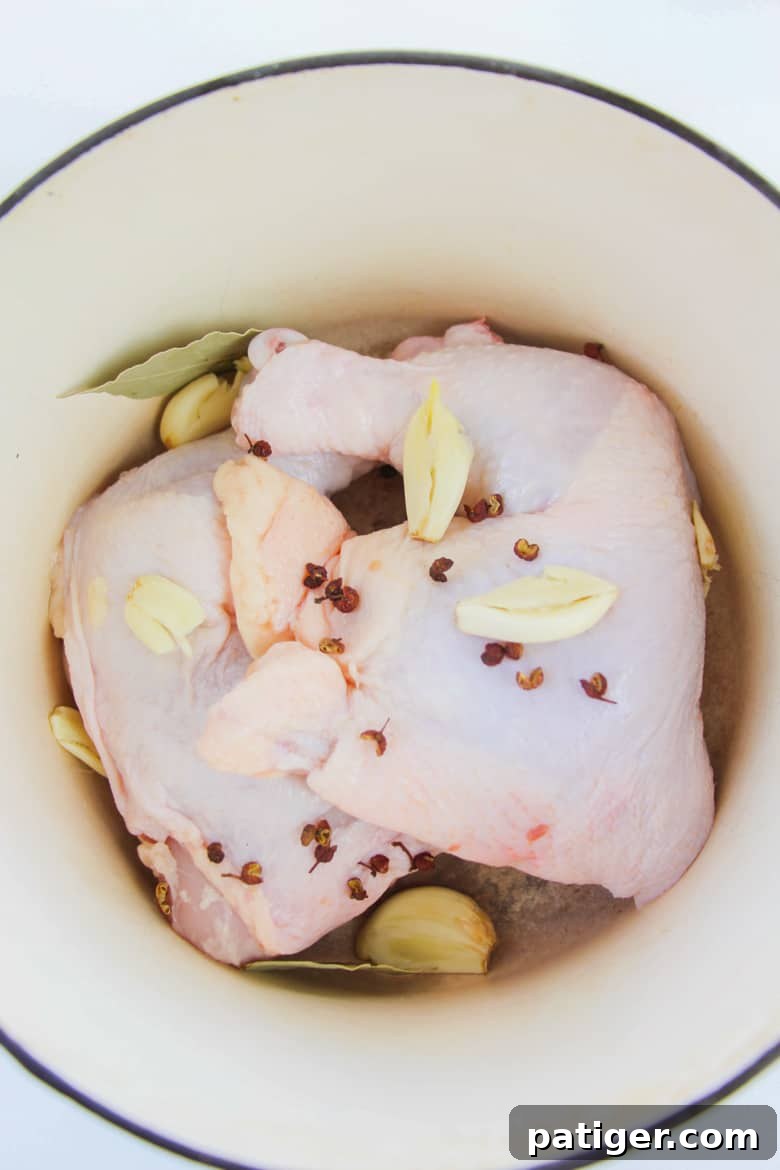
Step 1: Assemble Your Ingredients in the Pot. Begin by carefully placing your raw chicken pieces into a Dutch oven or any large, heavy-bottomed pot. Add the crushed garlic, bay leaves, peppercorns, and a generous pinch of salt directly into the pot with the chicken. Pour in enough water to completely cover the chicken. The chicken should be submerged to ensure even cooking and maximum flavor infusion.
Step 2: Bring to a Gentle Boil, Then Simmer. Place the pot on your stovetop over high heat and bring the water to a full, rolling boil. As soon as the water reaches a boil, reduce the heat immediately to medium-low, or just enough to maintain a gentle simmer. Crucially, place the lid securely on the pot. This traps the steam and ensures the chicken cooks evenly and retains moisture. Allow the chicken to simmer for approximately 25-30 minutes, or until it is thoroughly cooked through.
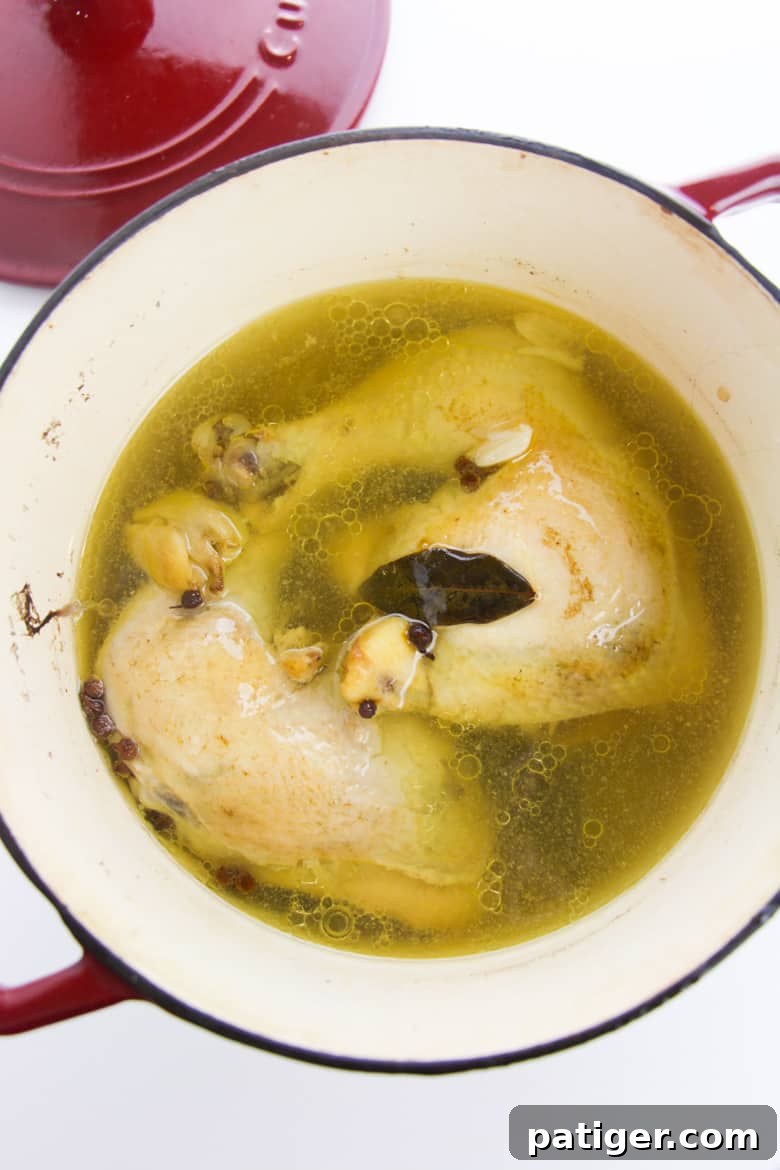
Step 3: Check for Doneness and Rest the Chicken. The most reliable way to determine if your chicken is fully cooked is by using a meat thermometer. Insert the thermometer into the thickest part of the chicken, avoiding any bones. It should register an internal temperature of 165°F (74°C). Once it reaches this temperature, remove the chicken from the pot and transfer it to a plate or cutting board. Allow the chicken to cool and rest for at least 10 minutes. This resting period is critical, as it allows the juices to redistribute throughout the meat, ensuring maximum tenderness and flavor. Skipping this step can result in dry chicken.
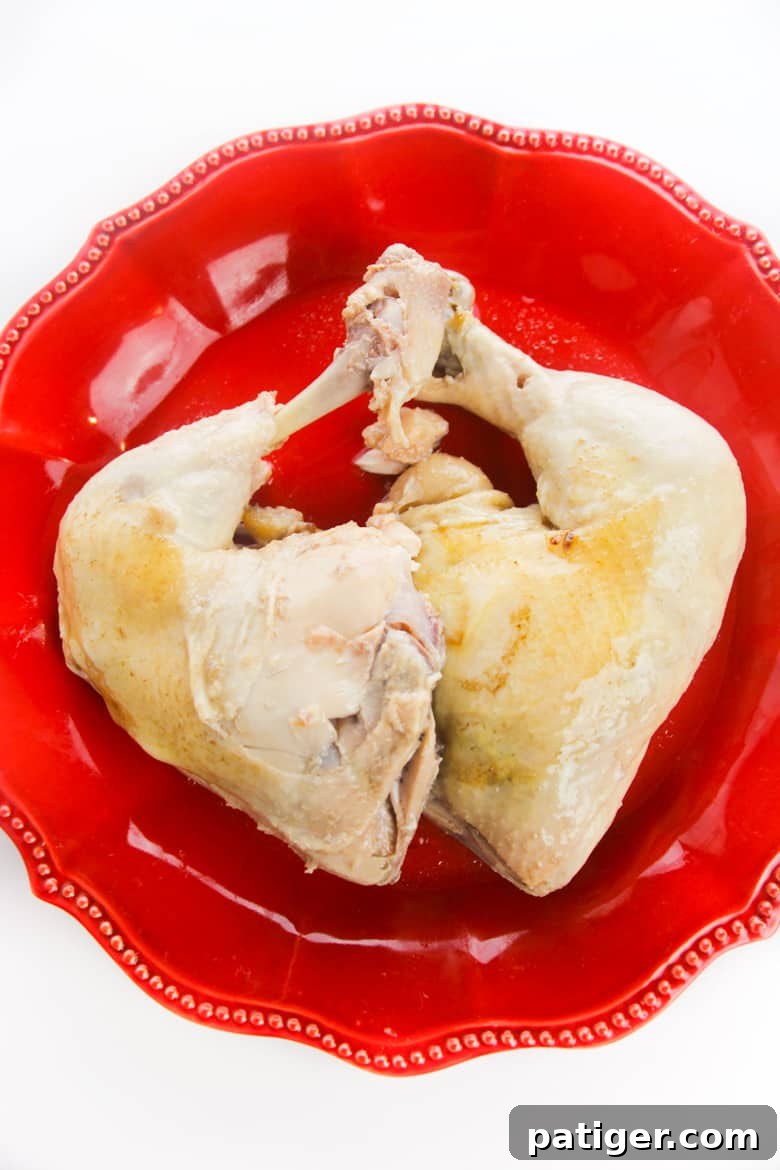
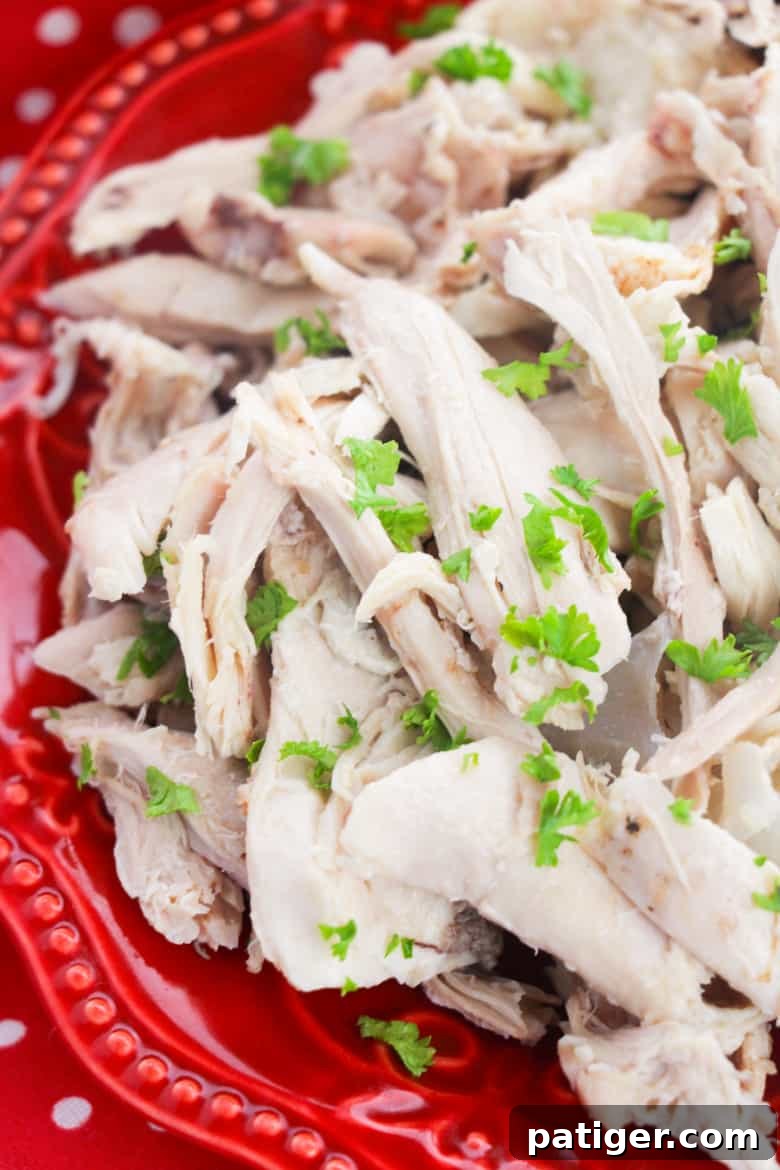
Step 4: Shred the Chicken. After the chicken has rested, it’s time for the fun part: shredding! You can easily shred the chicken using two forks, pulling the meat away from the bone (if applicable) and tearing it into desired strands. For a quicker and more efficient shredding process, especially when dealing with a large batch, meat claws are an excellent tool. Discard any bones, skin, or gristle. Your perfectly poached, shredded chicken is now ready to be used in your favorite recipes!
Tips for Achieving the Juiciest Shredded Chicken
While poaching is inherently forgiving, a few expert tips can elevate your shredded chicken from good to absolutely phenomenal:
- Maintain a Gentle Simmer: Avoid a rolling boil throughout the cooking process. A gentle simmer ensures the chicken cooks slowly and evenly, preventing it from toughening up. Aggressive boiling can result in dry, stringy chicken.
- Don’t Overcrowd the Pot: Ensure there’s enough space for the chicken pieces to be fully submerged and cook without overlapping too much. Overcrowding can lower the water temperature and lead to uneven cooking.
- Use a Meat Thermometer: This is your best friend for perfectly cooked chicken. Trusting an internal temperature of 165°F (74°C) eliminates guesswork and prevents both undercooking and overcooking.
- Flavor the Poaching Liquid: Don’t limit yourself to just garlic and bay leaves. Consider adding half an onion, a few celery stalks, carrots, peppercorns, or even a splash of white wine to your poaching liquid for a richer, more complex flavor. You can also use chicken broth instead of water for an added depth of flavor.
- Resting is Non-Negotiable: As mentioned in the steps, letting the chicken rest for 10-15 minutes after cooking is vital. This allows the muscle fibers to relax and reabsorb the juices, ensuring a moist and tender result.
- Consider Bone-In, Skin-On Chicken: Even if you plan to remove the skin and bones before shredding, cooking with them adds significant flavor and moisture to the chicken and the poaching liquid.
Creative Uses for Your Poached Shredded Chicken
The beauty of perfectly poached shredded chicken lies in its incredible versatility. Once you have a batch ready, a world of culinary possibilities opens up. Here are some inspiring ideas to put your delicious chicken to good use:
- Classic Chicken Salads: Beyond the traditional, try variations with cranberries and walnuts, a zesty lemon-herb dressing, or a spicy Southwestern twist.
- Comforting Casseroles: As mentioned, it’s perfect for Ritz Chicken Casserole, Chicken and Rice Casserole, and Chicken and Dumpling Casserole. It also shines in cheesy chicken and pasta bakes or creamy potato casseroles.
- Soups and Stews: Stir into homemade chicken noodle soup, a robust chicken chili, a creamy chicken and wild rice soup, or a comforting tortilla soup. It adds protein and flavor without needing extra cooking.
- Tacos, Burritos, and Wraps: A fantastic filling for quick weeknight meals. Season it with taco seasoning, wrap it in a warm tortilla with your favorite toppings, or create healthy lettuce wraps.
- Sandwiches and Sliders: Mix with mayonnaise, celery, and herbs for a classic chicken salad sandwich, or toss with BBQ sauce for delicious pulled chicken sliders.
- Pasta Dishes: Incorporate into a creamy chicken alfredo, a vibrant chicken pesto pasta, or a light lemon-garlic chicken pasta for a complete meal.
- Enchiladas and Quesadillas: Layer it into cheesy enchiladas or stuff it into quesadillas for a quick and satisfying meal.
- Salad Topping: Simply add a scoop of shredded chicken to any green salad for an instant protein boost, making your salad a more fulfilling meal.
Storage Solutions for Ultimate Meal Prep Efficiency
Proper storage is key to making the most of your batch-cooked poached shredded chicken. Following these guidelines will ensure your chicken stays fresh and delicious, ready for your next meal.
In the Refrigerator
Once your shredded chicken has cooled completely, transfer it to an airtight container. It will remain fresh and safe to consume for up to three to four days in the refrigerator. For best quality and to prevent bacterial growth, ensure it’s stored properly and cooled quickly after cooking. You can even store it with a little bit of the poaching liquid to keep it extra moist.
In the Freezer
Freezing is an excellent option for long-term storage, making this recipe a true meal-prep powerhouse. Here’s how to do it effectively:
- Portioning: Divide the shredded chicken into individual meal sizes or quantities that suit your typical recipe needs. This makes thawing much more convenient, as you only take out what you need.
- Containers: Use freezer-safe containers, heavy-duty sealable freezer bags, or a vacuum sealing system. Freezer bags allow you to flatten the chicken for quicker freezing and easier stacking, saving freezer space.
- Labeling: Always label your containers or bags with the date of freezing to keep track of freshness.
- Duration: When stored in freezer bags or containers, poached shredded chicken can maintain its quality for 3-4 months. If you use a vacuum sealer, which removes air and prevents freezer burn more effectively, it can last even longer, up to 6-9 months without significant loss of quality.
- Thawing: To thaw, simply transfer the frozen chicken to the refrigerator overnight. For quicker thawing, you can place the sealed bag in a bowl of cold water, changing the water every 30 minutes until thawed. Avoid thawing at room temperature for food safety reasons.
Frequently Asked Questions About Poached Shredded Chicken
Poaching chicken refers to cooking it gently in simmering liquid, typically water or broth, at a temperature just below boiling. This method is preferred for its ability to produce exceptionally tender and moist chicken, as it prevents the meat from drying out, unlike higher-heat cooking methods like pan-frying or roasting.
Allowing chicken to rest after it’s cooked is a crucial step that significantly impacts its juiciness and flavor. When chicken cooks, the muscle fibers contract, pushing the natural juices towards the center. Resting allows these fibers to relax and redistribute the juices evenly throughout the meat. If you were to slice or shred the chicken immediately, the juices would escape, leading to dry and less flavorful chicken.
The safest and most accurate way to confirm that chicken is fully cooked is by using a meat thermometer. Insert the thermometer into the thickest part of the chicken, ensuring it doesn’t touch any bone. The internal temperature should register 165°F (74°C). If cooking bone-in chicken, be extra careful not to touch the bone with the thermometer, as bone temperature can give a false, higher reading.
While it is generally recommended to thaw chicken completely before poaching for even cooking, you can technically poach chicken from frozen. However, it will significantly increase the cooking time (often by 50% or more) and might not absorb flavors from the poaching liquid as effectively. If poaching from frozen, ensure the internal temperature reaches 165°F (74°C) using a meat thermometer, and adjust cooking time accordingly.
Absolutely! The poaching liquid, now infused with chicken flavor and aromatics, is essentially a homemade chicken broth. Strain it to remove any solids, then cool it completely before storing it in an airtight container in the refrigerator for up to 3-4 days or freezing it for up to 3 months. It’s excellent for making soups, stews, gravies, or using as a flavorful base for cooking grains like rice or quinoa.
Shop Essential Recipe Supplies
To make your poaching experience even smoother, here are some recommended kitchen tools:
- Dutch Oven: Ideal for even heat distribution and maintaining a steady simmer.
- Meat Thermometer: Essential for ensuring your chicken is cooked to perfection and safe to eat.
- Meat Claws: For effortless and quick shredding of cooked chicken.
Discover More Delicious Chicken Recipes
If you love versatile chicken dishes, be sure to explore these other fantastic recipes:
- One-Pot Creamy Garlic Chicken: An incredibly easy and satisfying meal, all cooked in a single pot.
- Chicken Noodle Casserole: A comforting classic that’s wonderfully simple to prepare.
- Classic Chicken Parmesan: A timeless Italian-American favorite, perfect for a family dinner.
- Instant Pot Chicken Fried Rice: A quick and flavorful twist on a takeout favorite, made in your Instant Pot.
- Creamy Spinach Chicken Pasta: Another fantastic one-pot wonder, combining tender chicken with creamy pasta and fresh spinach.

How to Poach Chicken for Shredding
Author: Jaclyn
15 mins
25 mins
40 mins
Learn the simple art of poaching chicken for shredding. This method consistently delivers juicy, delicious chicken, ideal for countless recipes and easy meal preparation.
3-4 servings
Ingredients
- 2-3 chicken quarters (can substitute with large chicken breasts)
- 2 bay leaves
- 4-6 crushed garlic cloves
- ½ Tablespoon peppercorns
- Salt, to taste
- 3 cups water, or enough to cover the chicken
Instructions
- Place chicken, crushed garlic, bay leaves, peppercorns, and salt in a Dutch oven or large pot. Add enough water to completely cover the chicken.
- Bring the water to a full boil over high heat. Once boiling, immediately reduce the heat to medium-low, cover the pot with a lid, and allow the chicken to simmer for about 25-30 minutes, or until an inserted meat thermometer reads 165°F (74°C).
- Carefully remove the chicken from the pot and transfer it to a plate or cutting board. Let it rest for 10 minutes. Use two forks or meat claws to pull the chicken away from the bone and shred it into desired pieces.
Nutrition
Serving: 1g | Calories: 196kcal

Did You Make This Recipe?
We’d love to see your culinary creations! Share a photo with me on Instagram @crayonsandcravings and be sure to follow on Pinterest @crayonsandcravings for even more delicious recipe inspiration and meal ideas!