
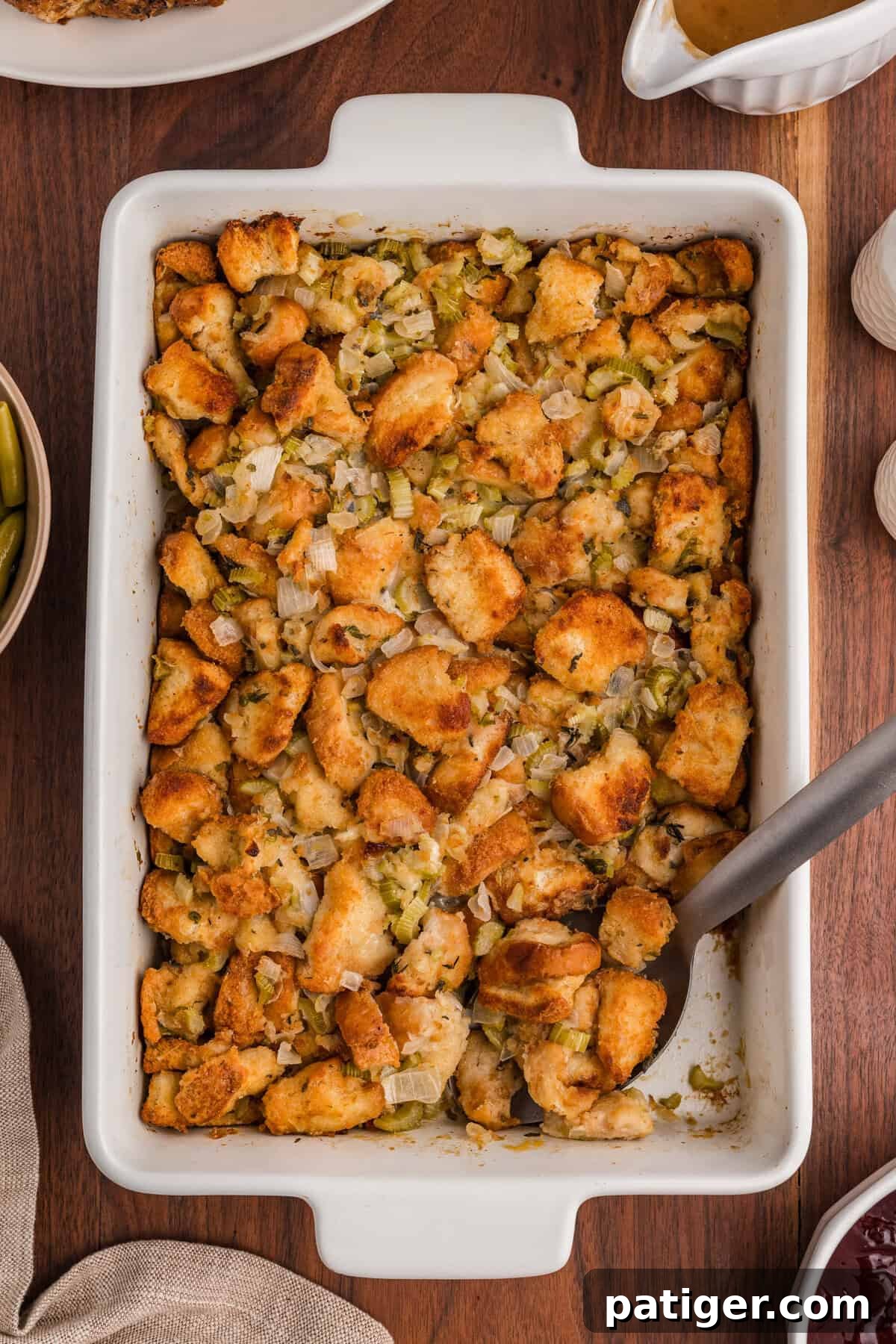
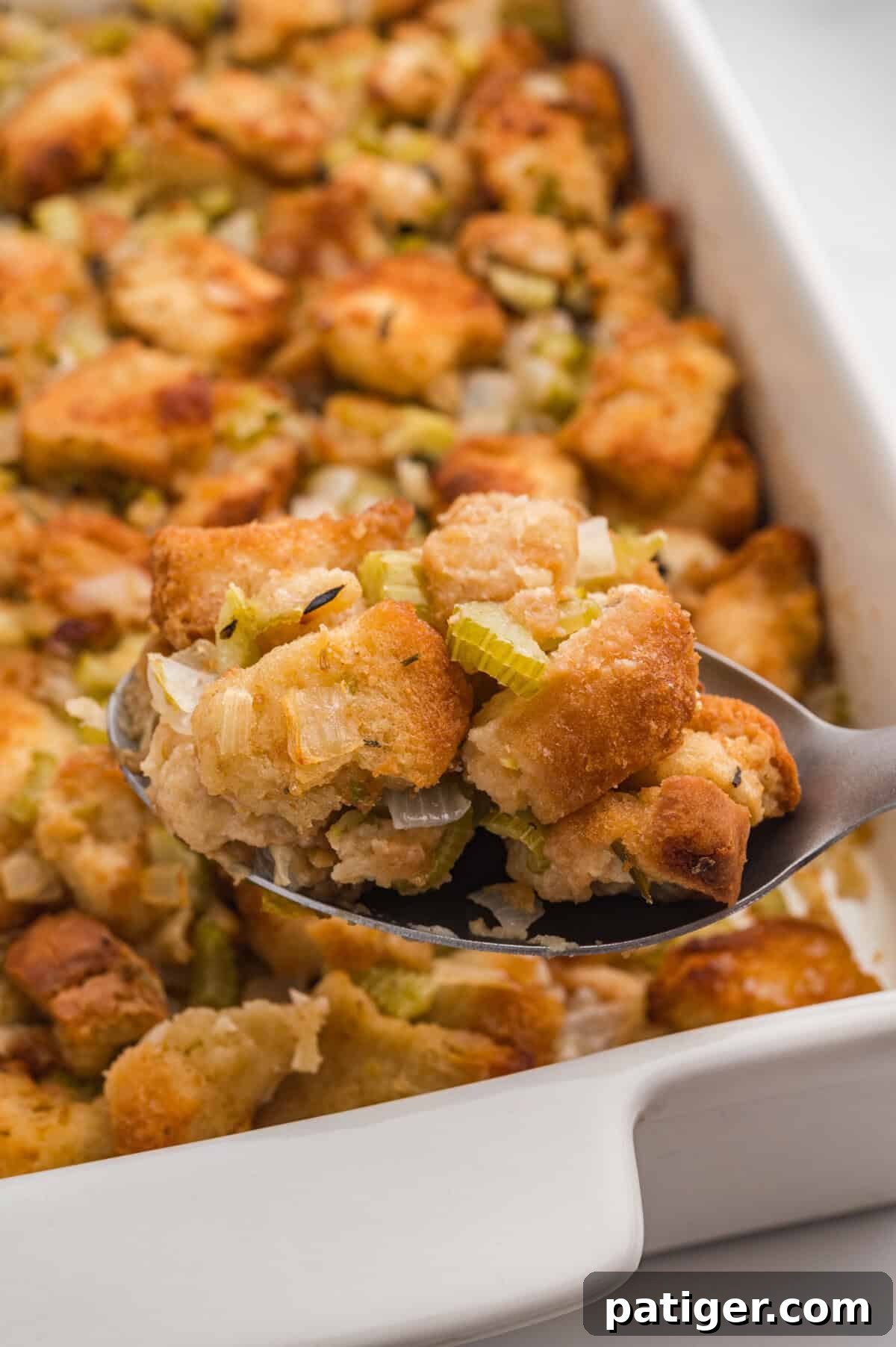
If you’re searching for the ultimate classic bread stuffing recipe, one that perfectly balances crispy, golden edges with a soft, buttery, and profoundly savory center, then your quest ends here. This isn’t just any stuffing; it’s the quintessential old-fashioned recipe, designed to deliver that nostalgic, comforting flavor profile that makes any meal, especially a holiday feast, truly special.
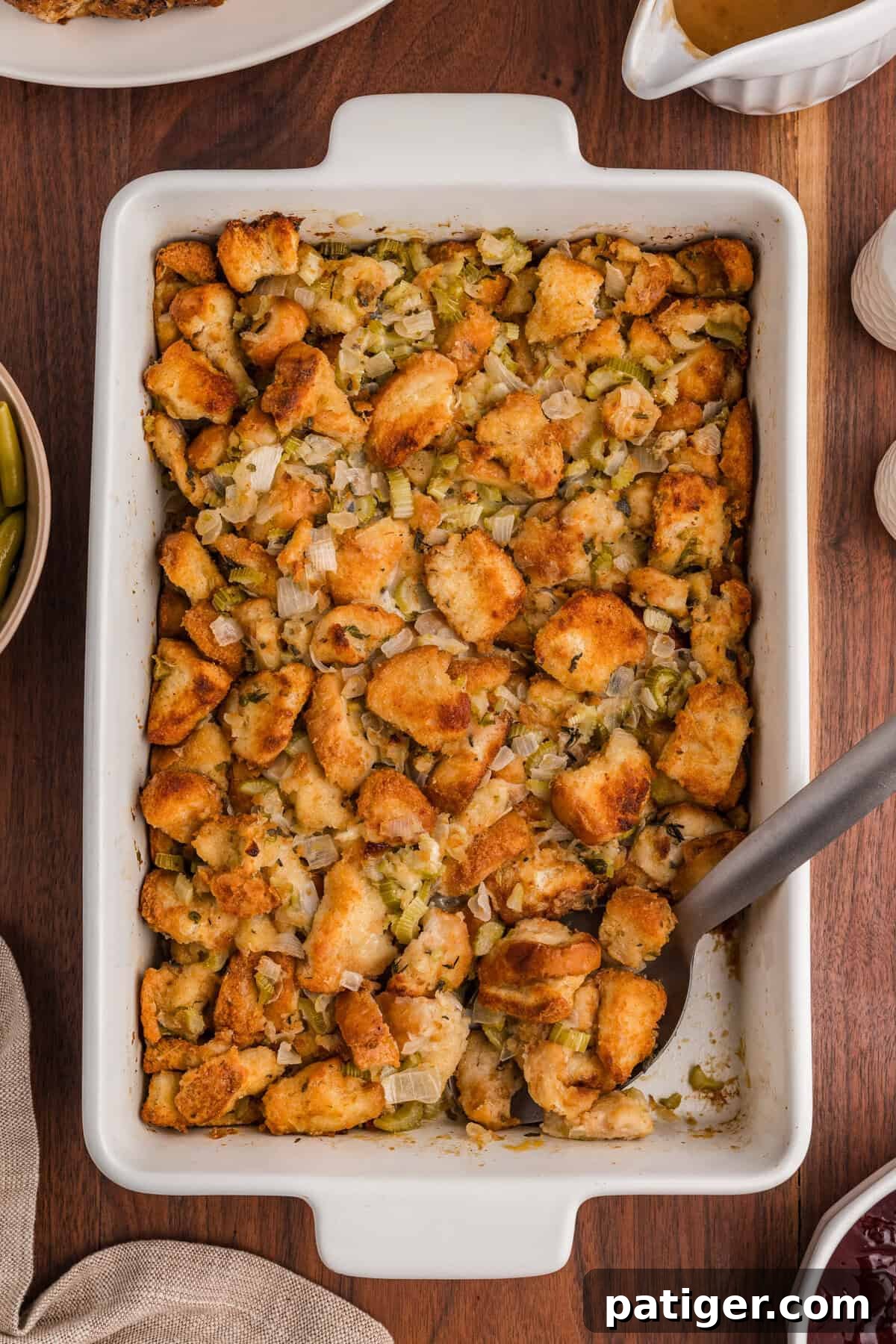
Crafted with care, this homemade bread stuffing brings together simple, high-quality ingredients to create a symphony of textures and tastes. Hearty toasted bread cubes form the base, infused with garlic butter for an unparalleled depth of flavor. Sautéed aromatic vegetables like onions and celery provide a sweet and savory foundation, while fresh sage and thyme contribute that unmistakable, fragrant herbaceousness. All of this is bound together by a rich, flavorful broth, ensuring every bite is moist and satisfying. This is precisely what an authentic, old-fashioned stuffing recipe should embody: simplicity, richness, and an abundance of flavor.
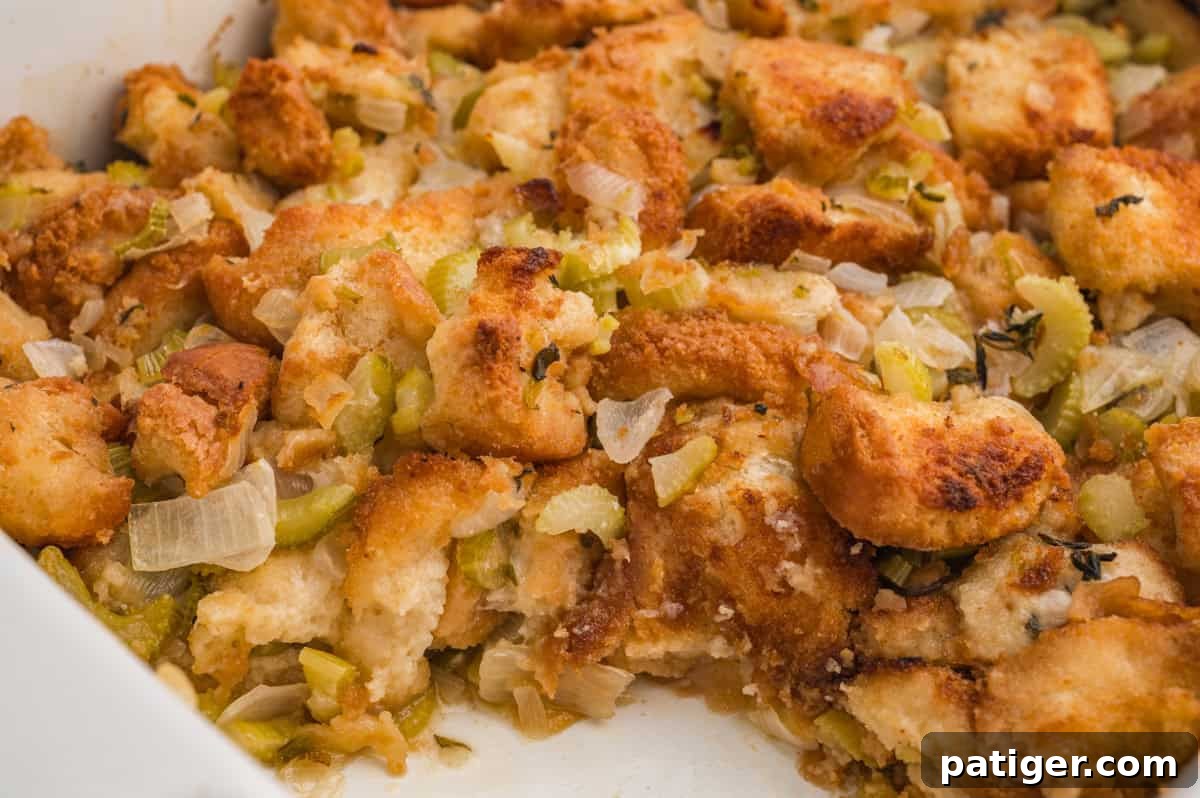
What truly sets this classic stuffing apart is its meticulous preparation. The bread isn’t just tossed; it’s lovingly coated in garlic butter and toasted not once, but twice. An initial toast at the start develops a deep, nutty flavor and a sturdy texture, preventing sogginess. A final toast at the end, uncovered, ensures a beautifully golden and irresistibly crisp top layer. Beneath this delightful crunch, the interior remains wonderfully soft and tender, having perfectly absorbed the savory broth and aromatic herb essences. This two-stage toasting method is a secret to achieving the ideal balance of textures, making each mouthful a delightful experience.
This homemade bread stuffing is more than just a side dish; it’s a culinary cornerstone that elevates any festive spread. It partners flawlessly with traditional holiday favorites such as creamy mashed potatoes, comforting green bean casserole, a perfectly cooked roast turkey, and a luscious, savory gravy. Whether you’re orchestrating an elaborate Thanksgiving dinner, hosting a cozy Christmas gathering, or simply craving a taste of home on a crisp fall evening, this stuffing delivers warmth, comfort, and an undeniable sense of tradition to any meal. Its timeless appeal makes it a must-have on your holiday table or any occasion that calls for a truly satisfying side.
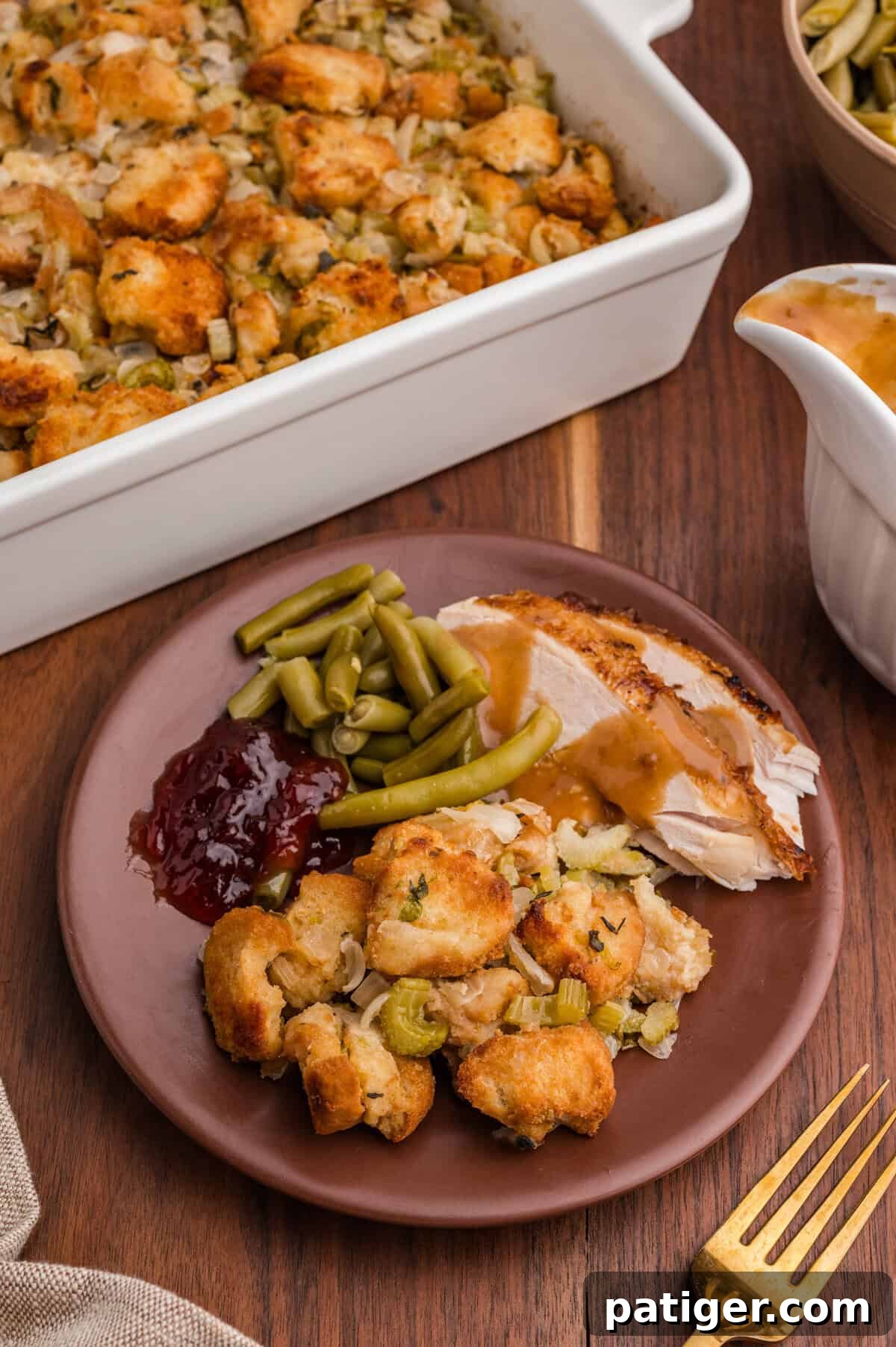
Why This Homemade Stuffing Will Be Your New Favorite
This classic bread stuffing recipe isn’t just about tradition; it’s about crafting an unforgettable culinary experience that will have everyone asking for seconds. Here’s why this recipe stands out and why you’ll adore making it:
- Irresistibly Golden, Crispy Top & Soft, Buttery Center: The hallmark of truly great stuffing lies in its texture. This recipe guarantees a beautifully browned, crunchy top layer that provides a delightful contrast to the incredibly moist and tender interior. Each bite is a harmonious blend of textures, making it utterly addictive.
- Two Broth Options for Every Cook: We understand that time can be a luxury, especially during holiday preparations. That’s why this recipe offers two distinct broth methods: a quicker, straightforward approach for when you need to save time, and an optional, more deeply flavorful simmered broth for those who wish to elevate the savory notes to gourmet levels. Choose the option that best fits your schedule and desired depth of flavor.
- Classic Herb Flavor with Fresh Sage and Thyme: The soul of traditional stuffing resides in its aromatic herbs. Fresh sage and thyme are the stars here, infusing the entire dish with that signature, comforting, and nostalgic Thanksgiving essence. Their vibrant, earthy notes are perfectly balanced, never overpowering, and always inviting.
- The Perfect Companion for Any Occasion: While undeniably a star on the Thanksgiving table, this versatile stuffing isn’t limited to just one holiday. Its hearty, comforting profile makes it an ideal side dish for any fall or winter meal, from Sunday roasts to cozy family dinners. It’s a recipe you’ll want to revisit again and again.
Essential Ingredient Notes for Perfect Bread Stuffing
Understanding your ingredients is key to culinary success. This section provides detailed notes and substitution options for each component, ensuring you achieve the best possible results. For precise measurements and step-by-step instructions, please refer to the complete printable recipe card located at the end of this post.
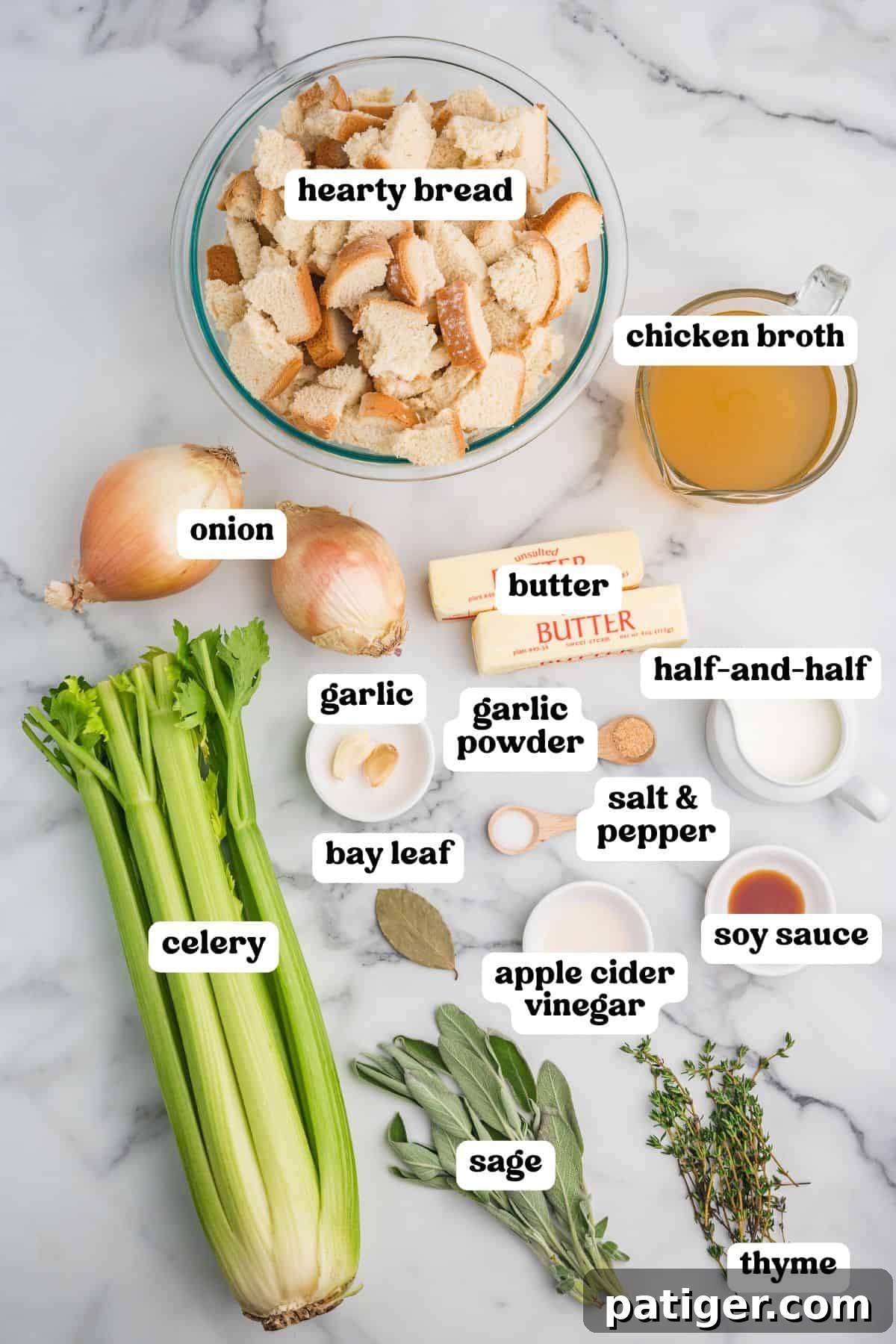
- Bread: The foundation of your stuffing, the bread choice is crucial. Opt for a high-quality, hearty bread that can absorb moisture without disintegrating. I highly recommend using Pepperidge Farm Farmhouse Hearty White Bread or their Sourdough variety. Both offer an excellent sturdy structure and a wonderfully mild flavor that acts as a perfect canvas for the other ingredients. Avoid soft, squishy sandwich bread, as it tends to become mushy. For added complexity and texture, feel free to mix different types of day-old or slightly stale bread. Tearing the bread by hand rather than cutting it creates more irregular surfaces, which leads to better absorption and a more rustic texture.
- Butter: A generous amount of butter is non-negotiable for an old-fashioned stuffing. It provides unparalleled richness, moisture, and a depth of flavor that can’t be replicated. Salted butter is generally preferred, but if using unsalted, ensure you adjust the salt content in the broth and seasoning to taste. Butter is essential for sautéing the vegetables and for that final crispy topping.
- Onions and Celery: These classic aromatics are the backbone of savory stuffing flavor, creating the “mirepoix” that underpins so many delicious dishes. Finely dicing them ensures they cook down evenly and blend seamlessly into the stuffing. Don’t discard the celery leaves; chop them up and add them to the mix for an extra layer of fresh, green flavor. They contribute significantly to the overall aromatic profile.
- Herbs: Fresh is best when it comes to sage and thyme, as they infuse the stuffing with that quintessential Thanksgiving aroma and taste. Minced fresh sage offers a potent, earthy note, while fresh thyme provides a slightly delicate, peppery undertone. If fresh herbs are unavailable, dried herbs can be used in a pinch, but remember to use approximately one-third of the amount specified for fresh, as dried herbs are more concentrated.
- Half-and-Half: This dairy addition is a game-changer, contributing a luscious creaminess and extra moisture to the stuffing. It helps create that desirable soft, buttery center and rounds out the savory flavors beautifully. Whole milk can be a suitable substitute if half-and-half is not available, though it will be slightly less rich.
- Chicken Broth: For the most control over seasoning, always opt for low-sodium chicken broth. This allows you to adjust the salt content precisely to your preference. Crucially, choose full-fat (not fat-free) chicken broth, as the inherent fat contributes significantly to the broth’s body, mouthfeel, and overall flavor, making the stuffing richer and more satisfying. You will need approximately 1½ to 3 cups for the quicker version of this recipe, depending on your bread’s absorbency. However, if you choose to simmer your broth for enhanced flavor, you will start with 5 cups to account for reduction.
- Optional Simmer Ingredients: To truly elevate your stuffing to extraordinary heights, consider making the optional simmered broth. This involves cooking down chicken broth with a few simple additions: extra onion, celery, garlic, and bay leaves. These ingredients gently simmer, concentrating their flavors. After straining, a touch of butter, a splash of apple cider vinegar (for brightness and tang), and a hint of soy sauce (for umami depth) are stirred in. This creates a deeply concentrated, intensely savory broth that infuses the stuffing with an unparalleled richness and complexity, truly bringing all the flavors together in a cohesive, unforgettable way.
How to Prepare the Best Homemade Bread Stuffing
This detailed section guides you through the process of making this incredible stuffing, complete with step-by-step instructions and insights. Accompanying photos illustrate key stages of the recipe. For the full, printable version of the recipe, including all measurements and detailed notes, please scroll down to the recipe card below.
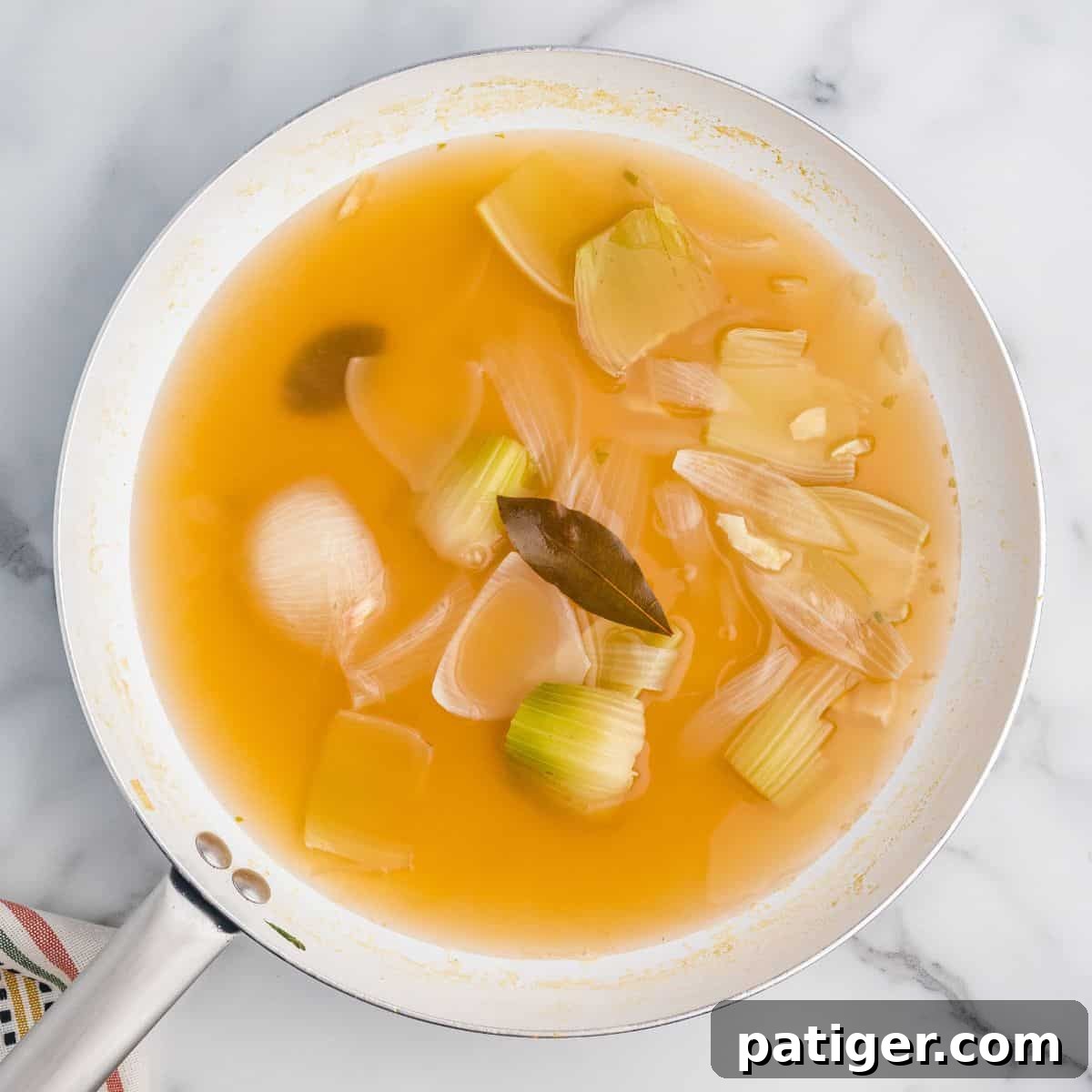
Step 1: Optional Broth Simmer for Enhanced Flavor (Highly Recommended): If you have the time and desire to deepen the flavor profile of your stuffing, begin by preparing the optional simmered broth. In a large saucepan, combine 5 cups of low-sodium chicken broth with roughly chopped onion, celery, garlic cloves, and a couple of bay leaves. Bring this mixture to a gentle boil, then reduce the heat and simmer uncovered for 15 to 20 minutes, allowing the broth to reduce by approximately half. This process concentrates the flavors beautifully. While the broth simmers, you can proceed with preparing the bread. Once reduced, carefully strain the broth to remove all solids. Stir in 2 tablespoons of butter, 1 tablespoon of apple cider vinegar, and 1 teaspoon of soy sauce (if using) along with salt to taste. Set this intensely flavorful broth aside.
Step 2: Prepare and Toast the Bread Cubes: Begin by preheating your oven to 400°F (200°C). Carefully tear or cut your chosen hearty bread into rough, bite-sized pieces, aiming for about 1-inch cubes. Avoid squishing the bread, as you want to maintain its texture. Spread these bread pieces in a single, even layer across two large baking pans. This ensures even toasting. Melt ½ cup of salted butter and stir in ½ teaspoon of garlic powder. Drizzle this fragrant garlic butter evenly over the bread cubes, tossing gently to ensure every piece is lightly coated. Bake for 8 to 10 minutes, or until the bread cubes are lightly golden and perfectly toasted. This initial toast is crucial for preventing a soggy stuffing. Remove the toasted bread from the oven and reduce the oven temperature to 350°F (175°C).
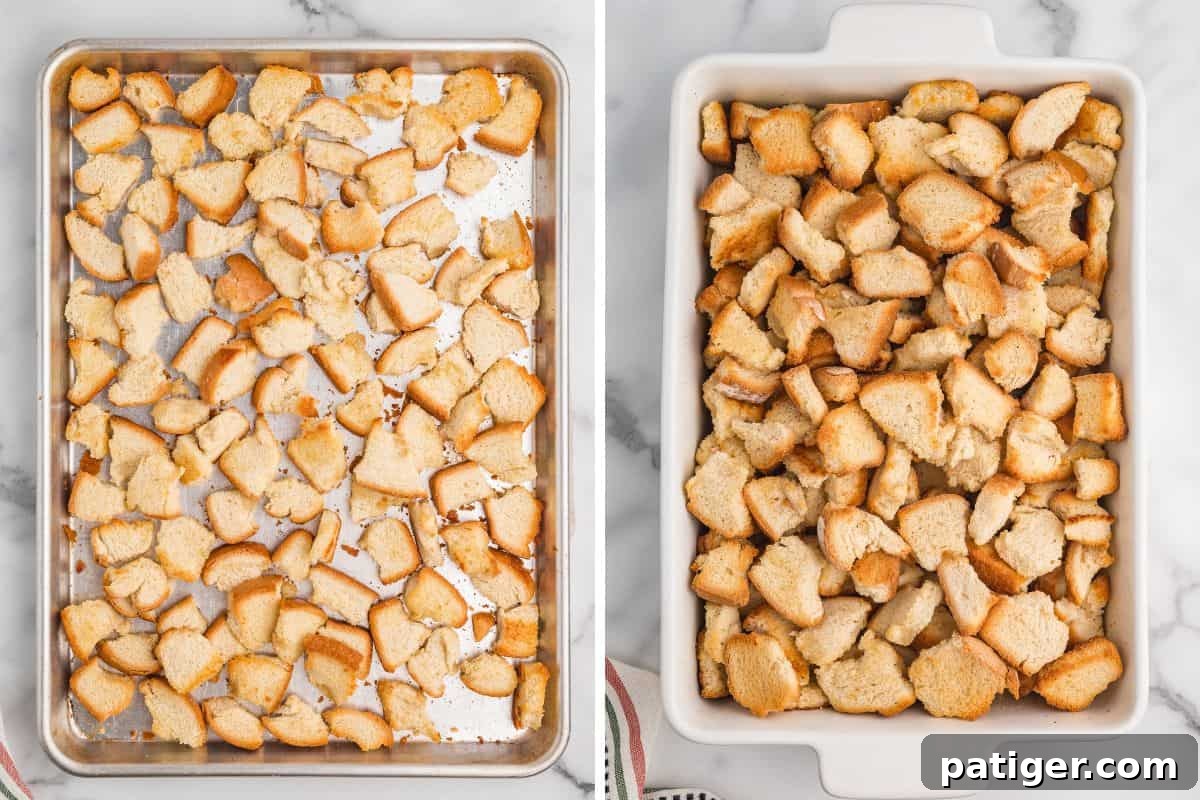
Step 3: Assemble the Base in Baking Dish: Lightly grease a 9×13-inch baking dish with nonstick cooking spray to prevent sticking. Carefully transfer all the toasted bread cubes into this prepared baking dish. Alternatively, you can combine all ingredients in a large mixing bowl before transferring them, but assembling directly in the baking dish saves a step.
Step 4: Sauté the Aromatics: In a large skillet, melt 4 tablespoons of the remaining butter over medium-high heat. Add the diced onions and celery, along with a pinch of salt to help draw out their moisture. Sauté for 6 to 10 minutes, stirring occasionally, until the celery is tender-crisp and the onions have become translucent and softened. This step develops a rich flavor base for your stuffing.
Step 5: Incorporate Creaminess and Fresh Herbs: Remove the skillet from the heat. Stir in the half-and-half, minced fresh sage, and fresh thyme. The residual heat from the vegetables will gently warm the dairy and release the fragrant oils from the fresh herbs. Pour this aromatic mixture evenly over the toasted bread cubes in the baking dish. Gently turn and fold the ingredients together using a large spoon or spatula until everything is well combined.
Step 6: Moisten with Broth: Now it’s time to add the broth. Slowly drizzle the chicken broth (either your quick version or the optional simmered broth) over the bread cubes, adding about ½ cup at a time. After each addition, gently turn the mixture to allow the bread to absorb the liquid evenly. The goal is to moisten the bread thoroughly without making it soggy or waterlogged. The exact amount of broth needed will vary based on your bread type and how dry it was initially. I typically use between 1½ to 2 cups for optimal moistness. Continue until the bread is just moistened and plump, but still has some structure.
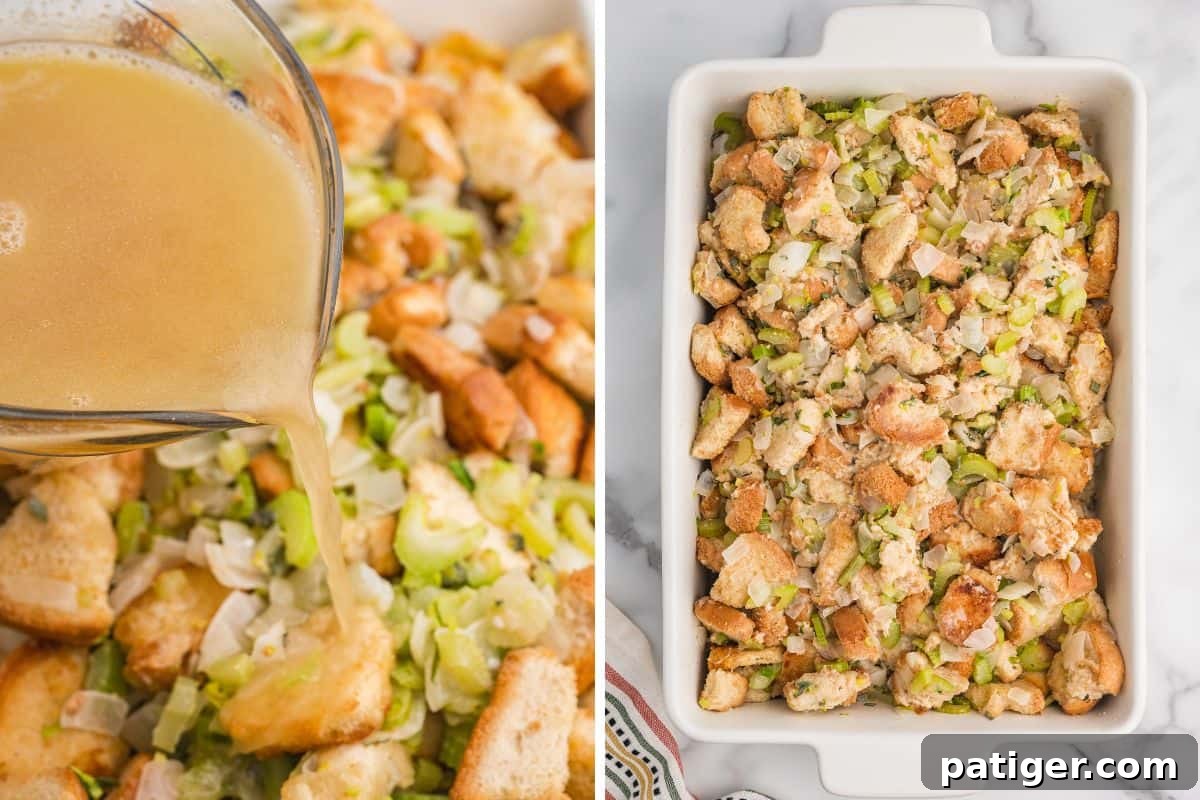
Step 7: Initial Covered Bake: Cover the baking dish tightly with aluminum foil. Place it into the preheated 350°F (175°C) oven and bake for 30 to 40 minutes. Baking it covered allows the stuffing to steam, ensuring the interior becomes wonderfully soft and absorbs all the delicious flavors without drying out prematurely. It also helps the center to set.
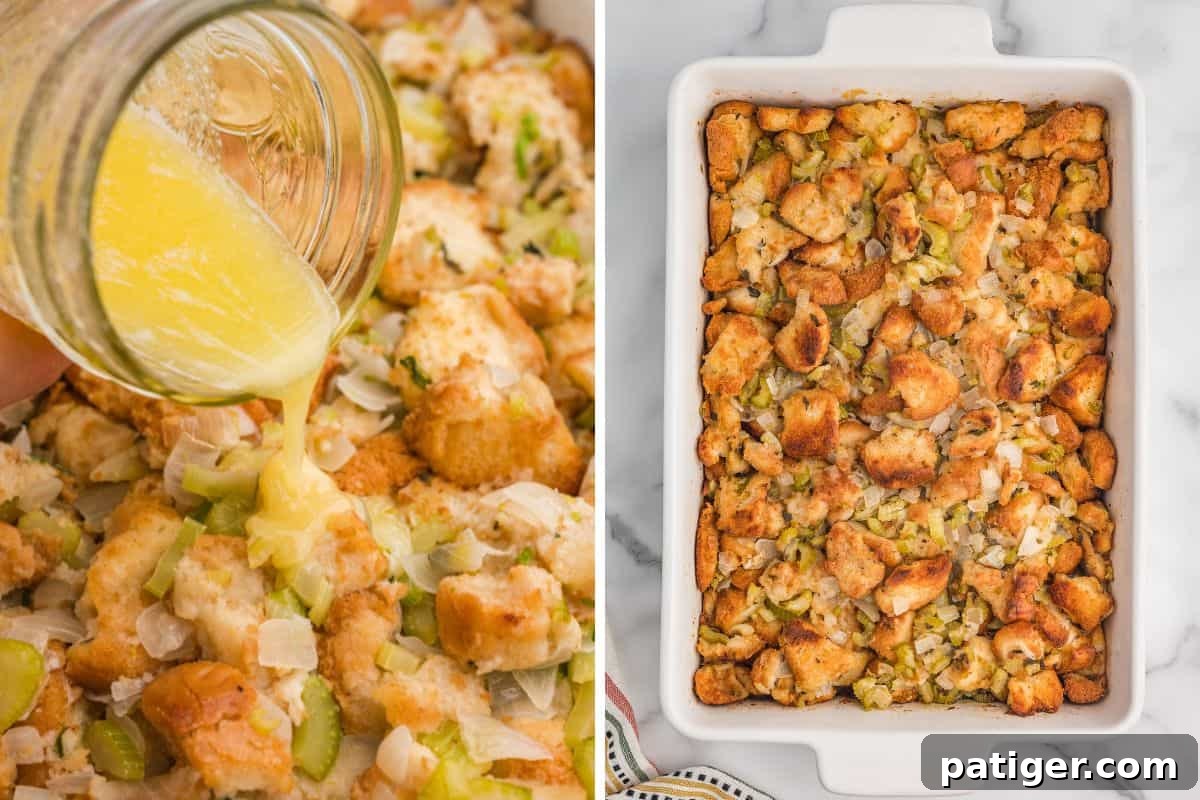
Step 8: Final Uncovered Bake for Crispiness: While the stuffing is baking, melt the remaining 4 tablespoons of butter and stir in ¼ teaspoon of garlic powder. Once the initial covered bake is complete, remove the foil from the baking dish. Drizzle the prepared garlic butter evenly over the top of the stuffing. Increase the oven temperature to 400°F (200°C). Return the uncovered stuffing to the oven and bake for an additional 10 to 15 minutes, or until the top layer is beautifully golden brown and delightfully crisp. Keep a close eye on it during this final stage to prevent over-browning.
Pro Tip: Rescuing Soggy Stuffing
Even experienced cooks can sometimes end up with stuffing that’s a bit too wet in the center. If you find your stuffing is still soggy after the recommended baking time, there’s no need to panic! Simply spread the stuffing out onto a large baking sheet, ensuring it’s in a single, relatively thin layer. Return the baking sheet to the oven, uncovered, and bake for an additional 10 to 20 minutes at 375°F (190°C). This increases the surface area exposed to the heat, allowing excess moisture to evaporate and encouraging the bread to dry out and crisp up. Remember to keep a watchful eye on it during this process to prevent the edges from becoming overly dry or burnt.
Storage and Reheating Instructions
Proper storage and reheating are essential for enjoying your delicious homemade stuffing beyond the initial meal. Follow these guidelines to maintain its flavor and texture:
Refrigerator: To preserve freshness and prevent spoilage, store any leftover bread stuffing promptly. Transfer the cooled stuffing to an airtight container or cover the baking dish tightly with plastic wrap or aluminum foil. When properly stored in the refrigerator, the stuffing will remain fresh and delicious for up to 4 days.
Reheating: For best results, reheat your stuffing covered in a 350°F (175°C) oven until it is thoroughly warmed through. Covering it helps retain moisture and prevents the stuffing from drying out. If you notice the stuffing appears a bit dry, add a splash of chicken or vegetable broth (or even water) before reheating to rehydrate it and restore its original moist texture. For a crispy top, uncover for the last 5-10 minutes of reheating.
Freezing: Stuffing freezes remarkably well, making it an excellent candidate for meal prep or enjoying holiday flavors year-round. Allow the stuffing to cool completely to room temperature before freezing. Transfer it to a freezer-safe airtight container or heavy-duty freezer bags, pressing out as much air as possible to prevent freezer burn. It can be stored in the freezer for up to 3 months. When ready to serve, thaw the frozen stuffing overnight in the refrigerator. Reheat as directed above, covered, then uncover for the final minutes to re-crisp the top.
Making Stuffing Ahead of Time
Preparing stuffing in advance is a fantastic strategy to reduce stress, especially when hosting a large holiday meal. You can assemble this homemade bread stuffing up through Step 8 of the baking instructions. This means you’ll have toasted the bread, sautéed the vegetables, mixed in the herbs and half-and-half, and added the broth. Once assembled, allow the stuffing to cool completely to room temperature. Then, wrap the baking dish tightly with several layers of plastic wrap, followed by aluminum foil, and refrigerate for up to 24 hours.
On the day you plan to serve, remove the stuffing from the refrigerator approximately 30 minutes before baking to allow it to come closer to room temperature. Preheat your oven to 400°F (200°C). Continue with the final baking step (Step 8): drizzle with the remaining garlic butter and bake uncovered until the stuffing is thoroughly heated through, the center is set, and the top is beautifully golden and crisp. This make-ahead method ensures you have more time to focus on other dishes and enjoy your guests.
Expert Tips for the Best Homemade Stuffing Every Time
Achieving perfectly balanced and flavorful stuffing is easier than you think with these expert tips:
- Choose the Right Bread: This is arguably the most critical factor. Always use sturdy, day-old bread like a good quality white bread, sourdough, or challah. Freshly baked, soft bread has too much moisture and will turn mushy. Stale bread will absorb the broth without falling apart, giving you that ideal texture.
- Tear, Don’t Cut, for Optimal Texture: While cutting bread into cubes is an option, tearing it by hand creates irregular, craggy pieces. These uneven surfaces provide more nooks and crannies for the broth and butter to cling to, resulting in a more rustic texture and better flavor absorption throughout the stuffing.
- Toast the Bread Properly: Don’t skip the initial toasting step! This process removes excess moisture from the bread, transforming it into a sponge ready to soak up all the delicious broth and seasonings without becoming soggy. It also adds a subtle nutty flavor.
- Season Your Broth to Perfection: If you opt for the simmered broth, taste it before adding salt to the main stuffing mixture. Broth often contains sodium, and you want to ensure your final dish isn’t over-salted. Adjust seasoning as you go.
- Moisture Control is Key: When drizzling in the broth, add it slowly, about half a cup at a time. Gently toss the mixture after each addition and stop when the bread is thoroughly moistened but still holds its shape. It should feel damp, not wet or swimming in liquid. The amount of broth needed can vary based on your bread’s dryness and type.
- Don’t Skimp on the Butter: Butter is crucial for both flavor and texture. It contributes to the golden crust and the rich, tender interior. For the crispiest top, always add a final drizzle of garlic butter before the uncovered bake.
- Bake Uncovered for That Essential Crispy Top: The final uncovered baking stage is vital. It allows the surface of the stuffing to dry out and brown, creating that irresistible crispy crust that everyone loves. Keep an eye on it to achieve a deep golden color without burning.
- Embrace Fresh Herbs: While dried herbs work, fresh sage and thyme bring a vibrant, aromatic quality that truly elevates the stuffing. Their bright flavors are unmatched in creating that classic holiday taste.
Exciting Additions and Flavor Variations
This classic bread stuffing is a perfect canvas for culinary creativity. While delicious on its own, it also lends itself beautifully to various additions and flavor variations, allowing you to customize it to your taste or event. Experiment with these ideas to make the recipe uniquely yours:
- Savory Sausage Stuffing: For a heartier, richer stuffing, brown 1 to 2 cups of your favorite ground sausage (breakfast, Italian, or sage sausage all work well) until cooked through. Drain any excess fat, then stir it into the stuffing mixture along with the sautéed vegetables. If using a very fatty sausage, you might want to slightly reduce the amount of butter used for sautéing the vegetables.
- Smoky Bacon and Herb Stuffing: Elevate the savory profile by cooking 6-8 strips of bacon until crispy. Remove the bacon, reserving a few tablespoons of the rendered bacon fat. Use this flavorful fat to sauté the onions and celery, infusing them with a smoky essence. Once cooked, crumble the crispy bacon and fold it into the stuffing mixture just before baking.
- Garden Fresh Extra Veggies: Boost the nutritional value and add more texture by incorporating additional vegetables. Sauté finely diced mushrooms, carrots, or sweet bell peppers along with the onions and celery. Ensure they are tender before adding to the bread mixture. This adds vibrant colors and earthy notes.
- Sweet & Savory Twist: Introduce a delightful contrast of flavors by adding sweet elements. Stir in ½ to 1 cup of chopped apples (like Granny Smith for a tart counterpoint, or Fuji for sweetness), dried cranberries, or golden raisins to the stuffing mixture. These fruits soften and plump up during baking, providing bursts of sweetness that perfectly complement the savory herbs.
- Nutty Crunch: For an added layer of texture and richness, incorporate toasted nuts. Fold in ½ to 1 cup of chopped walnuts or pecans to the stuffing mixture before baking. Toasting the nuts lightly beforehand intensifies their flavor and crunch.
- Cheesy Indulgence: For a truly decadent stuffing, add 1 cup of shredded cheese. Sharp cheddar, Gruyere, or a blend of Italian cheeses would work wonderfully. Stir it in with the half-and-half and herbs, ensuring it melts into the stuffing, creating a gooey, flavorful treat.
- Spice it Up: For a subtle kick, add a pinch of red pepper flakes or a dash of cayenne pepper to the vegetable mixture. If you enjoy a more pronounced warmth, a teaspoon of smoked paprika can add a beautiful depth of flavor.
More Irresistible Thanksgiving Side Dish Recipes
Complete your holiday spread with these other delectable side dishes that pair perfectly with our classic bread stuffing:
- Creamed Spinach: A rich and creamy classic that adds a touch of elegance to any meal.
- Sweet Potato Casserole with Marshmallows: A beloved sweet and savory dish with a delightful toasted marshmallow topping.
- Broccoli Casserole: A cheesy and comforting vegetable casserole that’s a family favorite.
For even more inspiration, explore our full collection of 23 Thanksgiving side dishes to ensure your holiday meal is nothing short of spectacular.
Homemade Bread Stuffing
Author: Jaclyn
45
50
1
35
12
Ingredients
- 24 ounces hearty bread, *
- 1 cup salted butter, divided
- ¾ teaspoon garlic powder, divided
- 2 large onions, diced (about 3 cups)
- salt & pepper, to taste
- 6 celery ribs, diced (about 3 cups)
- 1 cup half-and-half
- 2 Tablespoons fresh sage, minced
- 2 teaspoons fresh thyme
- 1 ½ to 3 cups chicken broth, or use optional reduced broth option below
Optional Simmered Broth:
- 5 cups low-sodium chicken broth, or stock
- ½ onion
- 1 celery rib, roughly chopped
- 2 garlic cloves
- 2 bay leaves
- 2 Tablespoons butter
- 1 Tablespoon apple cider vinegar
- 1 teaspoon soy sauce, optional
- salt, to taste
Instructions
-
Optional, for more flavorful broth: In a large saucepan, combine 5 cups of low-sodium chicken broth, ½ onion (roughly chopped), 1 celery rib (roughly chopped), 2 garlic cloves, and 2 bay leaves. Bring to a boil and then reduce heat to simmer for 15 to 20 minutes, until the liquid has reduced by about half. While the broth reduces, you can continue with the next steps of preparing the bread. Once reduced, carefully strain out all solids. Stir in 2 tablespoons of butter, 1 tablespoon of apple cider vinegar, 1 teaspoon of soy sauce (if using), and salt to taste. Set aside.
-
Preheat oven to 400°F (200°C). Tear or cut the hearty bread into uniform pieces, approximately 1-inch cubes (aim for about 12 pieces per slice). Spread the bread cubes in a single layer on two separate baking pans to ensure they toast evenly.
-
Melt ½ cup of salted butter. Stir in ½ teaspoon of garlic powder until well combined. Drizzle this garlic butter evenly over the bread cubes on the baking pans and gently toss to coat all pieces. Bake for 8 to 10 minutes, or until the bread is lightly golden and perfectly toasted. Remove the pans from the oven and reduce the oven temperature to 350°F (175°C).
-
Lightly grease a 9×13-inch baking dish with nonstick cooking spray. Transfer all the toasted bread cubes from the baking pans into this prepared dish.
-
In a large skillet, melt 4 tablespoons of the remaining butter over medium-high heat. Add the diced onions and celery along with a pinch of salt and pepper. Cook for 6 to 10 minutes, stirring occasionally, until the celery is soft and the onions are translucent and tender.
-
Remove the skillet from the heat. Stir in 1 cup of half-and-half, 2 tablespoons of minced fresh sage, and 2 teaspoons of fresh thyme. Mix well. Pour this aromatic vegetable mixture over the toasted bread cubes in the baking dish and gently turn to combine all ingredients evenly.
-
Slowly drizzle the prepared chicken broth (either the quick version or the optional simmered broth) over the bread, adding approximately ½ cup at a time. After each addition, gently turn the stuffing mixture to ensure even absorption. Continue adding broth until the bread is thoroughly moistened but not soggy. The total amount of broth needed typically ranges from 1½ to 3 cups, depending on the type and dryness of your bread.
-
Cover the baking dish tightly with aluminum foil. Bake at 350°F (175°C) for 30 to 40 minutes, or until the center of the stuffing is mostly set and feels dry to the touch.
-
Melt the remaining 4 tablespoons of butter and stir in ¼ teaspoon of garlic powder. Remove the foil from the baking dish. Drizzle the prepared garlic butter evenly over the top of the stuffing. Increase the oven temperature to 400°F (200°C) and bake uncovered for an additional 10 to 15 minutes, or until the top is beautifully golden brown and crisp. Serve hot.
Notes
Broth: The quantity of broth required can vary significantly based on the type of bread you use and how dry or toasted it is. Always add gradually and adjust as needed.
Make Ahead: To prepare this stuffing in advance, assemble it completely through baking Step 8. Allow it to cool entirely, then cover tightly and refrigerate overnight (up to 24 hours). The next day, let it sit at room temperature for 30 minutes, then bake uncovered at 400°F (200°C) for 10 to 15 minutes until heated through and the top is crispy.
Storage: Store any leftover stuffing in an airtight container in the refrigerator for up to 4 days. To reheat, cover with foil and bake in a 350°F (175°C) oven until warm; add a splash of broth if it seems dry.
Nutrition: The nutritional information provided is calculated using 2 cups of low-sodium chicken broth.
Nutrition
Carbohydrates: 31g |
Protein: 8g |
Fat: 21g |
Saturated Fat: 12g |
Polyunsaturated Fat: 2g |
Monounsaturated Fat: 5g |
Trans Fat: 1g |
Cholesterol: 48mg |
Sodium: 419mg |
Potassium: 194mg |
Fiber: 3g |
Sugar: 5g |
Vitamin A: 570IU |
Vitamin C: 2mg |
Calcium: 112mg |
Iron: 2mg
Did You Make This Recipe?
Share your culinary creations with me on Instagram @crayonsandcravings! For more delicious recipes and kitchen inspiration, be sure to follow along on Pinterest @crayonsandcravings. Your feedback and photos are always cherished!
Pin Recipe
Leave A Review