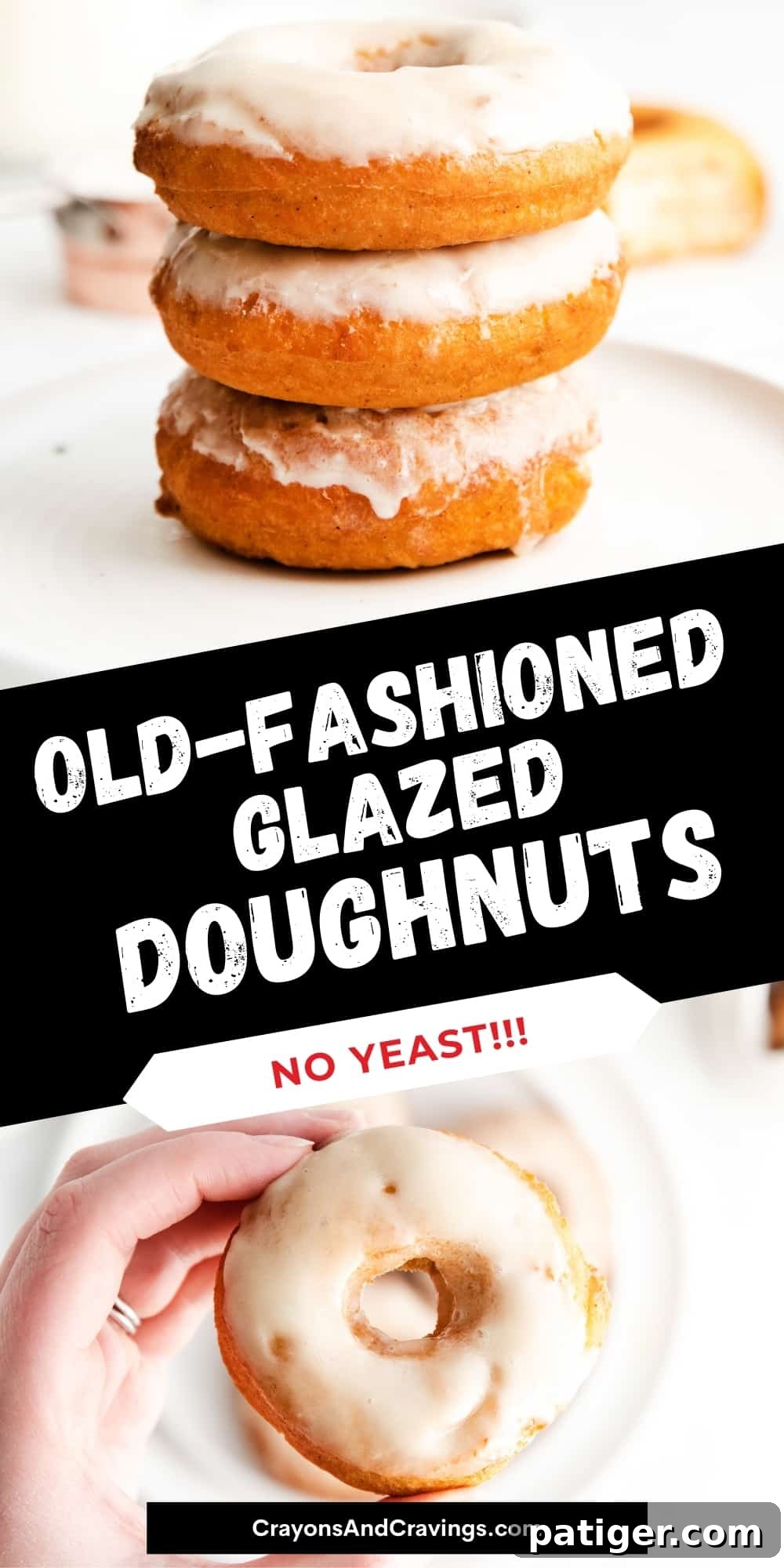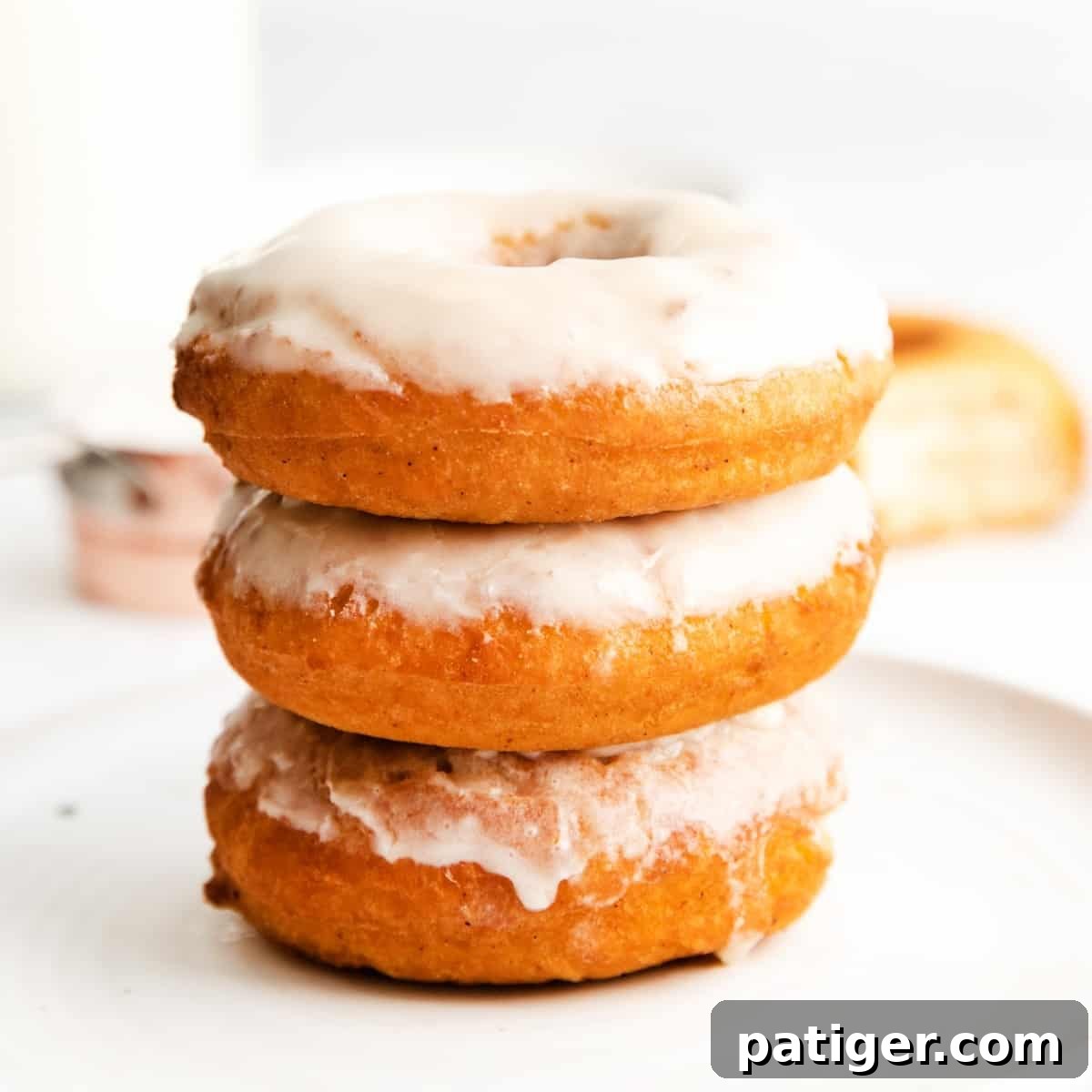
Welcome to the delightful world of homemade old-fashioned buttermilk doughnuts! These aren’t just any doughnuts; they are a timeless classic, deep-fried to achieve a perfect golden crisp exterior, while maintaining an irresistibly soft and fluffy interior. Each bite is a journey back to simpler times, crowned with a luscious, creamy vanilla glaze that melts in your mouth. This traditional doughnut recipe promises to become a cherished favorite in your kitchen, inspiring you to make them again and again.
There’s nothing quite like the aroma of freshly made doughnuts filling your home. While store-bought varieties offer convenience, they simply can’t compare to the unparalleled taste and texture of these scratch-made cake doughnuts. What makes this recipe truly special is its reliance on baking powder rather than yeast, meaning there’s no lengthy waiting period for the dough to rise. You can whip up a batch of these glorious treats relatively quickly, making them ideal for a spontaneous weekend breakfast or a special brunch.
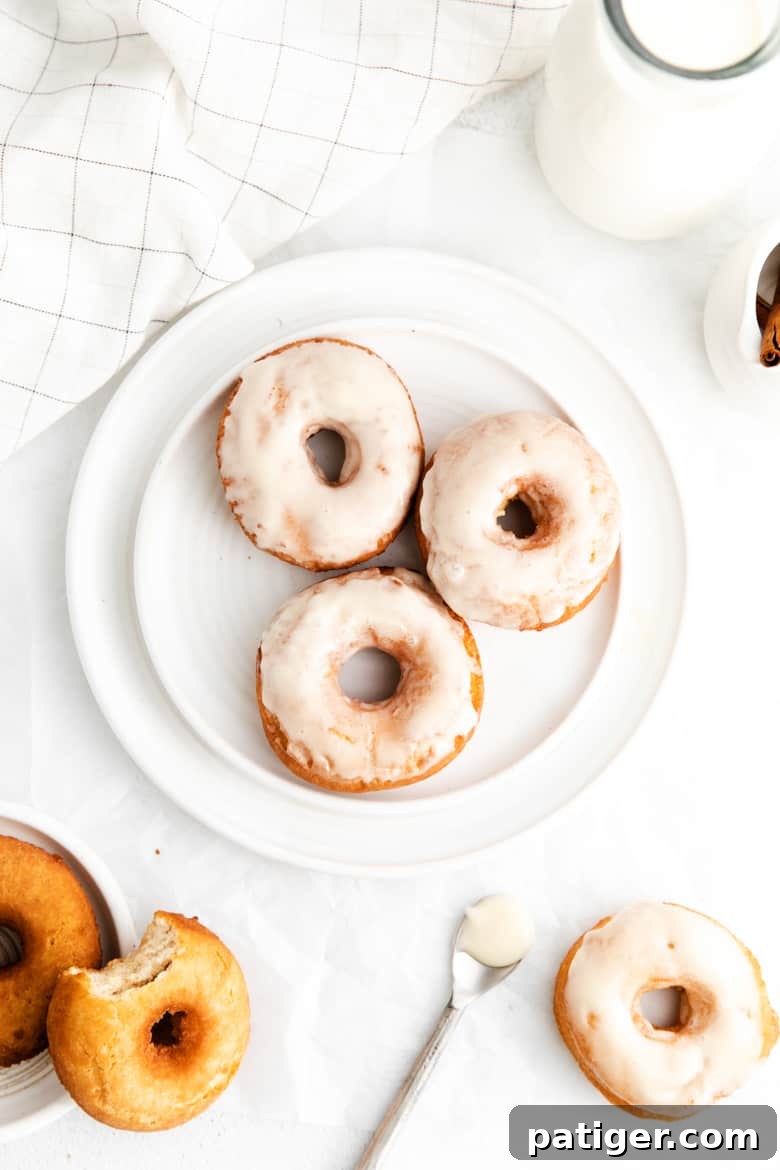
While the vanilla glaze adds a layer of sweet indulgence, it’s entirely optional. These old-fashioned buttermilk doughnuts are remarkably flavorful on their own, subtly spiced with a hint of cinnamon and nutmeg. They are perfectly sweet and make an excellent companion to a hot cup of coffee or tea. If you’re looking for a quick doughnut fix without the deep-frying, you might want to try these easy biscuit donuts, or for a healthier twist, consider these delicious air fryer doughnuts.
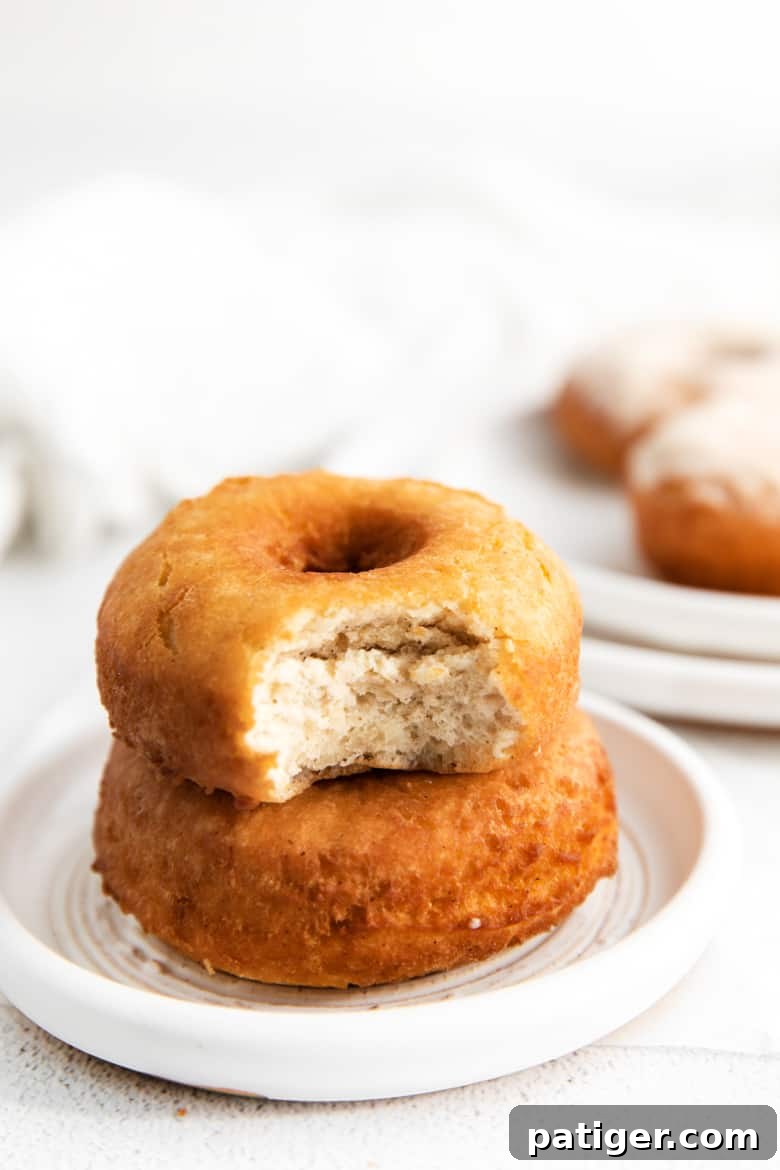
The Secret to Old-Fashioned Perfection: Buttermilk
The key ingredient that truly sets these doughnuts apart and gives them their distinctive “old-fashioned” moniker is buttermilk. Buttermilk not only contributes to the tender, cake-like crumb but also adds a subtle tang that perfectly balances the sweetness. When buttermilk reacts with baking powder, it creates a light and airy texture that is simply irresistible. This is why our old-fashioned buttermilk doughnuts boast that signature delicate texture.
Simple Ingredients for Superior Flavor
You’ll be pleased to discover that the ingredient list for these classic doughnuts is straightforward, featuring items you likely already have in your pantry. No exotic or hard-to-find components here, just honest-to-goodness baking staples that come together to create something truly magical.
For the Doughnuts
- 3 ¼ cups all-purpose flour
- 2 teaspoons baking powder
- 1 teaspoon ground cinnamon
- ½ teaspoon ground nutmeg
- ⅔ cup granulated sugar
- 2 large eggs
- 4 tablespoons butter, melted
- ⅔ cup buttermilk
- Canola or vegetable oil, for deep-frying
For the Glaze
- 1 cup powdered sugar (also known as confectioners’ sugar)
- 2 tablespoons heavy cream
- 1 teaspoon pure vanilla extract
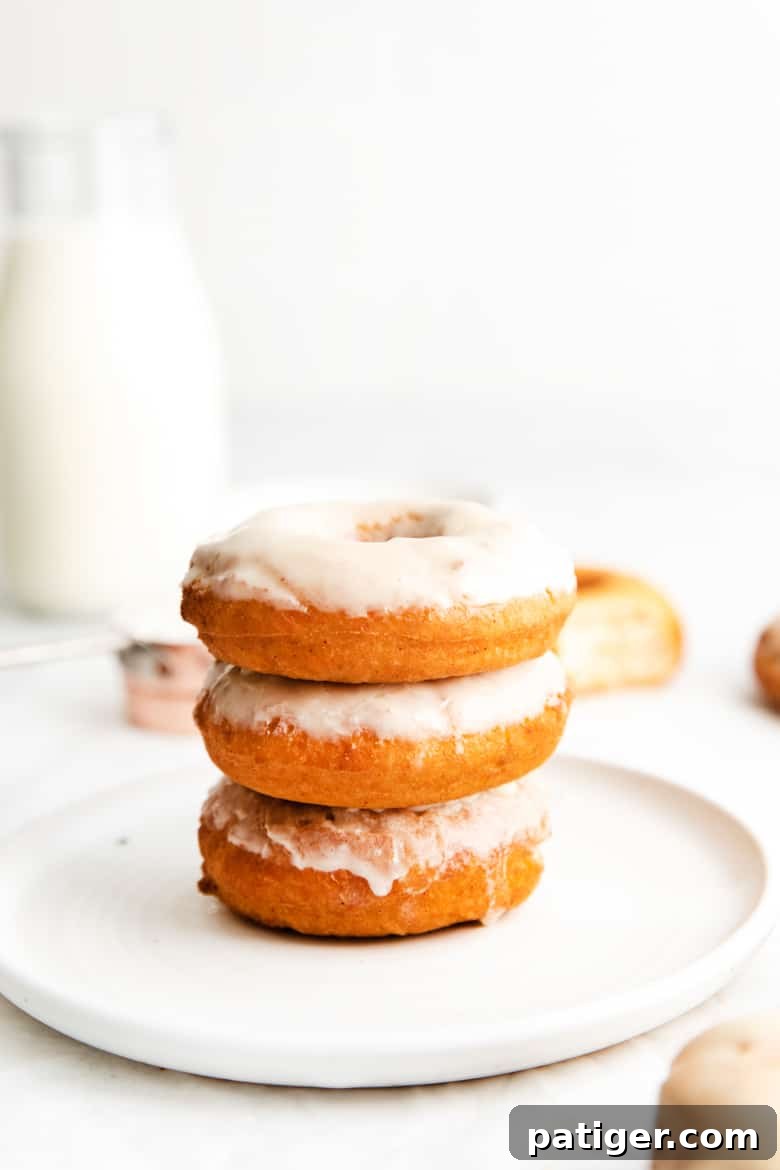
Customizing Your Classic Doughnuts: Substitutions and Variations
One of the joys of baking is the ability to customize recipes to suit your taste or what you have on hand. These old-fashioned glazed doughnuts are no exception! Here are some creative ways to adapt this recipe:
- For an Even More Tender Crumb: If you desire an exceptionally delicate doughnut, substitute cake flour for all-purpose flour. Cake flour has a lower protein content, resulting in a lighter, softer texture.
- Glaze Consistency: The perfect glaze is smooth and coats the doughnuts beautifully. If your glaze is too thin, gradually add a bit more powdered sugar until it reaches your desired consistency. If it’s too thick, a touch more heavy cream (or milk) will thin it out.
- Glaze Alternatives: While the vanilla glaze is traditional and delicious, feel free to experiment.
- Simple Powdered Sugar: For a less sweet option, simply dust your cooled doughnuts with powdered sugar.
- Cinnamon Sugar: Immediately after frying and draining excess oil, roll your warm doughnuts in a mixture of ground cinnamon and granulated sugar. The warmth helps the sugar adhere and creates a delightful crunchy coating.
- Chocolate Glaze: Replace half of the powdered sugar with unsweetened cocoa powder in the glaze recipe, then proceed as usual, adding milk or cream until it reaches the right consistency.
- Maple Glaze: Substitute maple extract for vanilla extract in the glaze, and consider using a touch of maple syrup instead of some cream for a richer flavor.
- A Pop of Color: For a festive touch, top your glazed doughnuts with colorful sprinkles before the glaze sets. This is especially fun for birthdays or holidays!
- No Buttermilk? No Problem! If you don’t have buttermilk on hand, you can easily make a substitute. Add 1 tablespoon of lemon juice or white vinegar to a liquid measuring cup, then fill the rest of the way to ⅔ cup with regular milk. Let it sit for 5-10 minutes until it slightly curdles. While not a perfect substitute, it works well in a pinch!
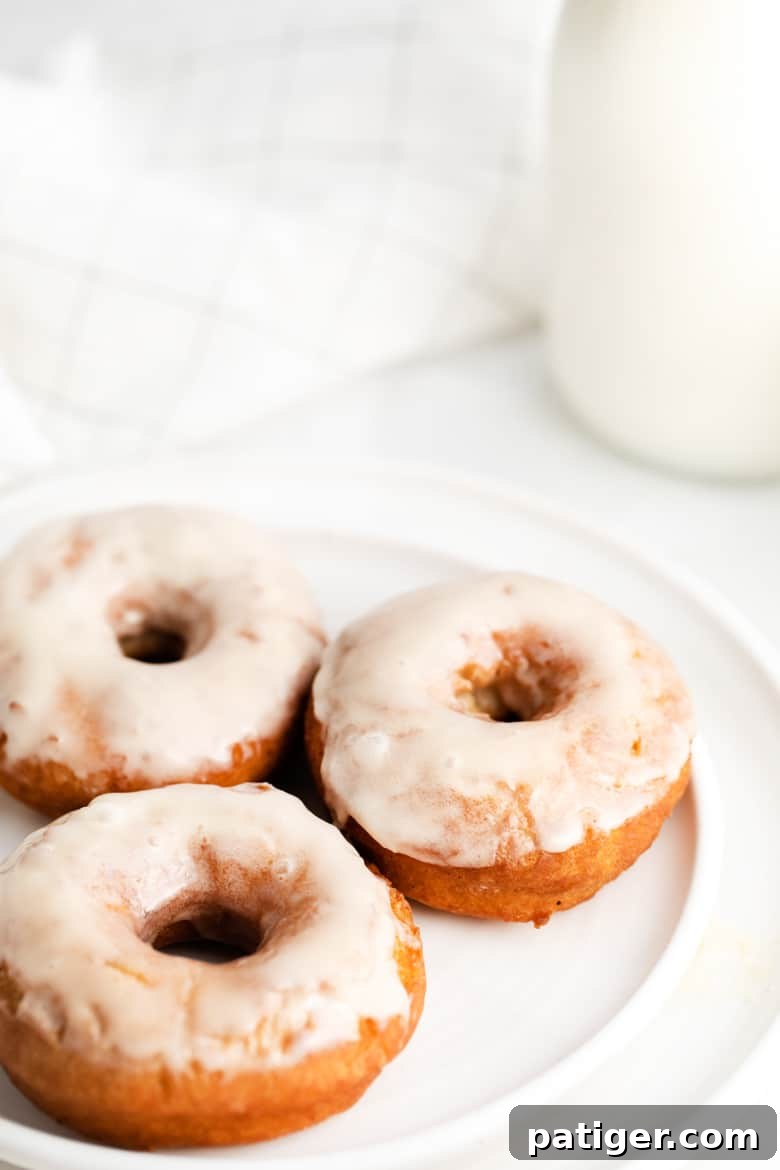
Crafting Perfection: How to Make Old-Fashioned Cake Doughnuts
Making these glorious old-fashioned doughnuts from scratch is a rewarding process. We’ve broken it down into six simple steps to guide you every step of the way. You’ll find the complete, detailed recipe in the printable recipe card towards the end of this post, but let’s walk through the main stages:
- Prepare the Dough: Combine your dry ingredients first, then wet, and gradually bring them together to form a smooth, workable dough.
- Chill the Dough: This crucial step helps the dough firm up, making it much easier to roll and cut, and preventing it from becoming too sticky when frying.
- Roll and Cut into Doughnuts: Achieve the classic doughnut shape and don’t forget the holes!
- Heat the Oil: Proper oil temperature is key for perfectly cooked doughnuts – golden brown on the outside, cooked through on the inside, and not greasy.
- Fry the Doughnuts: Submerge your carefully cut doughnuts into the hot oil until they are beautifully golden.
- Glaze the Doughnuts: The final touch! Dip them in the vanilla glaze while they’re still warm for maximum flavor absorption and a smooth coating.
Expert Tips for Doughnut-Making Success
Even seasoned bakers can benefit from a few pointers. Here are some key tips to ensure your old-fashioned buttermilk doughnuts turn out perfectly every time:
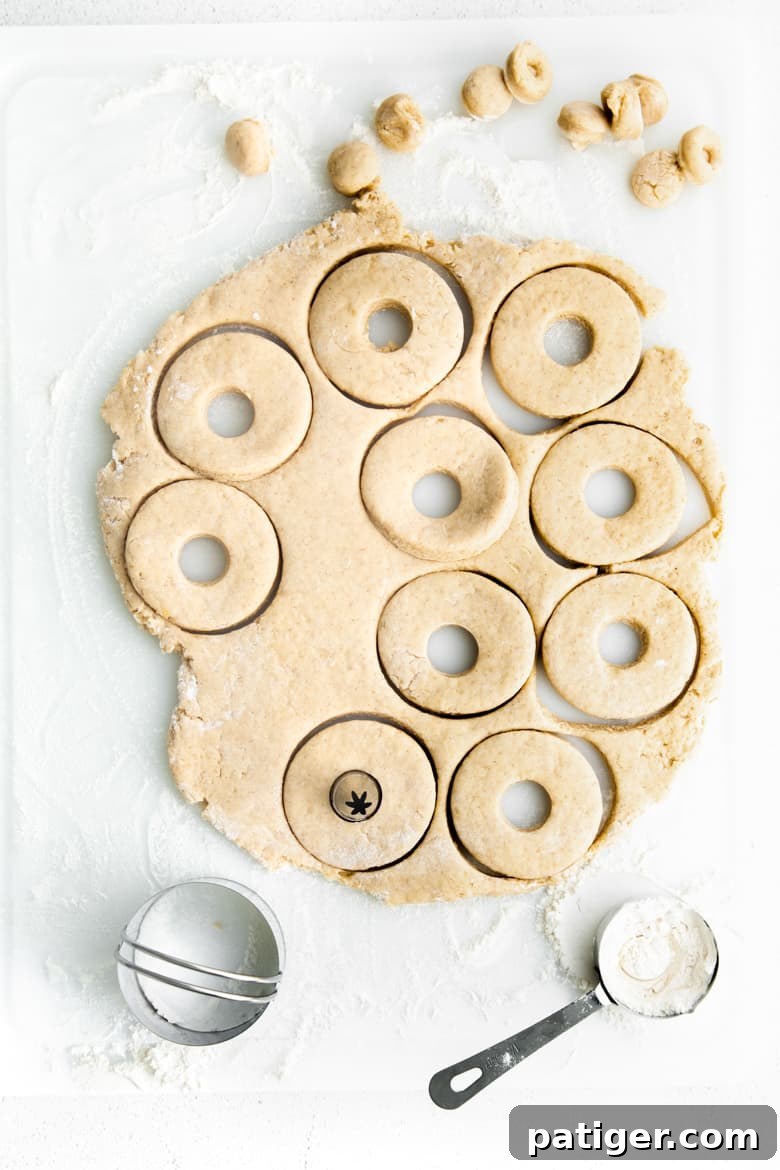
- Doughnut Cutter Alternative: No specialized doughnut cutter? No problem! You can easily use a biscuit cutter or a round cookie cutter for the outer shape, and a small circular object like a piping tip (as shown in the image above) or a small bottle cap for the center hole. Flour your cutters generously to prevent sticking.
- Don’t Skip Chilling the Dough: This step is vital. Chilling the dough not only makes it easier to handle and less sticky, but it also helps the doughnuts hold their shape better during frying. Cold dough absorbs less oil, resulting in a less greasy, lighter doughnut.
- Mastering Oil Temperature: Maintaining a consistent oil temperature of 375°F (190°C) is perhaps the most critical factor for perfect doughnuts. If the oil is too hot, the doughnuts will brown too quickly on the outside and remain raw inside. If it’s too cool, they’ll soak up too much oil and become greasy. A deep-fry thermometer is your best friend here.
- Don’t Overcrowd the Pot: Fry only a few doughnuts at a time, allowing them ample space. Overcrowding will drop the oil temperature significantly, leading to uneven cooking and greasy doughnuts.
- Glaze While Warm: For the silkiest, most even glaze, dip your doughnuts while they are still warm but not hot. The warmth helps the glaze adhere and melt into a smooth, beautiful coating.
- Re-rolling Scraps: Gather your dough scraps and gently re-roll them. You can cut more doughnuts or simply form small balls to make delicious doughnut holes. Be aware that re-rolled dough tends to be a bit tougher, so avoid overworking it.
Helpful Kitchen Supplies for Doughnut Enthusiasts
Having the right tools can make the doughnut-making process even more enjoyable and efficient. Here are some highly recommended kitchen supplies:
- Doughnut Cutter: For perfectly shaped doughnuts with minimal effort.
- Rolling Pin with Adjustable Rings: These are fantastic for ensuring your dough is rolled out to a consistent thickness, which is crucial for even frying.
- Deep Fry Thermometer: Absolutely essential for monitoring and maintaining the precise oil temperature, preventing burnt exteriors or raw interiors. It often clips conveniently to the side of your pot.
- Spider Strainer: This specialized tool with its wide, mesh basket is perfect for safely lowering doughnuts into hot oil and removing them without splashing. It also allows excess oil to drain quickly.
- Large Dutch Oven or Heavy-Bottomed Pot: A sturdy, deep pot is best for deep-frying, as it retains heat well and provides enough depth for the oil.
- Wire Cooling Rack with a Sheet Pan: This setup allows air to circulate around the doughnuts as they cool, preventing sogginess. Place a sheet pan underneath to catch any drips from the glaze.
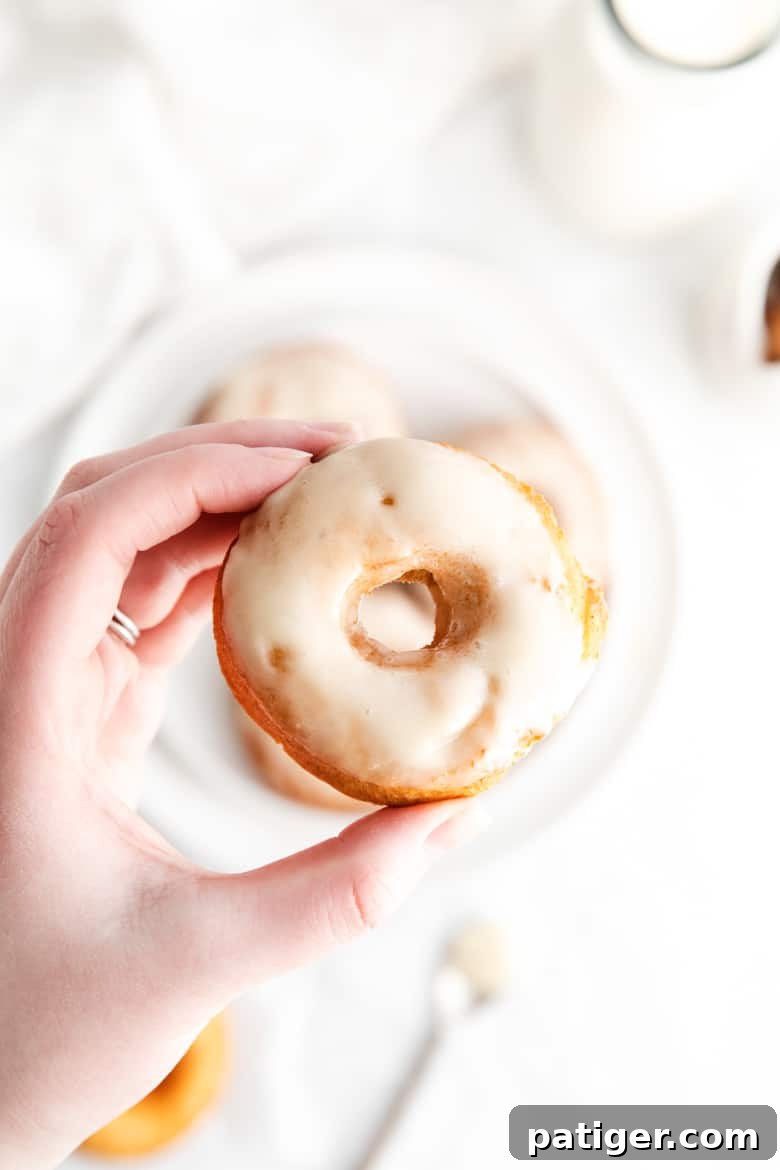
Storage and Enjoyment
While these old-fashioned buttermilk doughnuts are undeniably best enjoyed fresh, warm, and straight from the fryer, you can certainly store them to savor later. However, aim to enjoy them within a day or two for the optimal experience.
- Unglazed Doughnuts: If you plan to store them, it’s best to keep them unglazed. Once they have cooled completely to room temperature, place them in an airtight container. They will remain fresh for 1-2 days at room temperature. You can gently reheat them in a microwave for a few seconds or a warm oven before glazing.
- Glazed Doughnuts: If your doughnuts are already glazed, allow the glaze to set completely before storing them. Place them in an airtight container and store them in the refrigerator for up to 2 days. The refrigerator can sometimes alter the texture slightly, but they will still be delicious.
More Sweet Breakfast Delights to Explore
If you have a sweet tooth and enjoy starting your day with a comforting treat, you’ll love these other delicious breakfast and dessert recipes:
- Old-Fashioned Pound Cake with Sour Cream
- Easy Monkey Bread
- Brioche French Toast
- Maple Walnut Coffee Cake
- Old-Fashioned Southern Tea Cakes
- Apple Danish
Old Fashioned Glazed Doughnuts
Author: Jaclyn
Prep time: 15 mins
Cook time: 30 mins
Total time: 45 mins
Classic old-fashioned buttermilk doughnuts deep-fried to golden perfection and topped with a creamy vanilla glaze.
Servings: 12
Ingredients
For the Doughnuts:
- 3 ¼ cups all-purpose flour
- 2 teaspoons baking powder
- 1 teaspoon ground cinnamon
- ½ teaspoon ground nutmeg
- ⅔ cup granulated sugar
- 2 large eggs
- 4 tablespoons butter, melted
- ⅔ cup buttermilk
- Canola or vegetable oil, for frying
For the Glaze:
- 1 cup confectioners sugar
- 2 tablespoons heavy cream
- 1 teaspoon pure vanilla extract
Instructions
For the Doughnuts:
- In a small bowl, whisk together the flour, baking powder, cinnamon, and nutmeg. Set aside.
- In the bowl of a stand mixer fitted with the paddle attachment, combine the granulated sugar and large eggs. Beat on medium-high speed until the mixture is smooth, pale yellow, and slightly thickened.
- Reduce speed to low and gradually add the melted butter and buttermilk, mixing just until combined. Be careful not to overmix at this stage.
- Switch to the dough hook attachment. Gradually add the dry ingredients to the wet mixture in the stand mixer bowl. Mix on low speed until a smooth dough forms, which typically takes about 2-3 minutes. The dough should be soft but not overly sticky.
- Transfer the dough to a lightly greased bowl. Cover the bowl with plastic wrap and place it in the refrigerator to chill for at least one hour. Chilling is crucial for easier handling and better texture.
- After the dough has chilled, prepare your frying station. Heat at least 2 inches of canola or vegetable oil in a large Dutch oven or a deep, heavy-bottomed pan over medium heat. Monitor the oil temperature with a deep-fry thermometer until it reaches 375°F (190°C). While the oil heats, line a large baking sheet with several layers of paper towels to drain your freshly fried doughnuts.
- While the oil is heating, lightly flour a clean work surface. Roll out the chilled dough to a consistent ½-inch thickness.
- Using a floured doughnut cutter, cut out your doughnuts. If you don’t have a doughnut cutter, use a biscuit cutter for the outer ring and a small round object (like a piping tip) for the center hole. Gently score the top of each doughnut with a sharp knife to create the characteristic old-fashioned appearance. Gather any dough scraps, gently re-roll them, and cut out more doughnuts or form them into small doughnut holes.
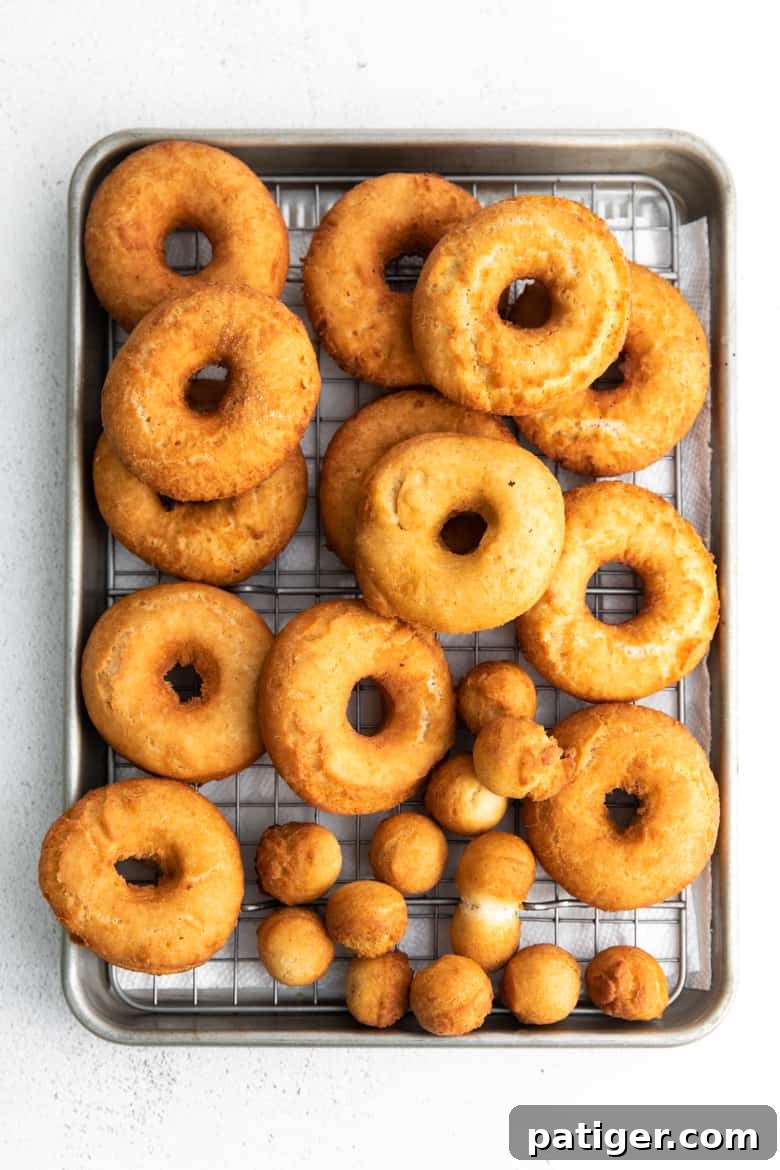
- Carefully lower a few doughnuts into the hot oil at a time, being careful not to overcrowd the pot. Fry until golden brown and cooked through, usually about 60-90 seconds per side. Doughnut holes will cook much faster. After each batch, allow the oil temperature to return to 375°F before adding the next set.
- Using a spider strainer or slotted spoon, carefully remove the fried doughnuts from the oil and transfer them to the paper towel-lined baking sheet to absorb any excess oil. After a minute or two, move them to a wire cooling rack set over a clean sheet pan.
For the Glaze:
- In a medium-sized bowl, whisk together the confectioners’ sugar, heavy cream, and pure vanilla extract until smooth and free of lumps. Adjust consistency as needed with more powdered sugar or cream.
- While the doughnuts are still warm (but not hot), dip each doughnut into the glaze, coating one side evenly. Let any excess glaze drip off before returning them to the wire cooling rack. Allow the glaze to set for a few minutes before serving.
Notes
For the best glaze coating, always dip the doughnuts while they are still warm. The warmth helps the glaze melt slightly and spread evenly, creating a beautiful, smooth finish.
While doughnuts are a treat best savored fresh, any unglazed leftovers can be stored in an airtight container at room temperature for up to 2 days. If your doughnuts are already glazed, ensure the glaze is fully set, then store them in an airtight container in the refrigerator for up to 2 days.
Nutrition
Serving: 1 doughnut | Calories: 345kcal
Did You Make This Recipe?
We’d love to see your creations! Share a picture with me on Instagram @crayonsandcravings and be sure to follow us on Pinterest @crayonsandcravings for even more delicious inspiration!
Don’t Forget to Pin for Later!