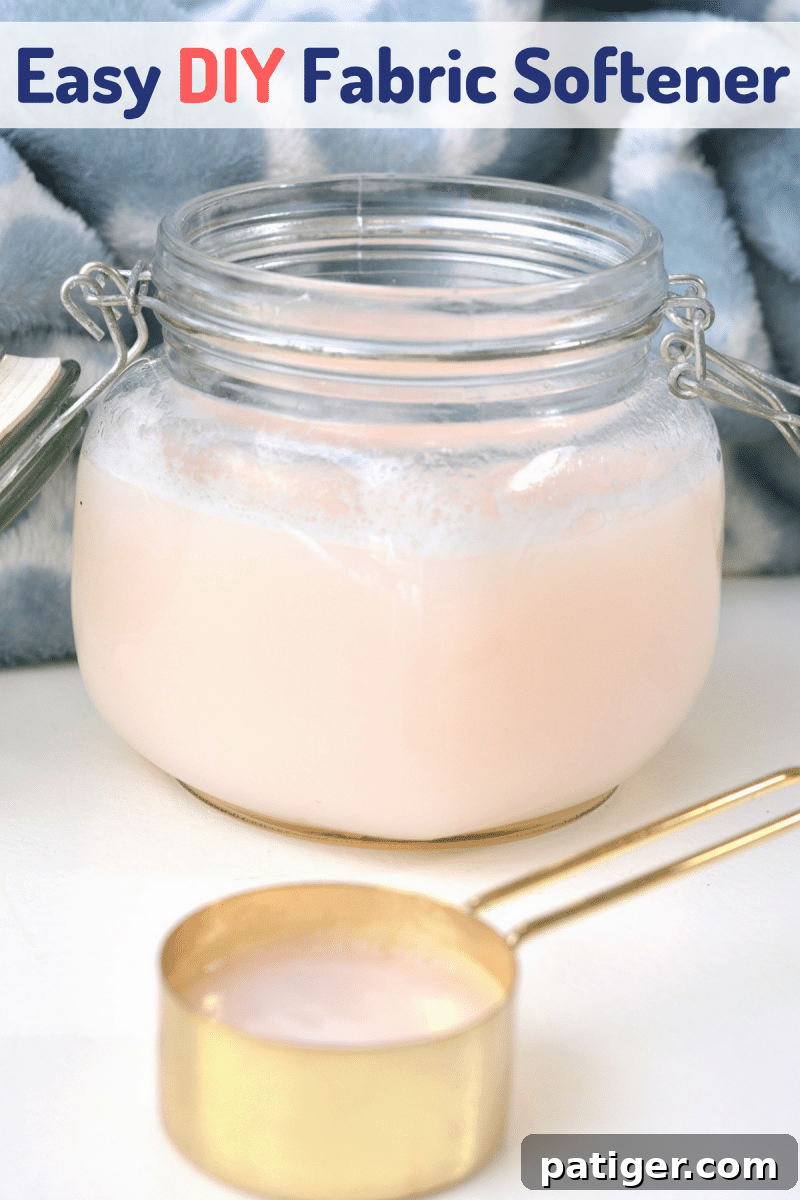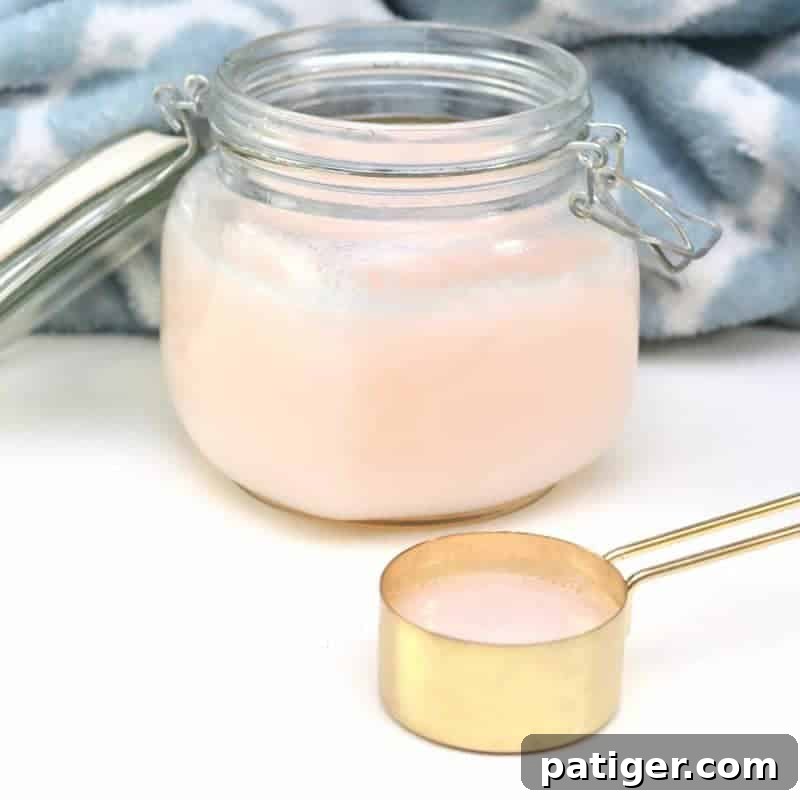
Revitalize your laundry routine and save money with this incredibly simple DIY fabric softener recipe. Using just a few common household ingredients like hair conditioner, white vinegar, and baking soda, you can create a generous batch that will last for 30 or more loads, leaving your clothes feeling wonderfully soft and smelling fresh. Say goodbye to expensive store-bought options and embrace a more economical, customizable, and eco-friendly approach to laundry care!
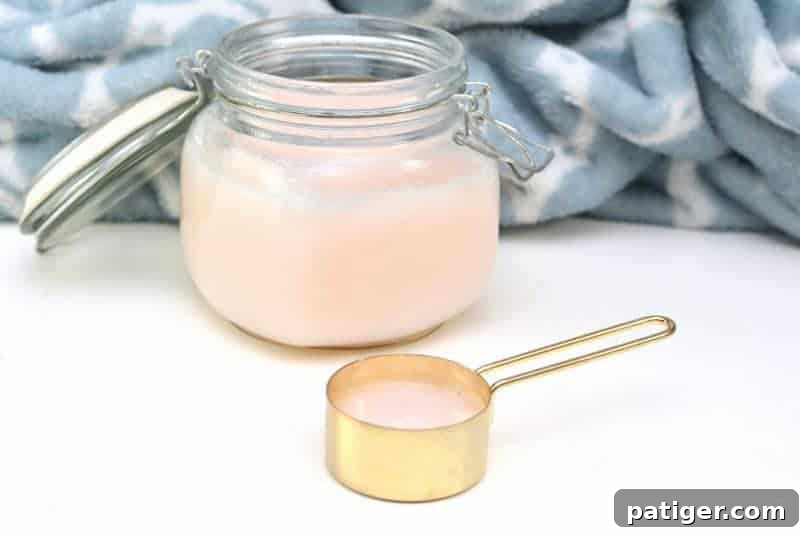
Let’s be honest: doing laundry rarely makes anyone’s “favorite activities” list. It’s a chore many of us approach with a sigh, a necessary evil in the quest for clean clothes. Yet, there’s an undeniable satisfaction in pulling a warm, freshly laundered load from the dryer. That comforting warmth, combined with the clean, fresh scent, can almost make the effort worthwhile. For me, it’s a moment of pure comfort – I often find myself snuggling into the pile of clean clothes, inhaling that wonderful aroma.
What if I told you that you could enhance this experience, make your laundry routine more enjoyable, and save a significant amount of money in the process? The secret lies in making your own homemade fabric softener, and it’s surprisingly simple! Using common ingredients you likely already have or can easily acquire, this DIY method allows you to customize your laundry care like never before.
One of the most exciting aspects of this DIY fabric softener is the ability to choose your own scent. The key ingredient here is hair conditioner, and the possibilities are endless! Do you prefer a vibrant, fruity aroma? A calming lavender? A crisp, clean linen scent? Simply pick a conditioner that appeals to your senses. I often opt for a budget-friendly, fruity-scented conditioner from discount stores like the Dollar Tree – there’s no need to splurge on an expensive brand, as its primary role here is for its softening properties and fragrance.
While the conditioner provides a lovely initial scent, the aroma left on your clothing after washing will be delightfully light and subtle. If you desire a stronger, more lasting fragrance, you can easily enhance your DIY fabric softener by adding a few drops of your favorite essential oil. Lavender, lemon, tea tree, or even a blend – experiment to find your perfect signature laundry scent. This level of customization is something commercial fabric softeners simply can’t offer.
Beyond the delightful scents and customization, the most compelling reason to switch to homemade fabric softener is the incredible cost savings. Laundry expenses can quickly add up, and finding ways to trim that budget is always a win. This recipe yields enough fabric softener for 30 to 40 loads, and the total cost of ingredients is remarkably low. It’s an economical choice that truly makes a difference in your household budget without compromising on the softness and freshness of your clothes.
Why Choose DIY Fabric Softener? The Benefits Unveiled
Embracing a DIY approach to fabric softener offers a multitude of advantages that go beyond just saving a few dollars. It’s a holistic choice that benefits your wallet, your clothes, and potentially even your health and the environment.
Significant Cost Savings
Commercial fabric softeners, especially those with specialized scents or “ultra” formulas, can be quite expensive. When you factor in the frequent purchases over a year, the cost can be substantial. Our homemade recipe uses readily available and inexpensive ingredients like white vinegar, baking soda, and a basic hair conditioner. These items are often purchased in bulk or at discount stores, dramatically reducing your per-load cost. Over time, these savings truly accumulate, freeing up your budget for other household needs or a little treat for yourself.
Unparalleled Scent Customization
Tired of the limited scent options in the laundry aisle? Or perhaps you prefer a scent that perfectly matches your personal style or mood? This DIY fabric softener puts you in complete control. As mentioned, the choice of hair conditioner dictates the base scent. From floral and fruity to woody or fresh, the possibilities are vast. For an added boost or a more therapeutic aroma, essential oils are your best friend. A few drops of lavender can be calming for bedtime linens, while citrus oils can energize morning loads. You can even opt for unscented conditioner and skip essential oils entirely for a truly fragrance-free option, perfect for those with sensitive skin or allergies.
Environmentally Friendly and Health-Conscious
Many commercial fabric softeners contain a cocktail of chemicals, artificial fragrances, and dyes that can be harsh on sensitive skin and contribute to environmental pollution. By making your own, you know exactly what goes into it. Vinegar and baking soda are natural, biodegradable ingredients. Choosing a conditioner with fewer harsh chemicals further enhances the eco-friendliness of your softener. Furthermore, by reusing an airtight container for storage, you actively reduce plastic waste, making a small but meaningful contribution to a more sustainable lifestyle.
Effective and Gentle on Fabrics
Some people worry that a homemade fabric softener won’t perform as well as its store-bought counterparts. Rest assured, this recipe is incredibly effective. The conditioner works to smooth fabric fibers, reducing static and increasing softness. Vinegar acts as a natural deodorizer, helps remove detergent residue, and brightens clothes, while baking soda neutralizes odors and helps balance pH. The result? Clothes that are soft, fresh, and free from stiffness, without the chemical buildup that can sometimes occur with commercial products.
DIY Fabric Softener Ingredients
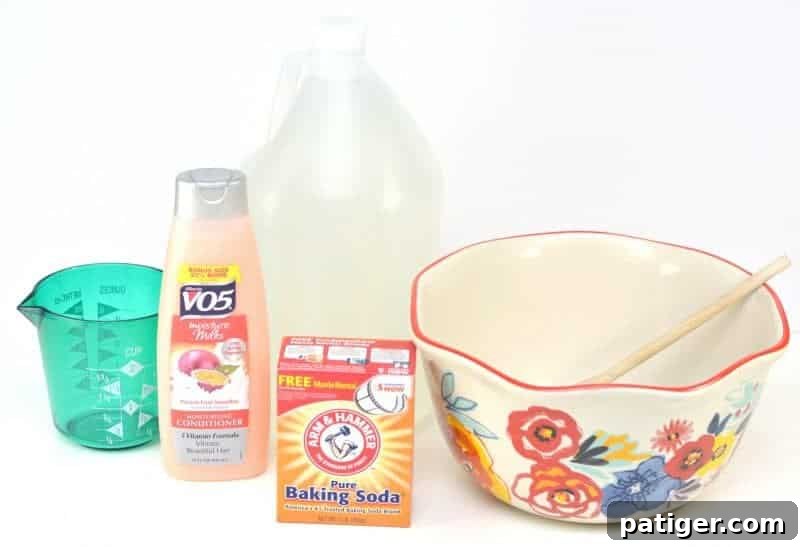
Gathering your ingredients is the first step towards softer, fresher laundry. Here’s what you’ll need, along with a brief explanation of each component’s role:
- 6 cups hot water: The heat is crucial here. It helps the conditioner to fully disperse and blend smoothly into the mixture, preventing clumps and ensuring an even consistency.
- 3 cups distilled white vinegar: Don’t worry, your clothes won’t smell like vinegar! This hero ingredient helps break down detergent residue, neutralizes odors, and acts as a natural fabric softener by smoothing out fibers. It also helps to brighten whites and colors.
- 2 cups hair conditioner: This is where the magic happens for softness and scent. Conditioner contains cationic surfactants that coat fabric fibers, making them feel smoother and reducing static cling. Choose an inexpensive one in your preferred scent.
- ½ cup baking soda: A powerful natural deodorizer and pH balancer, baking soda helps boost the cleaning power of your laundry and further softens water, contributing to the overall effectiveness of your homemade softener.
How to Make Homemade Fabric Softener: Step-by-Step Guide
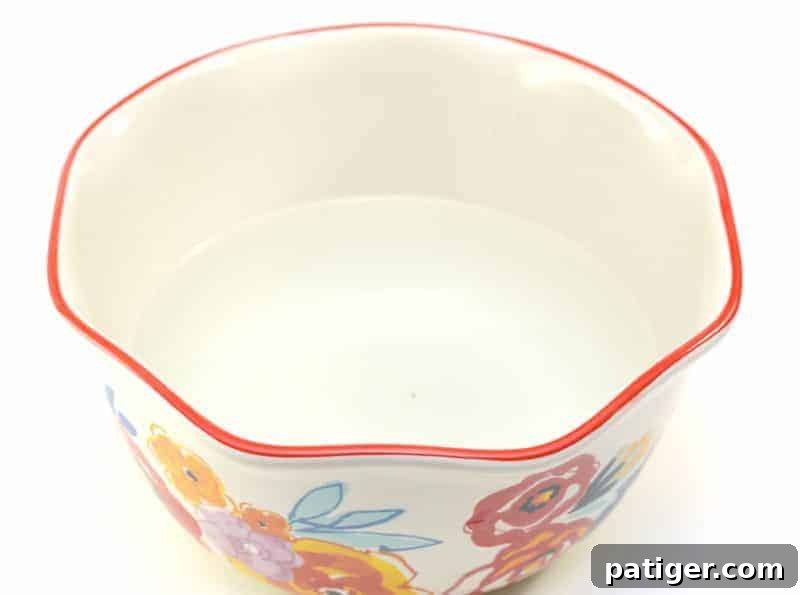
Making your own fabric softener is a straightforward process that takes very little time. Follow these simple steps, and you’ll have a generous batch ready to go!
1. Prepare Your Bowl: Start by pouring the 6 cups of hot water into a large mixing bowl. Ensure your bowl is big enough to accommodate all ingredients and allow for some frothing when the baking soda is added.
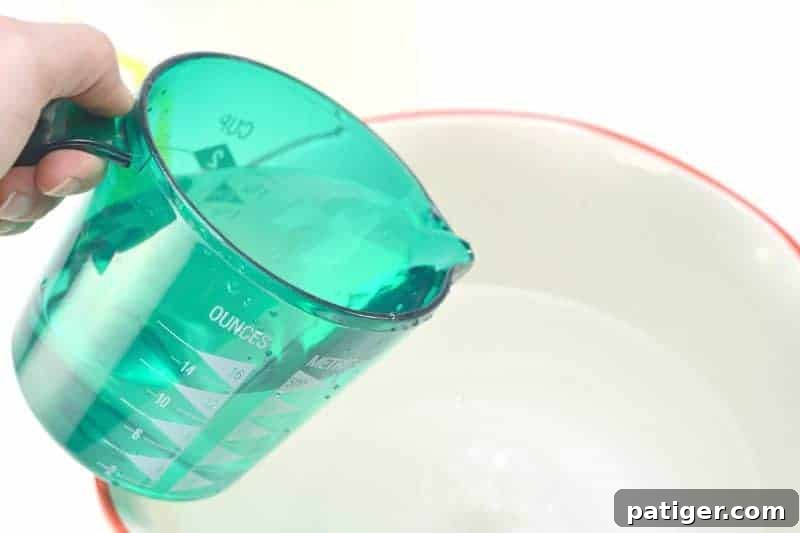
2. Add Vinegar: Carefully pour the 3 cups of distilled white vinegar into the hot water. The water doesn’t need to be boiling, just hot enough to help dissolve the conditioner easily later on.
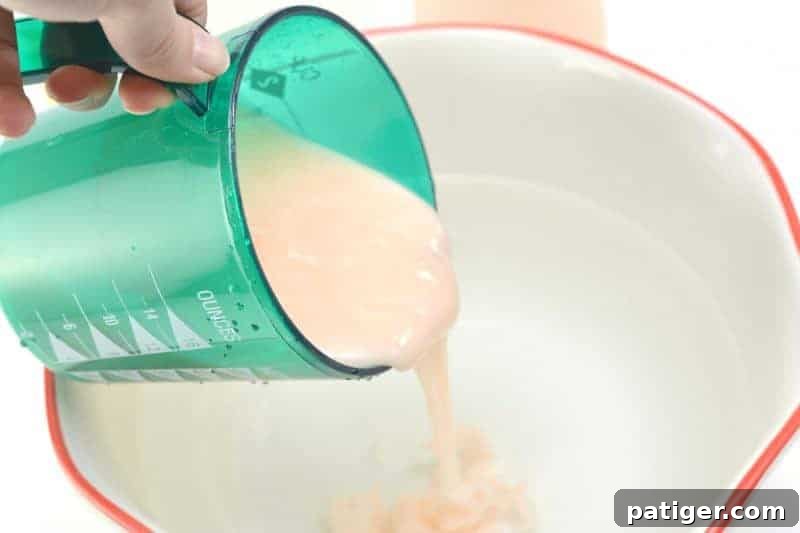
3. Incorporate Conditioner: Now, add the 2 cups of hair conditioner to the water and vinegar mixture. Stir thoroughly and vigorously until the conditioner is completely dissolved and smoothly combined with the liquids. This may take a few minutes, especially if your conditioner is thick. You want a uniform, lump-free consistency.
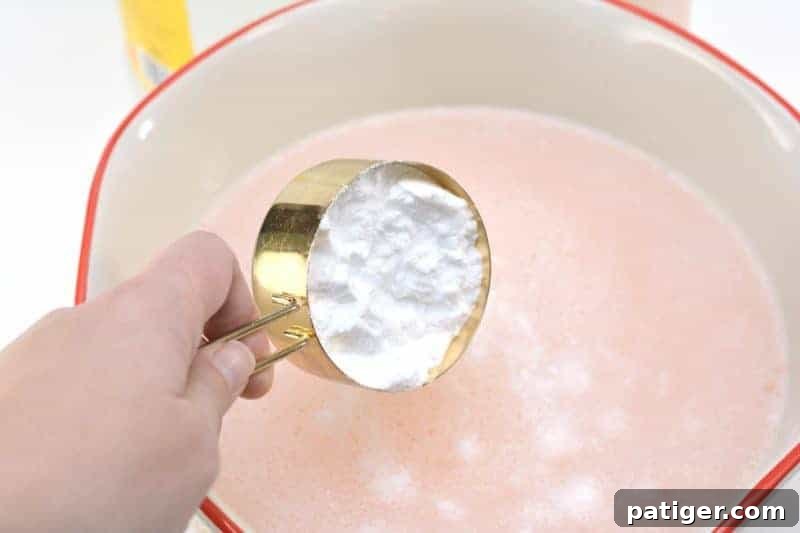
4. Slowly Add Baking Soda: This step requires a bit of patience! Slowly add the ½ cup of baking soda, a small amount at a time, into the mixture. The baking soda will react with the vinegar, causing a bubbling or fizzing action. Adding it slowly helps you control this reaction and prevents the mixture from overflowing your bowl. Continue stirring gently as you add each portion until all the baking soda has been incorporated and the fizzing subsides.
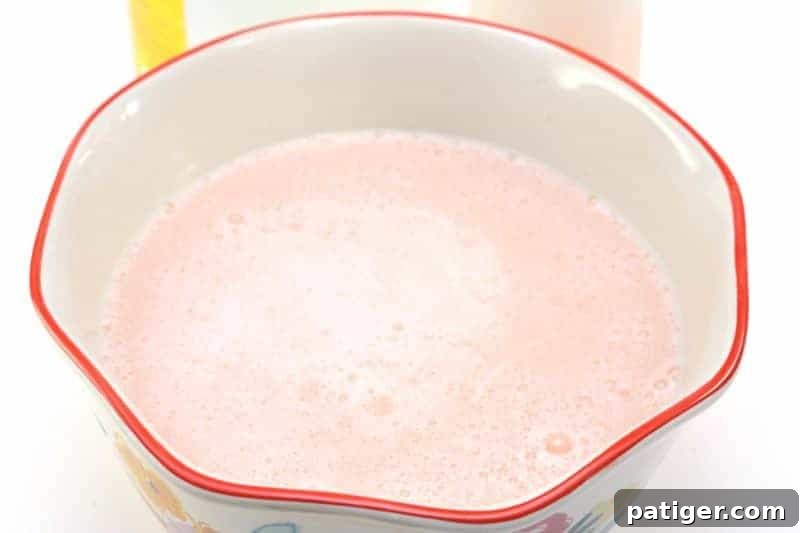
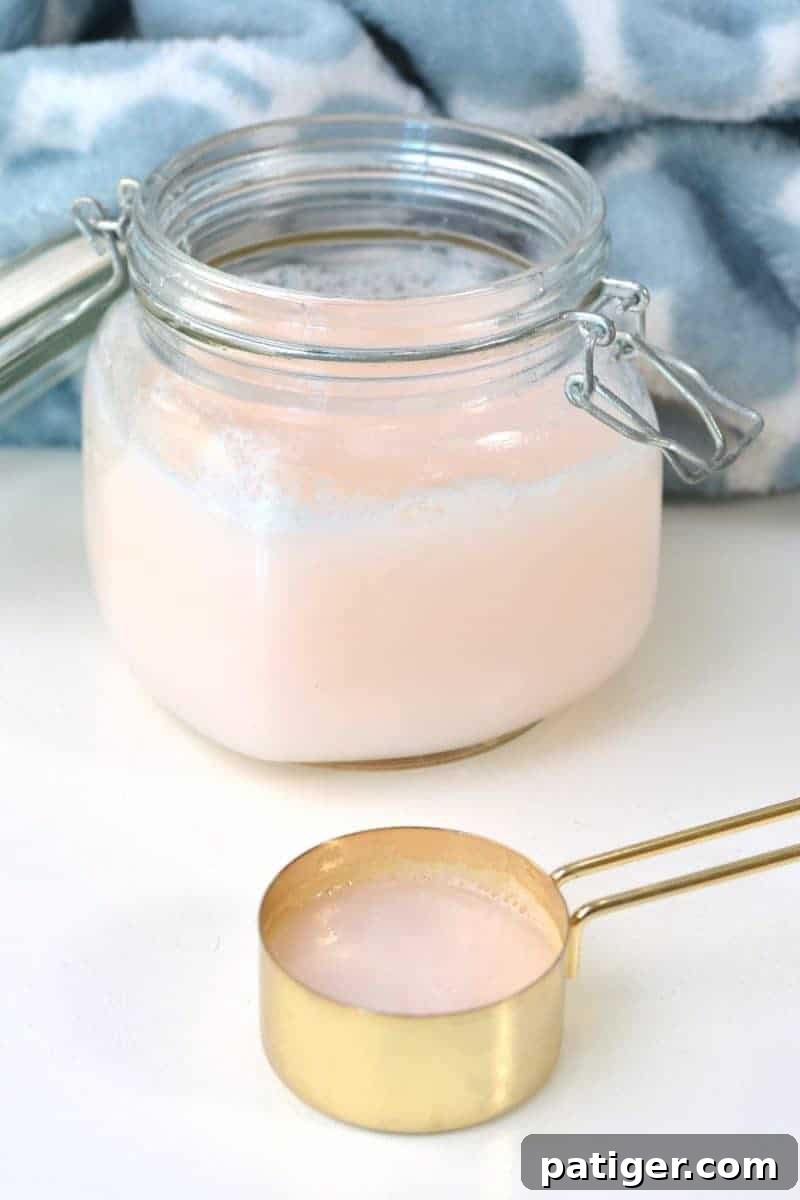
5. Rest and Store: Allow your freshly made fabric softener to rest for about 30 minutes. This gives any remaining bubbles a chance to settle and ensures a smoother consistency. Once the mixture has calmed, carefully pour it into an airtight container for storage. I personally love using Bormioli Rocco glass jars for their durability and aesthetic appeal, but any clean, sealable container will work perfectly.
Using Your Homemade Fabric Softener & Important Tips
Once your DIY fabric softener is ready, incorporating it into your laundry routine is effortless. For a standard load of laundry, add approximately 3 tablespoons or slightly under ¼ cup of the homemade softener. A ¼ cup scoop can be incredibly helpful for accurate and mess-free measuring.
Where to Add: Pour the softener directly into your washing machine’s fabric softener dispenser, typically located in the detergent drawer. If your machine doesn’t have a specific dispenser, you can add it to the rinse cycle manually. Simply wait until the machine reaches the rinse cycle (or the last rinse before spinning) and pour it directly into the water.
Note on Separation: Due to the natural ingredients, it’s possible for the mixture to separate slightly over time. This is completely normal and no cause for concern. If you notice any separation, simply give the container a good shake before each use to re-mix the ingredients. This ensures every load gets the full benefit of your homemade softener.
FAQs About DIY Fabric Softener
Q: Is homemade fabric softener safe for all types of fabric?
A: Generally, yes. This recipe is gentle enough for most fabrics, including cotton, blends, and synthetics. However, it’s often recommended to avoid fabric softener on certain specialized materials like athletic wear (which can lose its wicking properties), waterproof fabrics, or flame-resistant children’s sleepwear, as it can reduce their effectiveness. Always check garment care labels if you’re unsure.
Q: Will my clothes smell like vinegar?
A: Absolutely not! The vinegar scent completely dissipates during the rinse cycle and drying process. Its role is to help break down residues and soften, not to leave an odor. You’ll only smell the subtle fragrance from your chosen conditioner or essential oils.
Q: Can I use apple cider vinegar instead of white vinegar?
A: While apple cider vinegar has similar properties, it’s not recommended for this recipe. White distilled vinegar is preferred because it’s colorless and won’t risk staining lighter fabrics. Apple cider vinegar could potentially leave a faint tint on light-colored clothes.
Q: How long does homemade fabric softener last?
A: Stored in an airtight container in a cool, dark place, your homemade fabric softener can last for several months, typically up to 3-6 months. If you notice any unusual odor or significant separation that doesn’t resolve with shaking, it might be time to make a fresh batch.
Q: Can I adjust the scent strength?
A: Yes! The scent strength is largely determined by your choice of conditioner and the addition of essential oils. For a stronger scent, pick a conditioner with a more robust fragrance or add 5-10 drops of your favorite essential oil per batch. For a milder scent, use a lightly fragranced conditioner or reduce the amount of essential oil. You can even use unscented conditioner for a truly fragrance-free option.
Q: My fabric softener seems too thick/thin. What can I do?
A: The consistency can vary slightly depending on the thickness of your conditioner. If it feels too thick, you can thin it out by adding a small amount of warm water (¼ cup at a time) and stirring well until you reach your desired consistency. If it’s too thin, it will still work effectively, but for a thicker texture, you might try reducing the initial amount of hot water in your next batch.
This simple DIY fabric softener is a game-changer for anyone looking to simplify their laundry routine, save money, and enjoy naturally softer, fresher clothes. It’s incredibly rewarding to create your own household products, and this recipe is an excellent place to start. Give it a try, and you might just find laundry day a little less dreadful and a lot more delightful!
If you decide to make a batch of DIY Fabric Softener with Conditioner yourself, I would love to hear what scent of conditioner you decided to use — and how you liked it — in the comments below. Your experiences help inspire others!
More Laundry Tips You Might Enjoy
- DIY Wool Dryer Balls
- Laundry routine tips and laundry schedule printable
Pin for Later