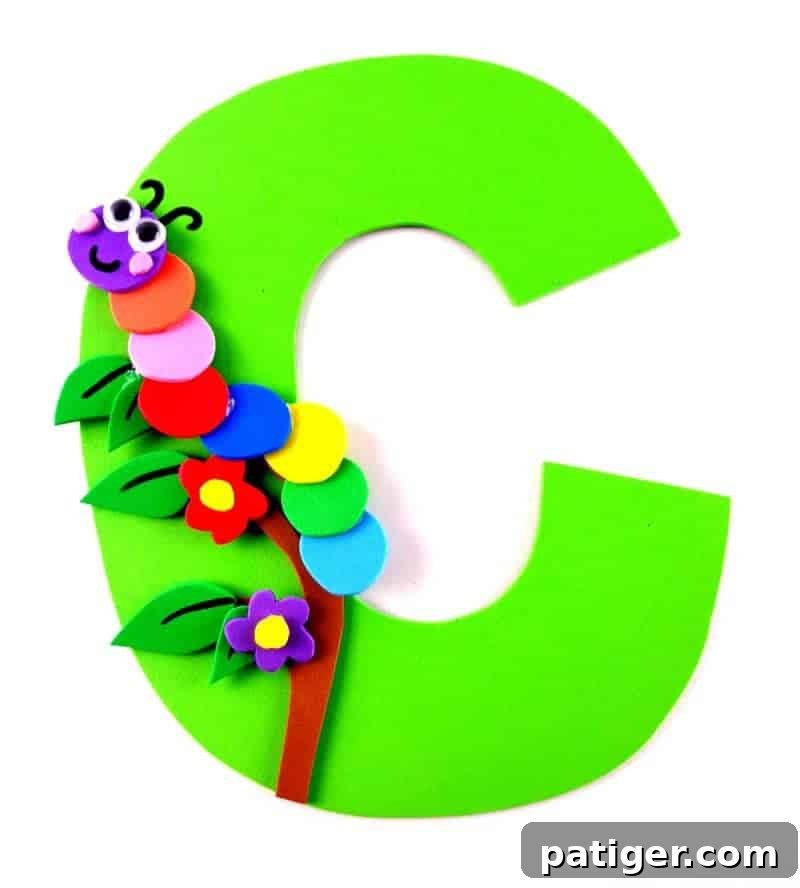
Engaging Letter C Craft: Create a Delightful Caterpillar with Our Printable Template
Welcome to another exciting installment of our popular Letter of the Week craft series! Designed with preschoolers in mind, these hands-on activities are a fantastic way to introduce and reinforce letter recognition, making early literacy both fun and memorable. This week, we’re diving into the letter ‘C’ with an adorable and educational caterpillar craft that your little ones will love. Through cutting, tracing, and gluing, children will not only connect with the letter ‘C’ but also develop crucial fine motor skills and unleash their creativity.
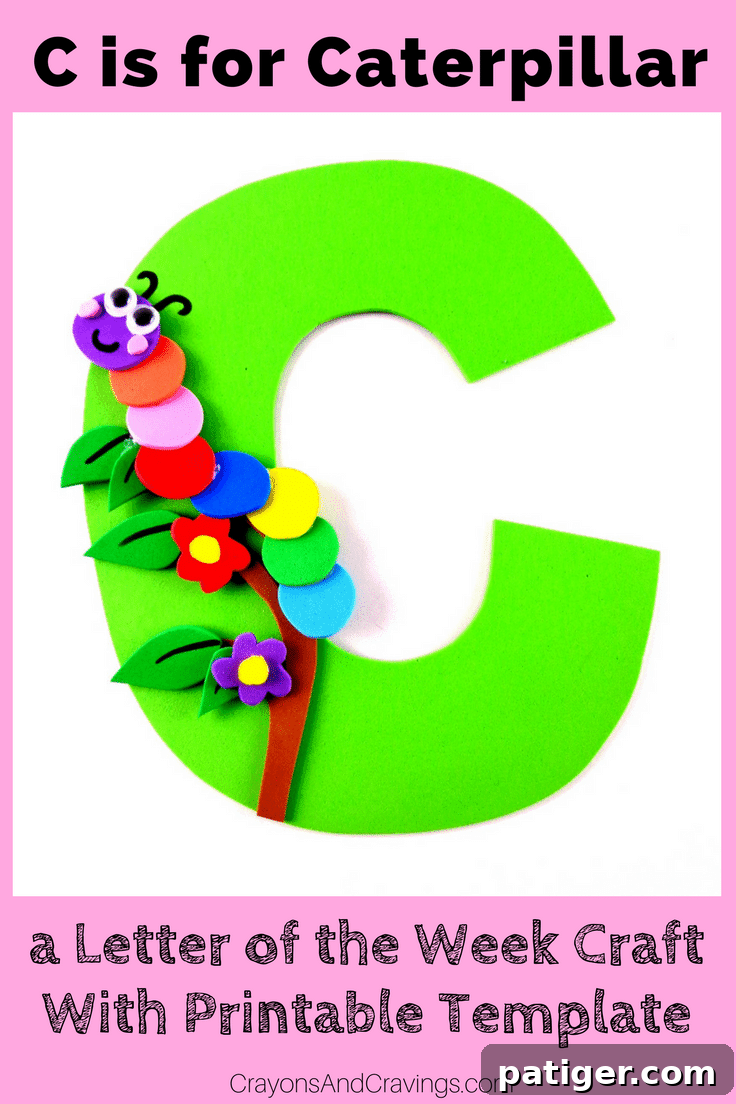
Building on the success of our Letter B is for Bus craft, we’re thrilled to present a new adventure into the alphabet. The letter ‘C’ brings us to the charming world of caterpillars – a perfect subject that starts with our focus letter and offers plenty of creative possibilities. This craft is more than just a pretty picture; it’s a stepping stone in your child’s educational journey, combining sensory exploration with foundational learning. Get ready to transform simple materials into a vibrant, friendly caterpillar resting on a letter ‘C’ branch!
Explore Our Complete Letter of the Week Craft Series Here!
The Power of Play: Why Hands-On Crafts Are Essential for Early Literacy
In early childhood education, engagement is key. While flashcards and worksheets have their place, hands-on activities like crafts offer a multi-sensory approach to learning that deeply embeds concepts. When children manipulate materials, trace shapes, and glue pieces, they are not just having fun; they are actively engaging their brains in a way that promotes stronger memory retention and deeper understanding. A letter C craft, for instance, allows them to physically interact with the letter shape and connect it to a concrete object – a caterpillar – making the abstract concept of an alphabet letter tangible and exciting. This interactive method significantly boosts letter recognition, phonological awareness, and early reading readiness.
“C is for Caterpillar”: A Perfect Match for Letter Learning
Choosing a caterpillar for the letter ‘C’ craft is no coincidence. The soft ‘C’ sound is wonderfully represented by this beloved garden creature, creating an instant phonetic link for young learners. Caterpillars are also visually captivating, with their segmented bodies and potential for vibrant colors, which makes them ideal for a creative project. Furthermore, the concept of a caterpillar’s transformation into a butterfly offers a gentle introduction to natural cycles and can spark curiosity about the world around them, all while reinforcing the initial sound and shape of the letter ‘C’. This engaging theme makes learning feel like an adventure.
Developmental Benefits Beyond Letter Recognition
This simple letter C craft offers a wealth of developmental benefits that extend far beyond just learning the alphabet. It’s a holistic activity that nurtures various aspects of your child’s growth:
- Enhances Fine Motor Skills: The precise actions of cutting out shapes, carefully tracing templates, applying glue, and placing small googly eyes are excellent exercises for developing dexterity and hand-eye coordination. These skills are fundamental for future tasks like writing, buttoning clothes, and using utensils.
- Boosts Cognitive Development: Following step-by-step instructions encourages sequencing skills and logical thinking. Children learn to anticipate the next step, solve minor challenges (like where to place a piece), and understand cause and effect. This process also supports concentration and attention span.
- Fosters Creativity and Self-Expression: While we provide a template, children can choose their own colors for the caterpillar’s body, leaves, and flowers, allowing them to personalize their creation. This freedom to choose encourages imaginative thinking and allows them to express their unique artistic flair, building confidence in their abilities.
- Expands Vocabulary and Language Skills: Discussing the craft naturally introduces new words like “caterpillar,” “antennae,” “segments,” “branch,” “leaves,” and various colors. Encouraging children to describe their actions and choices during the crafting process also promotes language development and verbal articulation.
- Develops Color and Shape Recognition: Identifying and selecting different colored craft foam pieces and recognizing the circular shape of the caterpillar’s body segments reinforces basic concepts. This visual discrimination is a key pre-reading skill.
Preparing for Your Crafting Adventure: Age-Appropriate Guidance
This craft is versatile and can be adapted for various age groups, from toddlers with adult assistance to independent kindergarteners. The level of involvement for adults largely depends on the child’s current fine motor skill development and their experience with crafting tools, particularly scissors. For younger preschoolers (around 2-3 years old), adults might want to pre-cut most of the pieces. This allows the child to focus on the joyful act of gluing and assembling, which is still incredibly beneficial for fine motor development and following simple instructions. Providing the pre-cut foam pieces minimizes frustration and maximizes their sense of accomplishment.
Older preschoolers (4-5 years old) and kindergarteners, however, will greatly benefit from attempting the tracing and cutting themselves. This provides invaluable practice for developing hand strength, scissor skills, and precision. You can guide them by holding their hand as they trace or cut, providing encouragement, and demonstrating proper technique. While they might still need some help transferring the templates onto the foam or cardstock accurately, the act of trying fosters independence and strengthens their fine motor control. Always supervise closely when scissors are involved and choose child-safe scissors for optimal safety. Remember, the goal is participation and learning, not perfection!
Essential Supplies for Your Letter C Caterpillar Craft
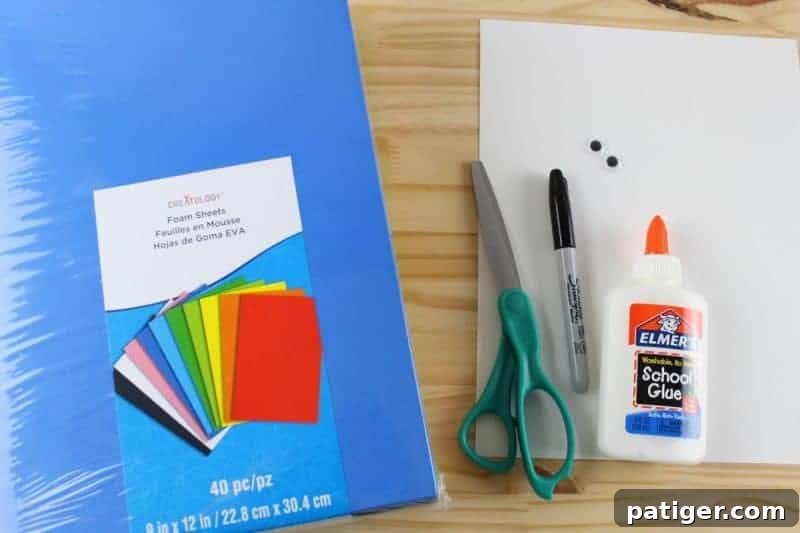
Gathering your materials beforehand ensures a smooth and enjoyable crafting experience. Here’s a detailed look at what you’ll need for this engaging letter C craft:
- Letter C Template (Printable): This is your foundational piece. Printing it on sturdy paper or cardstock makes it easier to trace and provides a durable base for the craft. You can get yours here: Letter C Printable Template.
- Caterpillar Template (Printable): This template includes the head, body segments, tree branch, and leaves. Printing on thicker paper will make these templates reusable for multiple crafting sessions. Download it here: Caterpillar Printable Template.
- Craft Foam or Colored Cardstock: We opted for vibrant craft foam for its tactile texture and easy manipulation, which is great for little hands. However, colored cardstock is an excellent alternative that’s readily available and works just as well. Feel free to choose what you have on hand or what your child prefers! You can find craft foam here: Craft foam or colored cardstock.
- Child-Safe Scissors: Essential for cutting out the shapes. Ensure they are appropriate for your child’s age and comfort level. You can find suitable scissors here: Scissors.
- Glue: A good quality craft glue or glue stick that dries clear will work perfectly. Liquid glue might offer a stronger bond, but glue sticks are less messy for younger children.
- Black Marker: Used for adding details like the caterpillar’s mouth, leaf veins, and antennae. A fine-tip marker will give the best results. Get one here: Black marker.
- Googly Eyes: These add so much character and a playful touch to your caterpillar! They are widely available at craft stores. Find them here: Googly eyes.
Step-by-Step Guide: Crafting Your Letter C Caterpillar
Let’s get started on bringing your Letter C Caterpillar to life! Follow these simple instructions for a fun and engaging crafting session:
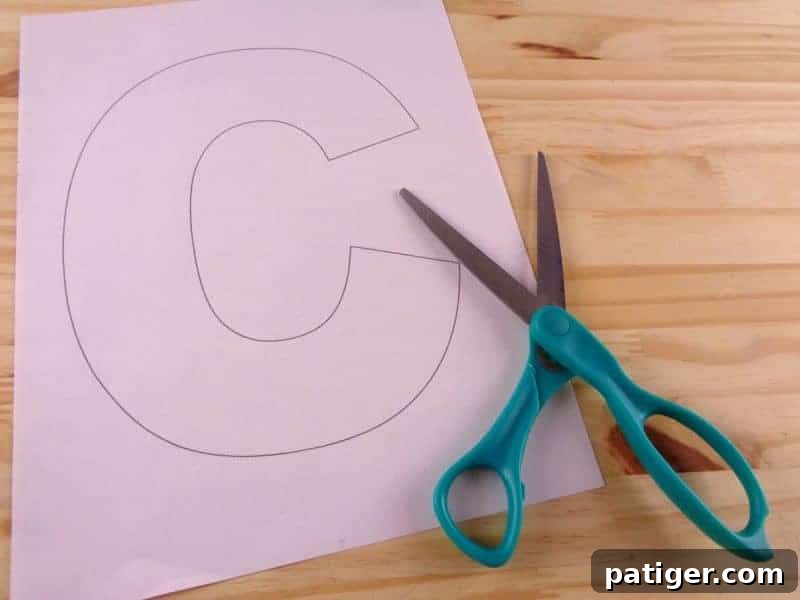
1. Prepare the Letter C Template: Begin by carefully cutting out the large letter ‘C’ shape from its printable template. This will serve as the base for your craft. Encourage your child to practice their scissor skills if they are old enough, always with supervision.
2. Trace the Letter C: Place the cut-out paper ‘C’ template onto your chosen craft foam or colored cardstock. Using a pencil or a marker, carefully trace around the edges of the letter ‘C’. This step helps children understand the shape and outline of the letter.
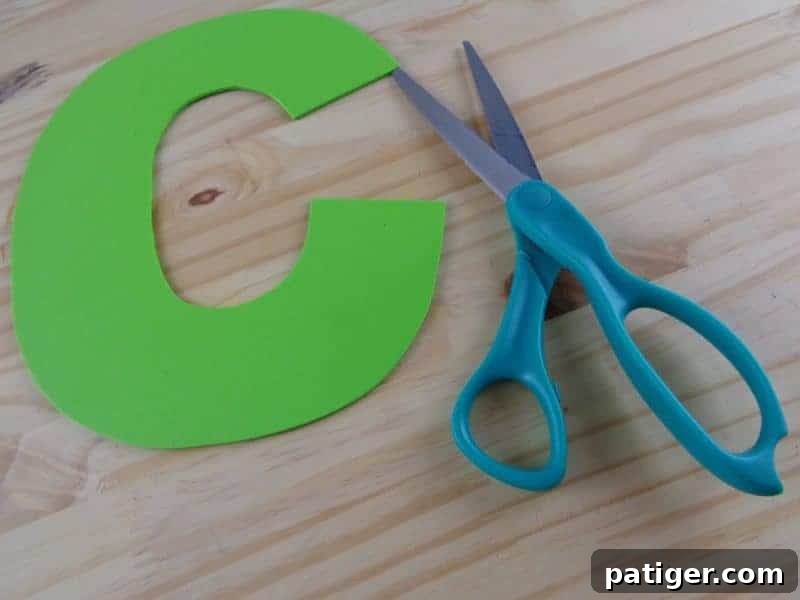
3. Cut Out the Foam Letter C: With precision, cut out the letter ‘C’ from the craft foam or cardstock along the traced lines. This will be the sturdy background for your caterpillar scene. Young children may need assistance with this step.
4. Prepare Caterpillar Template Pieces: Now, take your caterpillar template. Cut out all the individual pieces from the paper template: the caterpillar’s head, the seven body circles, the tree branch, and the leaves.
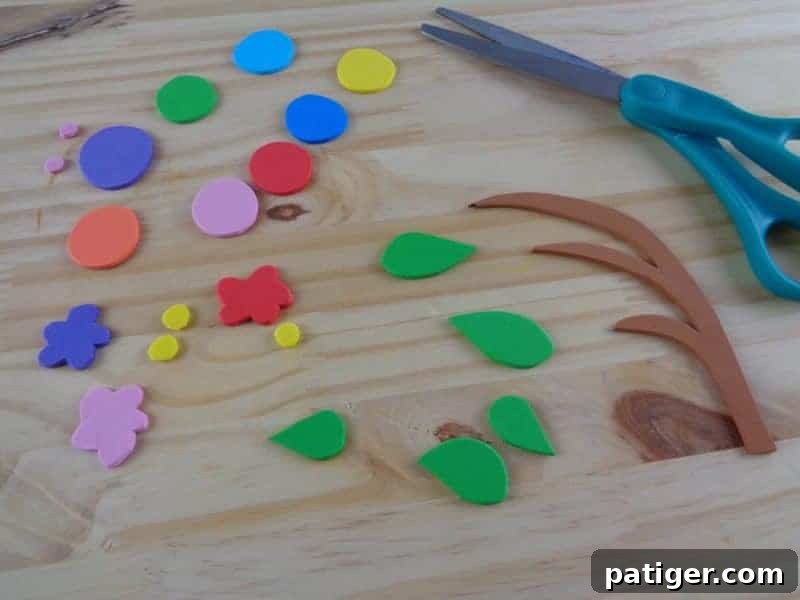
5. Trace and Cut Caterpillar Components: Using your paper templates, trace the caterpillar head and seven circles onto various colors of craft foam. Encourage your child to pick their favorite colors for a vibrant caterpillar body! Trace the tree branch onto brown craft foam and the leaves onto green craft foam. Carefully cut out all these traced foam pieces. This step is fantastic for practicing color recognition and sequencing.
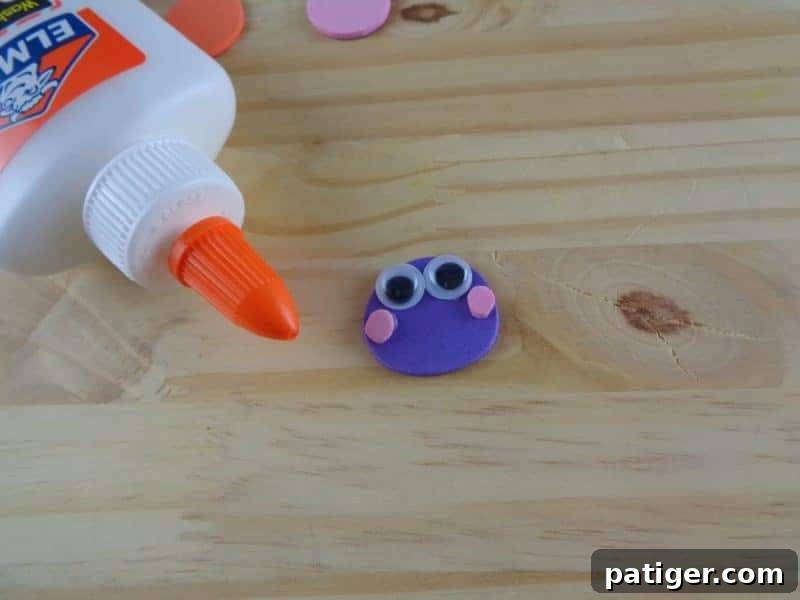
6. Create the Caterpillar’s Face: Take the head piece of your caterpillar. Cut two smaller circles from pink craft foam (or any color your child likes for cheeks!) and glue them onto the caterpillar’s face. Next, carefully glue on the googly eyes. This step brings the caterpillar to life and is often a favorite for kids!
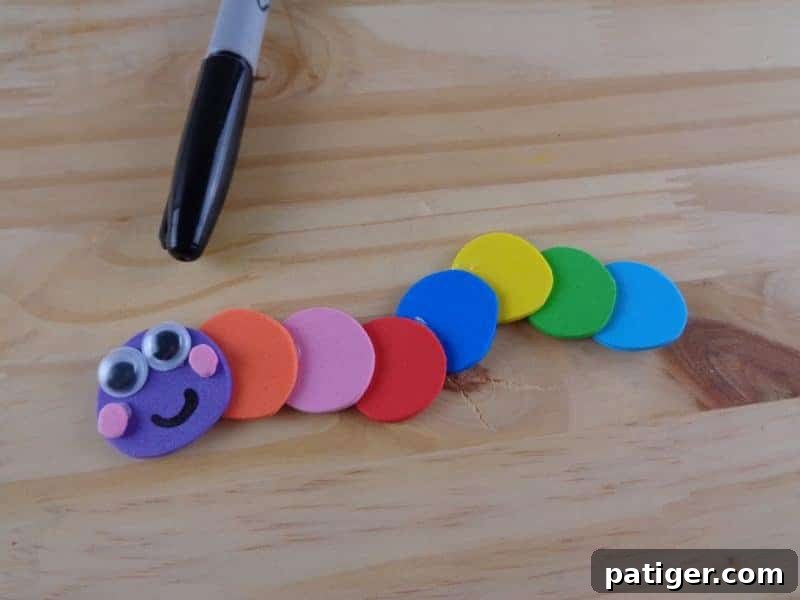
7. Assemble the Caterpillar’s Body: Take the seven colored foam circles. Apply a small amount of glue to the edge of one circle and attach it to the next, overlapping slightly. Continue this process, gluing all seven circles together in a row to form the caterpillar’s segmented body. This is a great opportunity to practice counting and pattern recognition.
8. Attach the Head to the Body: Once the body segments are securely glued, attach the completed caterpillar head to one end of the segmented body. Make sure it’s firmly attached to prevent it from falling off.
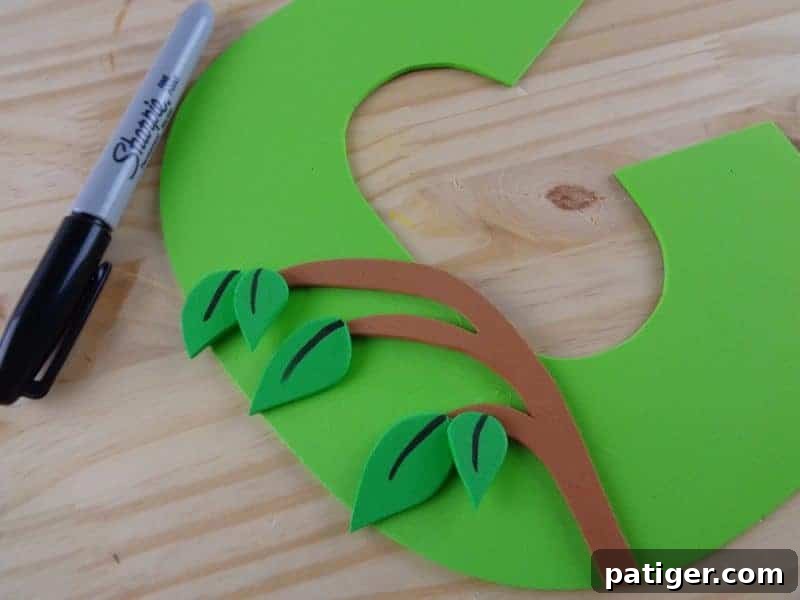
9. Position the Branch and Leaves: Take your cut-out brown craft foam tree branch and glue it onto the large letter ‘C’. Arrange it so it looks like a natural branch extending from the letter. Then, glue the green leaves onto the tree branch, creating a leafy home for your caterpillar.
10. Add Details to the Leaves: Using your black marker, add some simple vein details to the green leaves. This adds realism and a touch of artistic flair to your craft. Encourage your child to draw their own patterns if they wish.
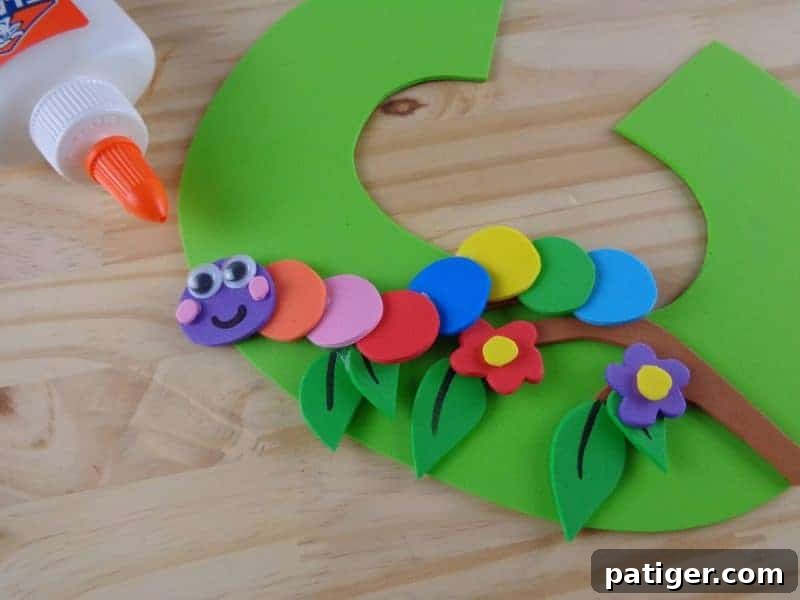
11. Decorate with Flowers: Cut out small flower shapes from various colors of craft foam. These can be simple circles with a few petals. Glue these colorful flowers onto the tree branch and around the letter ‘C’ to make the scene more vibrant and inviting for the caterpillar.
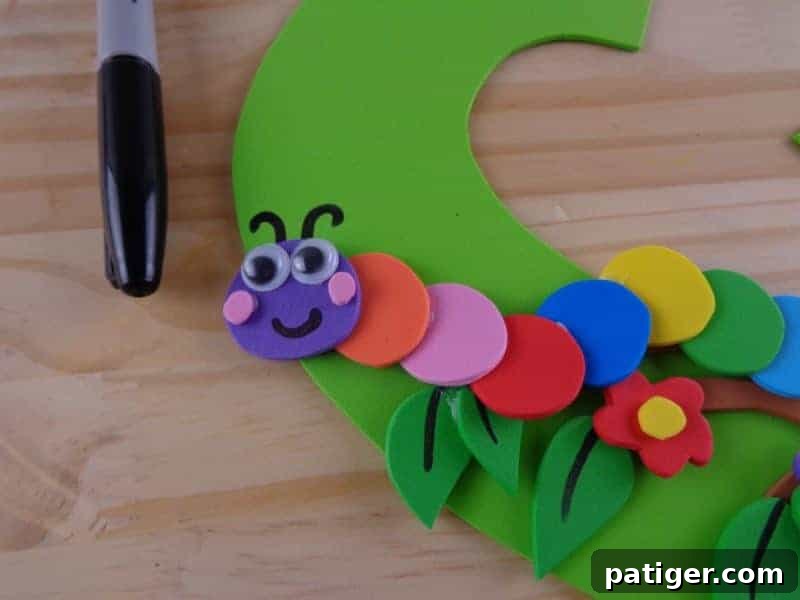
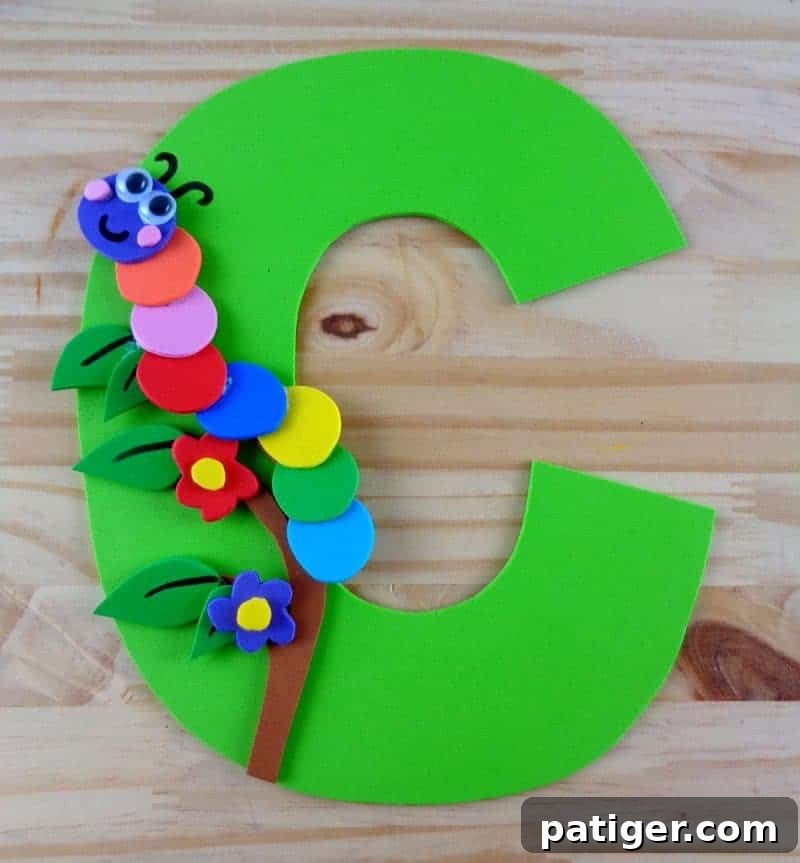
12. Final Assembly and Details: Finally, glue your completed caterpillar onto the tree branch, positioning it as if it’s crawling along the letter ‘C’. Once the caterpillar is in place, use your black marker to draw two small antennae onto the letter ‘C’ just behind the caterpillar’s head, completing its charming look. Step back and admire your beautiful Letter C Caterpillar!
Tips for a Smooth and Enjoyable Crafting Session
To ensure your crafting session is as fun and frustration-free as possible, consider these helpful tips:
- Prepare Your Workspace: Lay down newspaper or a washable mat to protect your surfaces from glue or stray foam pieces. Having everything organized beforehand makes the process smoother.
- Pre-Cut for Younger Children: If working with toddlers or very young preschoolers, pre-cutting some or all of the intricate pieces can prevent frustration and allow them to focus on the gluing and assembly, which is still incredibly beneficial.
- Encourage Choices: Let your child choose the colors for their caterpillar’s body segments or the flowers. This gives them a sense of ownership and boosts their creative confidence.
- Patience is Key: Crafting with young children often takes time. Be patient, offer gentle guidance, and celebrate every small step they complete.
- Turn it into a Story: As you craft, talk about caterpillars. “What does a caterpillar eat?” “Where does it live?” This adds another layer of learning and imaginative play.
- Manage Messes: Keep a damp cloth nearby for quick clean-ups, especially when working with glue.
Extending the Learning Fun: More “C” Adventures
Once your beautiful Letter C Caterpillar craft is complete, the learning doesn’t have to stop there! Here are some ideas to further explore the letter ‘C’ and related concepts:
- Read “C” Books: Look for children’s books featuring caterpillars (like “The Very Hungry Caterpillar” by Eric Carle!), cats, cars, or cookies. Point out the letter ‘C’ whenever you see it.
- Sing Alphabet Songs: Incorporate “The Alphabet Song” or other letter-specific songs that highlight the ‘C’ sound and shape.
- “C” Word Hunt: Go on a scavenger hunt around your house or classroom to find other objects that start with the letter ‘C’ (e.g., cup, chair, crayon, car).
- Practice Writing ‘C’: Use crayons, chalk, or even finger paint to practice writing both uppercase and lowercase ‘C’s.
- Discuss Nature: Talk about the life cycle of a caterpillar and its transformation into a butterfly, connecting the craft to real-world science concepts.
We hope you thoroughly enjoyed this fun and educational Letter C craft. It’s truly rewarding to see children light up as they learn and create. Stay tuned for next week’s exciting craft as we move on to the Letter D craft!
Until next time, happy crafting and happy learning!