
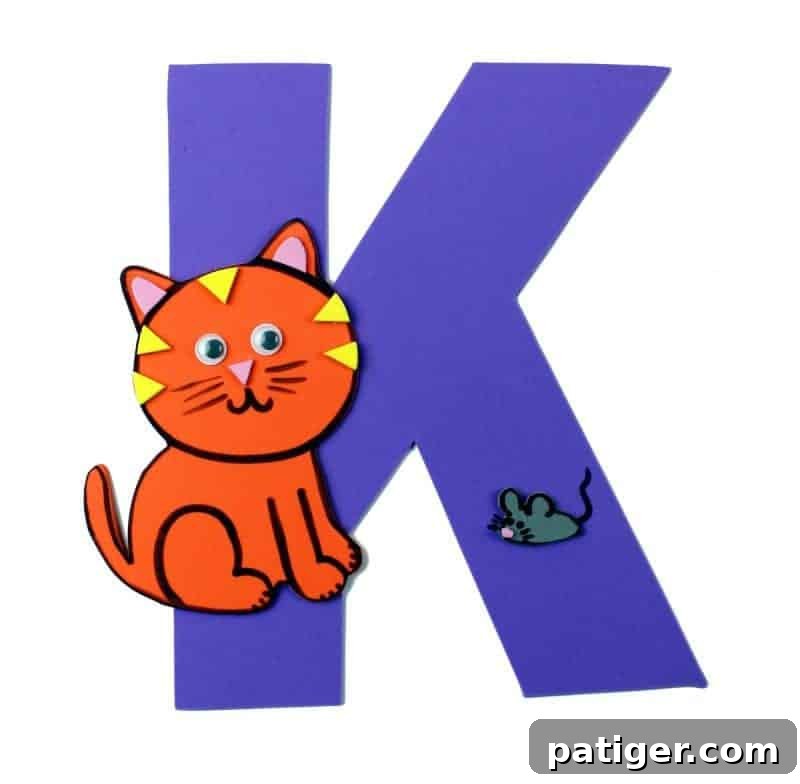
Welcome back to another exciting installment of our popular “Letter of the Week” craft series! Crafted specifically for young learners, these hands-on activities are designed to transform early literacy into an engaging and memorable experience for toddlers and preschoolers alike. This week, we’re ready to pounce into the delightful world of the letter K with an absolutely charming **Letter K is for Kitten craft** – a project that promises both educational value and heaps of fun for your little ones.
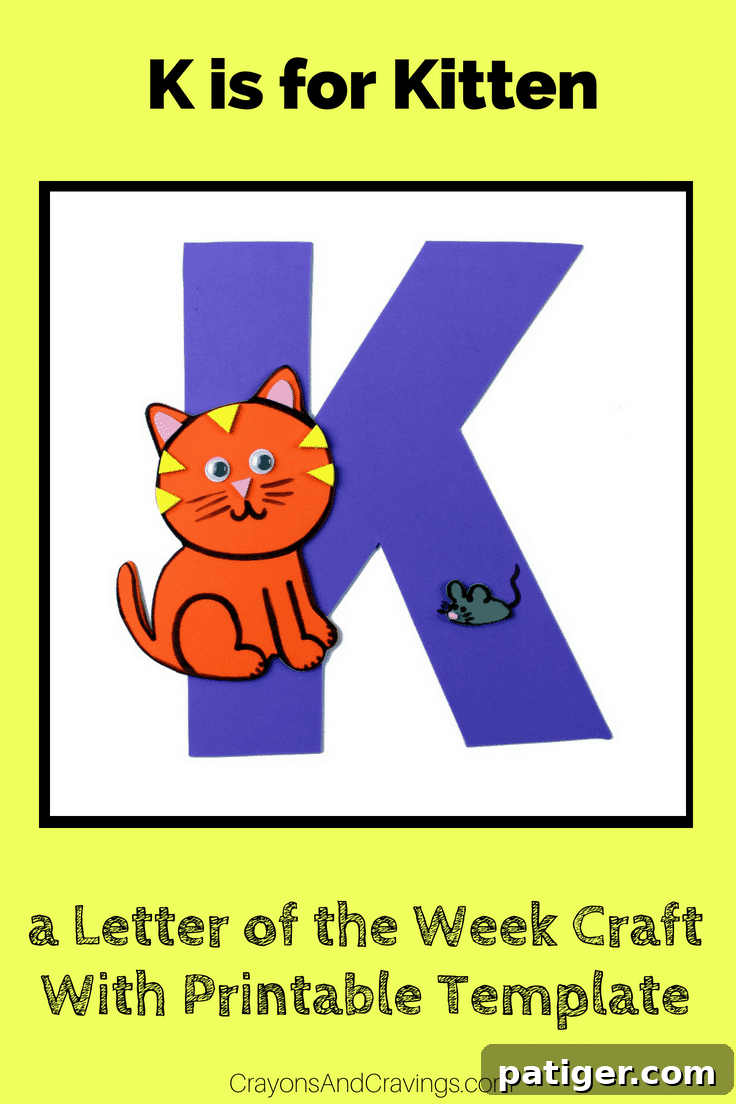
Continuing our alphabetical journey, following exciting projects like our Letter J is for Jelly Beans craft, we now focus on the distinct angles and unique sound of the letter K. The letter K, often recognized by its sharp lines, offers a fantastic opportunity to introduce children to new vocabulary and sounds. And what better way to explore the ‘K’ sound than through the captivating charm of a cuddly kitten? This activity isn’t just a craft; it’s a playful learning adventure designed to enhance letter recognition and develop crucial fine motor skills in an enjoyable way.
The Educational Benefits of Letter Crafts for Preschoolers
Incorporating hands-on crafts into a child’s learning journey offers far more than just entertainment; it’s a dynamic approach to fostering holistic development. Our “Letter of the Week” series, including this adorable Letter K craft, provides a multi-sensory learning experience that helps to solidify foundational skills essential for future academic success. Here’s a closer look at why integrating alphabet crafts into your routine is profoundly beneficial:
- Enhanced Letter Recognition: By actively constructing a visual representation of a letter, children create a strong cognitive link between the letter’s shape, its name, and its sound. This tactile and visual engagement makes it significantly easier for them to identify the letter ‘K’ in various printed materials.
- Boosted Phonics Awareness: Pairing the letter ‘K’ with a familiar and appealing word like ‘Kitten’ immediately connects the letter to its initial sound (/k/). This direct association is a cornerstone of phonics, laying vital groundwork for reading readiness.
- Developed Fine Motor Skills: The intricate actions involved in tracing, cutting, and gluing are excellent exercises for strengthening the small muscles in a child’s hands and fingers. These fine motor developments are critical for handwriting, drawing, and performing everyday self-care tasks.
- Improved Hand-Eye Coordination: Activities that require precise placement, such as aligning shapes, applying glue accurately, and cutting along predefined lines, significantly refine a child’s hand-eye coordination. This skill is vital for many learning activities and sports.
- Cultivated Creativity and Imagination: While guided by a template, these crafts always leave room for personal touches. Children are encouraged to personalize their kitten, perhaps by choosing unique colors or adding extra embellishments, thereby nurturing their imaginative thinking and artistic expression.
- Reinforced Following Instructions: Working through the step-by-step process of a craft helps children learn to listen attentively, comprehend instructions, and execute them in a logical, sequential manner – a fundamental skill for classroom learning.
- Strengthened Parent-Child Bonding: Engaging in a craft together creates a wonderful opportunity for quality interaction, meaningful conversation, and shared accomplishment. These moments not only foster a love for learning but also strengthen the emotional connection between parent and child.
This specific Kitten craft for the letter K is thoughtfully designed to address all these developmental areas, ensuring a rich, engaging, and comprehensive learning experience. It’s an ideal activity for parents, caregivers, and educators seeking creative and effective ways to support early childhood education, whether in a home or classroom setting.
Adapting the Letter K Craft for Every Child’s Skill Level
A significant advantage of simple alphabet crafts is their inherent flexibility. The core activity remains consistent, but the level of adult support can be easily adjusted to match your child’s specific age and developmental stage. This craft, involving tracing and cutting, offers excellent opportunities for skill-building but may require varying degrees of supervision and hands-on assistance.
For Young Toddlers (Ages 2-3): For our youngest crafters, the primary focus should be on the sensory experience and the joy of assembly. We recommend that adults pre-trace and pre-cut the foam or cardstock pieces. This way, the child can concentrate on the exciting part: applying glue, positioning the pieces, adding googly eyes, and seeing their adorable kitten take shape. This approach minimizes frustration and maximizes their enjoyment of the creative process and the rewarding final outcome, directly fostering letter recognition.
For Preschoolers (Ages 3-4): Many preschoolers are eager to develop their independence and practice new skills. You can provide support by tracing the templates onto the craft foam or colored cardstock for them. Then, encourage them to carefully cut out the pieces independently. Offer gentle supervision and guidance on proper scissor grip and cutting techniques. This step is incredibly valuable for developing essential scissor skills, enhancing hand strength, and boosting self-confidence.
For Kindergarteners (Ages 5+): Older children, typically in pre-k or kindergarten, are often ready for greater autonomy. Encourage them to take charge by tracing the templates themselves and then meticulously cutting out the shapes. You can also challenge them to add more intricate decorative details with markers, such as drawing unique patterns, stripes, or spots on their kitten. This advanced engagement not only builds confidence but further refines their fine motor control and creative problem-solving abilities, making the letter K craft truly their own.
Always prioritize safety, especially when using sharp objects. Ensure that children are using age-appropriate, child-safe scissors and are supervised throughout any cutting activities. The ultimate goal is to make learning an enjoyable and empowering experience, thoughtfully adapting the activity to meet each child at their individual developmental level.
Gathering Your Essential Supplies for the Letter K Kitten Craft
Preparing all your materials beforehand is key to ensuring a smooth, stress-free, and enjoyable crafting session. We’ve compiled a list of readily available items that will help you create this charming Letter K kitten. Remember, flexibility is part of the creative process, so feel free to substitute materials if you have suitable alternatives on hand!
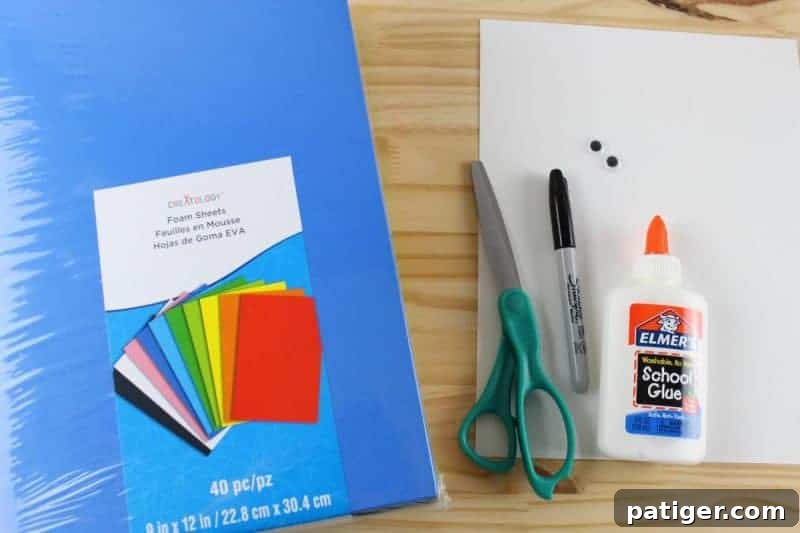
- Letter K Template: Printed on standard paper or sturdy cardstock. This forms the foundational ‘K’ shape for your craft. Get your essential printable here: Printable Letter K Template
- Kitten Template: Also printed on paper or cardstock. This template provides all the individual components for your kitten, including the main body, ears, tail, and a cute little mouse accessory. Download your template here: Printable Kitten Template
- Craft Foam or Colored Cardstock: We specifically chose craft foam for its vibrant hues and durable texture, which adds a lovely dimension to the finished piece. However, high-quality colored cardstock works equally well. Encourage your child to select colors that evoke a kitten (e.g., grey, black, white, orange, brown) or let them unleash their creativity with their favorite shades!
- Scissors: For younger crafters, we highly recommend using child-safe scissors. A sharp and reliable pair of scissors is indispensable for achieving clean and precise cuts.
- Glue: Any craft glue suitable for adhering paper or foam will suffice. A glue stick is fantastic for minimizing mess, but liquid craft glue often provides a stronger, more lasting bond, especially for attaching googly eyes and foam pieces.
- Black Marker: A fine or medium-tip black marker will be used to add charming details, such as whiskers, paw lines, and the distinct features of the little mouse, bringing your characters to life.
- Googly Eyes: These delightful embellishments instantly add a playful and expressive touch to your kitten! Small or medium-sized googly eyes are the perfect size to give your kitten a captivating gaze.
Having all these supplies neatly organized and within reach before you commence will significantly contribute to a seamless, more enjoyable, and ultimately successful crafting experience for both you and your child, as you embark on creating your Letter K masterpiece.
Step-by-Step Instructions: Crafting Your Adorable Letter K Kitten
Follow these easy-to-understand instructions to bring your charming Letter K kitten to life. Remember to tailor the level of assistance to your child’s age and current abilities, ensuring a truly collaborative, educational, and rewarding experience for everyone involved.
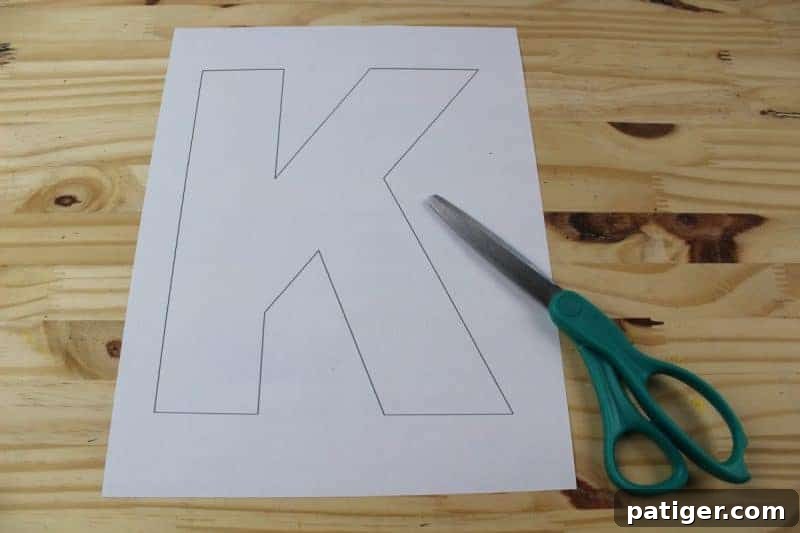
Step 1: Prepare the Letter K Template. Start by carefully cutting out the large letter K shape from its printed template. This initial cut creates a more manageable guide, making the subsequent tracing steps much easier and more precise for little hands.
Step 2: Trace the Letter K onto Your Chosen Material. Place the cut-out paper or cardstock letter K template onto your selected craft foam or colored cardstock. Using a pencil (for cardstock) or a marker (for foam), meticulously trace around the entire perimeter of the letter. Encourage your child to press firmly but gently, ensuring a clear, distinct outline that is easy to follow in the next cutting step. Choose a color for your large K that will provide a vibrant background and contrast beautifully with your kitten pieces.
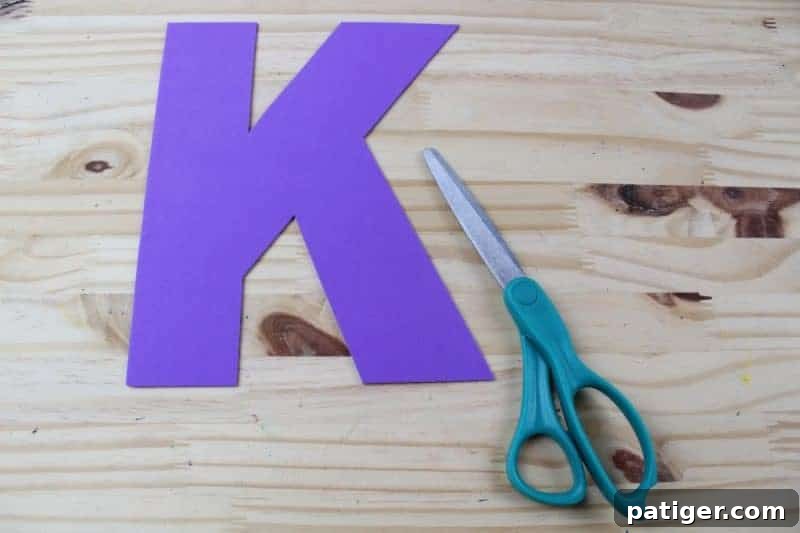
Step 3: Cut Out the Craft Foam Letter K. Now, using your child-safe scissors, carefully cut along the traced lines to create your craft foam (or cardstock) letter K. This step is an excellent opportunity for preschoolers to practice and refine their crucial scissor skills. Encourage them to take their time, focusing on accuracy and control as they follow the lines, which builds confidence and fine motor precision.
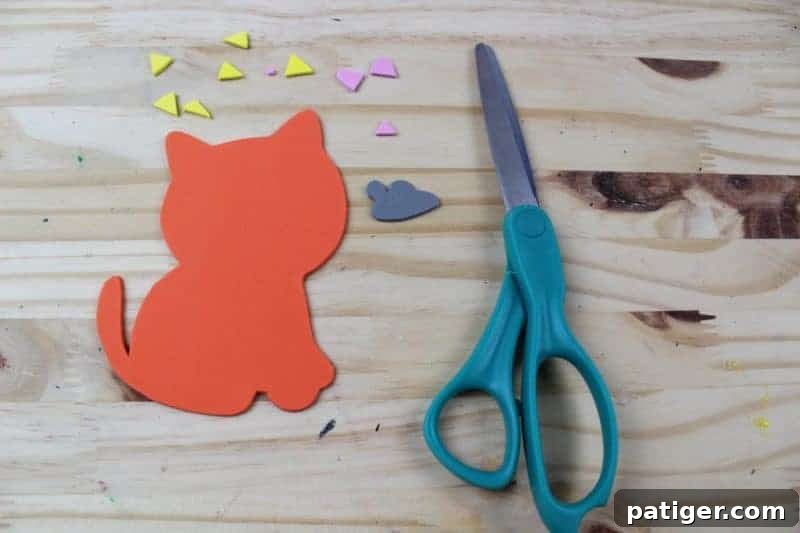
Step 4: Prepare the Kitten and Mouse Shapes. Retrieve your kitten template and meticulously cut out all the individual pieces it contains – this includes the main kitten body, distinct ear shapes, the tail, and the adorable tiny mouse. Once these paper templates are cut, trace each shape onto different colored craft foam or cardstock. For instance, you might opt for soft grey for the kitten’s main body, a delicate pink for the inner ears, and a contrasting color for the little mouse. After tracing, carefully cut out all these smaller pieces. This stage often involves more intricate cutting, so adult assistance and close supervision can be particularly beneficial here.
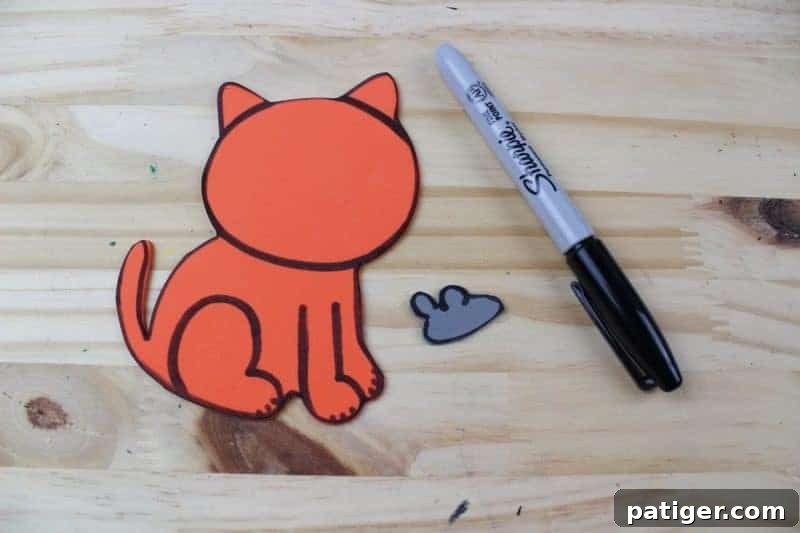
Step 5: Add Definition with a Black Marker. Before proceeding with assembly, use your black marker to carefully outline the edges of the kitten’s body, its ears, and the tail pieces. This simple yet effective step helps the shapes to truly pop, adding a polished and professional finish to your craft. You can also begin adding preliminary details, such as subtle paw lines or gentle fur textures. Don’t forget to outline the tiny mouse as well to make it stand out!
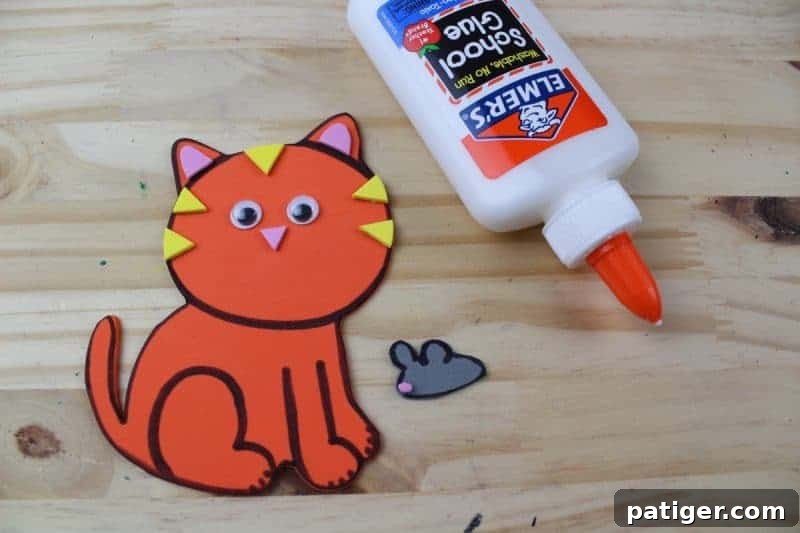
Step 6: Assemble the Kitten’s Body. Now comes the exciting part – bringing your adorable kitten to life! Begin by carefully gluing the smaller inner ear pieces onto the larger main ear shapes. Then, attach these completed ears to the kitten’s head. Next, securely fasten the tail piece to the back of the kitten’s body, ensuring it’s positioned appealingly. Refer to the accompanying photos for clear visual guidance on precise placement. Ensure that the glue is applied evenly and adequately for a strong, lasting hold. Liquid craft glue is often ideal for foam, while glue sticks work wonderfully for cardstock.
Step 7: Personalize with Googly Eyes and Mouse Nose. This step truly infuses your kitten with personality and charm! Carefully glue the googly eyes onto the kitten’s face. Empower your child to decide where they believe the eyes should go, fostering a sense of ownership over their unique creation. For the tiny mouse, dab a small dot of glue and attach a mini googly eye, or simply draw a cheerful dot for its nose using your black marker. If googly eyes aren’t available, don’t worry – drawing the eyes with a marker works perfectly well and allows for creative expression.
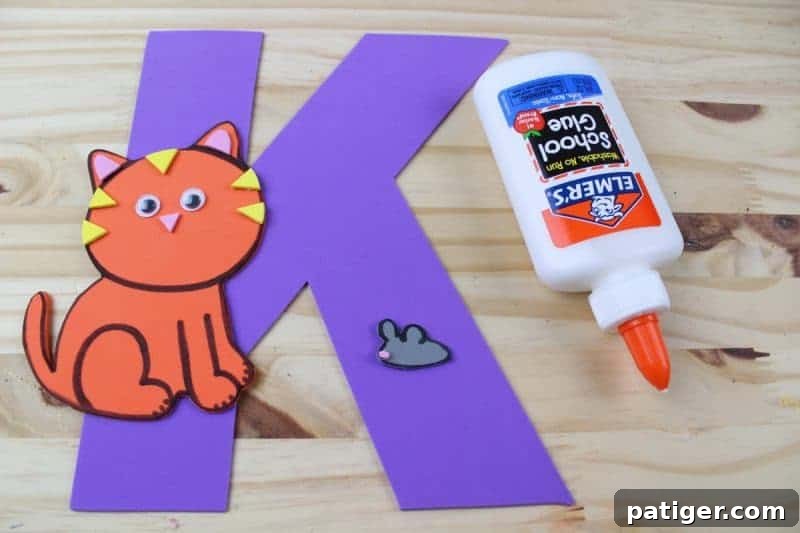
Step 8: Position and Glue the Kitten and Mouse onto the Letter K. With your charming kitten fully assembled and its gaze captivating, it’s time to carefully position it onto the large craft foam letter K. Arrange the kitten in a way that suggests playful interaction with the letter – perhaps nestled against its side or perched on one of its arms. Once you’re happy with the placement, firmly glue the kitten onto the letter K. Next, find the perfect spot for the tiny mouse – maybe at the kitten’s paws, or peeking mischievously from behind the letter. Securely glue the mouse into place, completing this adorable and educational scene.
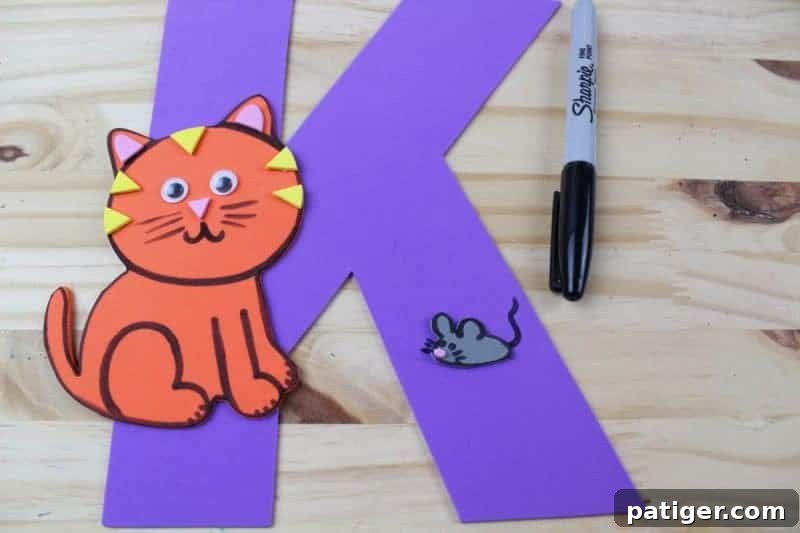
Step 9: Final Touches and Embellishments. This is the perfect opportunity for your child to add their unique flair and artistic signature to the craft! Using the black marker, gently draw delicate whiskers on the kitten, a small triangular nose, and a sweet, curved mouth. You can also add little paw pads, subtle stripes, or any other imaginative details your child envisions for their kitten. For the mouse, draw tiny rounded ears, a simple dot for a nose, and a little smile. These thoughtful final touches truly bring the characters to life, making the craft uniquely personal and encouraging boundless creative expression.
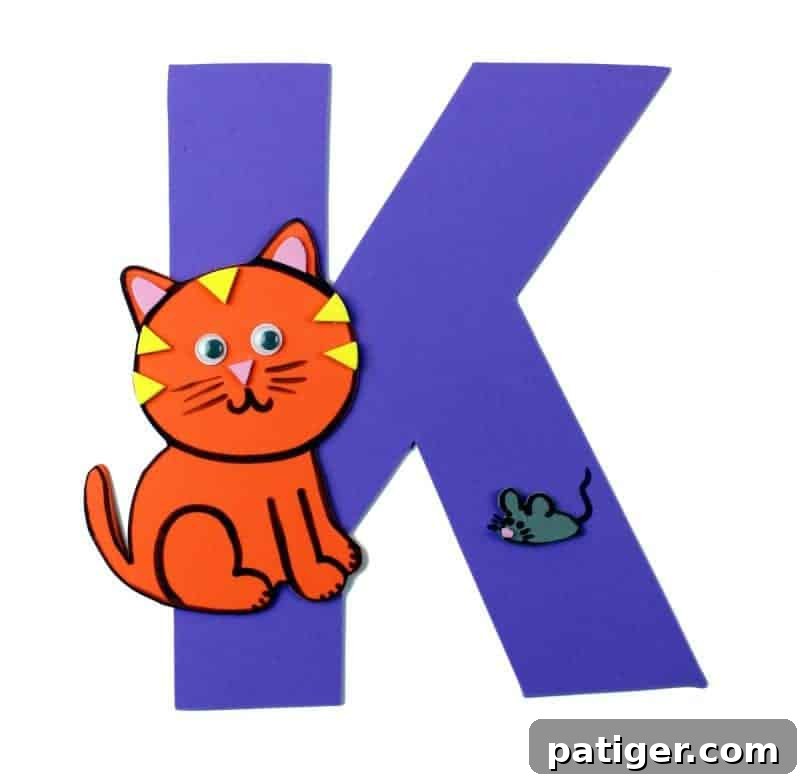
And there you have it! A wonderful, educational, and utterly charming **Letter K is for Kitten craft** masterpiece, proudly created by your little one. Don’t forget to display their completed work of art in a prominent place where everyone can admire their creativity and hard work!
Extending the Learning: Beyond the Craft Table
The learning opportunities don’t have to end once the glue has dried and the craft is complete! Here are a few engaging ideas to extend the educational value and reinforce the concepts learned through your Letter K craft:
- Discuss ‘K’ Words: While crafting or admiring the finished kitten, engage in a conversation about other words that begin with the letter K. Think of words like “kite,” “kangaroo,” “key,” “king,” “kettle,” and “kiwi.” This expands vocabulary and word association.
- Practice the ‘K’ Sound: Emphasize and repeatedly articulate the /k/ sound, as heard at the beginning of “kitten” and other ‘K’ words. Make a game of identifying items that start with that sound around the house or classroom.
- Read ‘K’ Books: Seek out and read picture books that feature kittens, kangaroos, or other K-themed stories. Connecting the craft to literature further deepens understanding and sparks imagination.
- Write the Letter K: Encourage your child to practice writing both uppercase and lowercase K on a separate piece of paper, a whiteboard, or even in sand or shaving cream for a sensory experience.
- Sing Alphabet Songs: Integrate the letter K into existing alphabet songs or create a new verse highlighting ‘K’ and ‘Kitten’. Music is a powerful tool for memory and recall.
We sincerely hope that you and your little ones thoroughly enjoy embarking on this delightful and educational **Letter K craft project**. It truly is a fantastic way to blend artistic expression with critical early literacy development. We cherish these moments of shared creativity, discovery, and joyful learning.
Be sure to keep an eye out for our next exciting adventure in the “Letter of the Week” series – the captivating Letter L craft, where we’ll be exploring the letter L with a beautiful and intricate leaf creation!
Explore our entire Letter of the Week craft series here for a treasure trove of educational and creative fun that will guide your child through the entire alphabet.
Until our next crafting adventure, happy crafting and happy learning!