
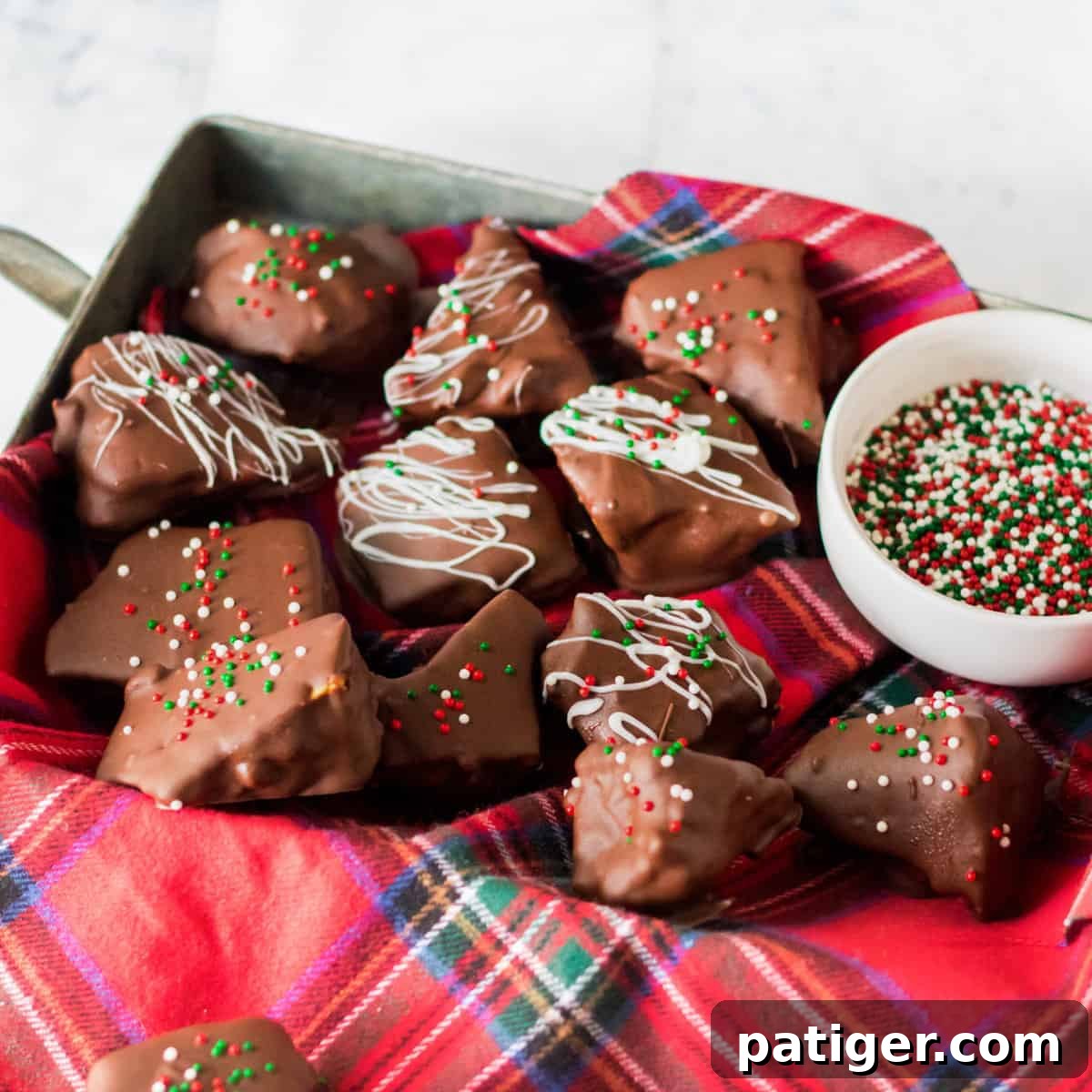
Delight in the irresistible charm of **Chocolate Covered Honeycomb Candy**, a truly magical confection that transforms simple ingredients into an extraordinary treat. This festive and fun candy gets its signature light, airy, and crispy texture from a surprising secret ingredient: baking soda! When perfectly prepared, each golden piece of honeycomb is then generously coated in rich chocolate, making it an exquisite homemade gift or a perfect indulgence for any occasion, especially during the holidays.
Imagine turning everyday staples like sugar, corn syrup, honey, baking soda, and luscious chocolate into a dessert so addictive, it might just outshine your most cherished recipes. If you’ve ever sought that ultimate crave-worthy homemade candy, your search ends here. In the United States, it evokes the satisfying crunch of a honey-infused Butterfinger; across the Atlantic, it rivals the beloved Cadbury Crunchie bar from England; and for those in Australia, it brings to mind the delightful Violet Crumble. Now, you can recreate this global sensation in your own kitchen, saving yourself the expense and wait of international shipping.
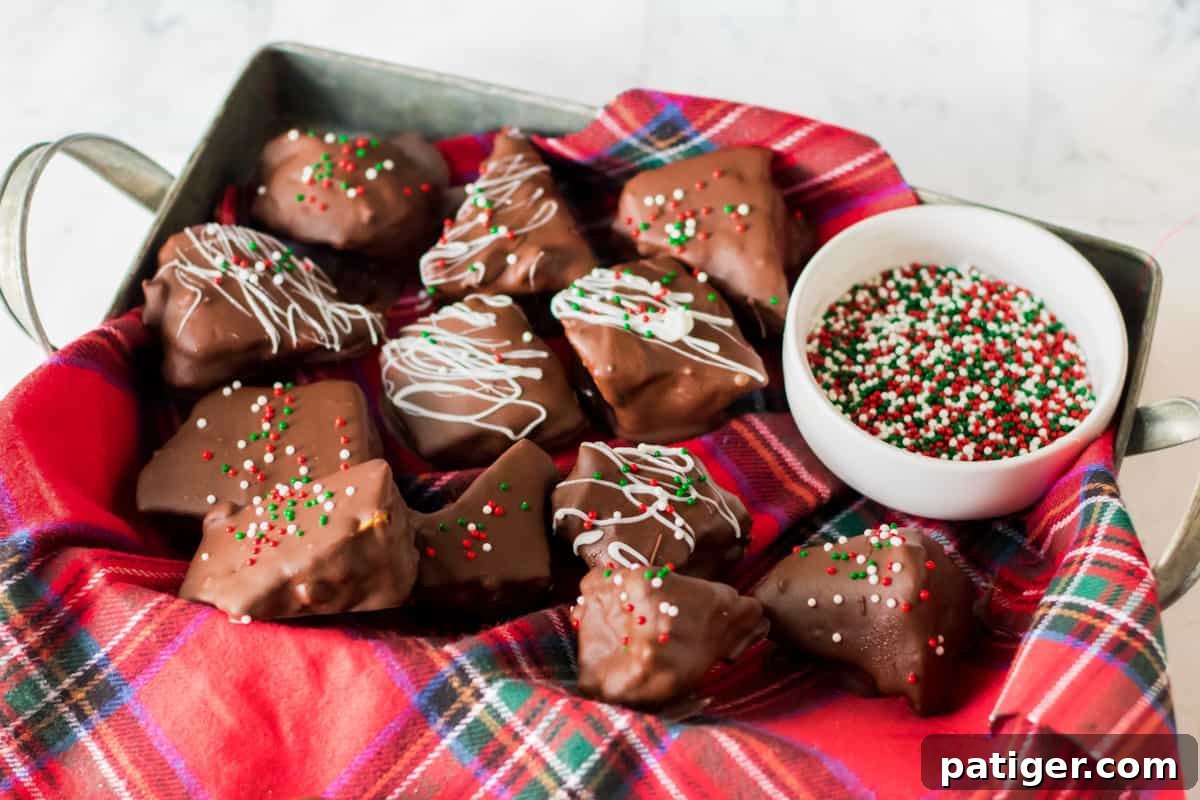
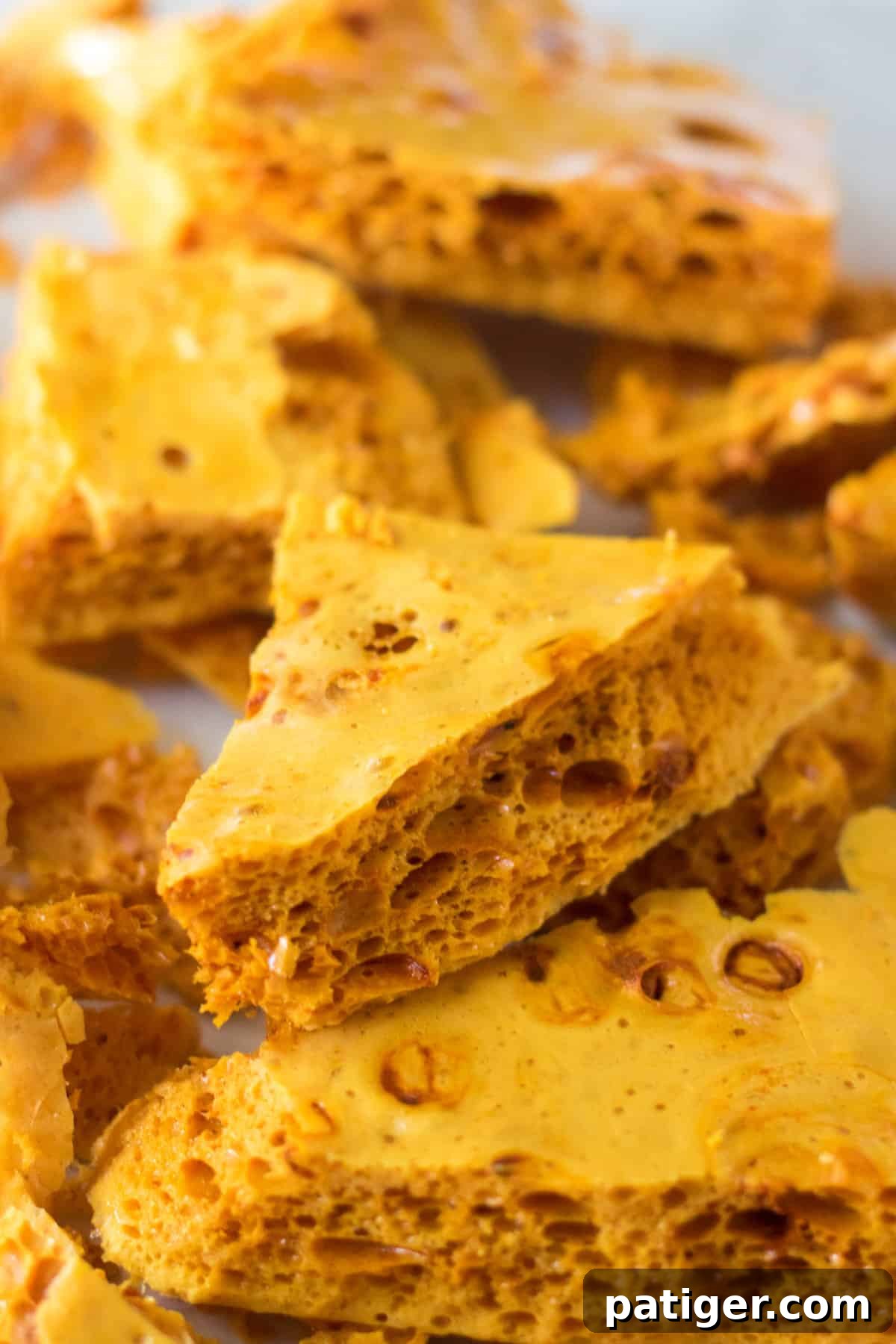
The allure of this candy lies in its captivating texture: wonderfully crispy and crunchy, yet never overly hard or chewy. The magic truly happens when baking soda interacts with the hot sugar mixture. This chemical reaction releases a burst of gas bubbles, which become perfectly trapped as the candy cools and sets. The result is a flaky, brittle, toffee-like creation, brimming with delicate air pockets, which is then enveloped in a smooth, decadent chocolate coating, creating a harmonious blend of flavors and textures.
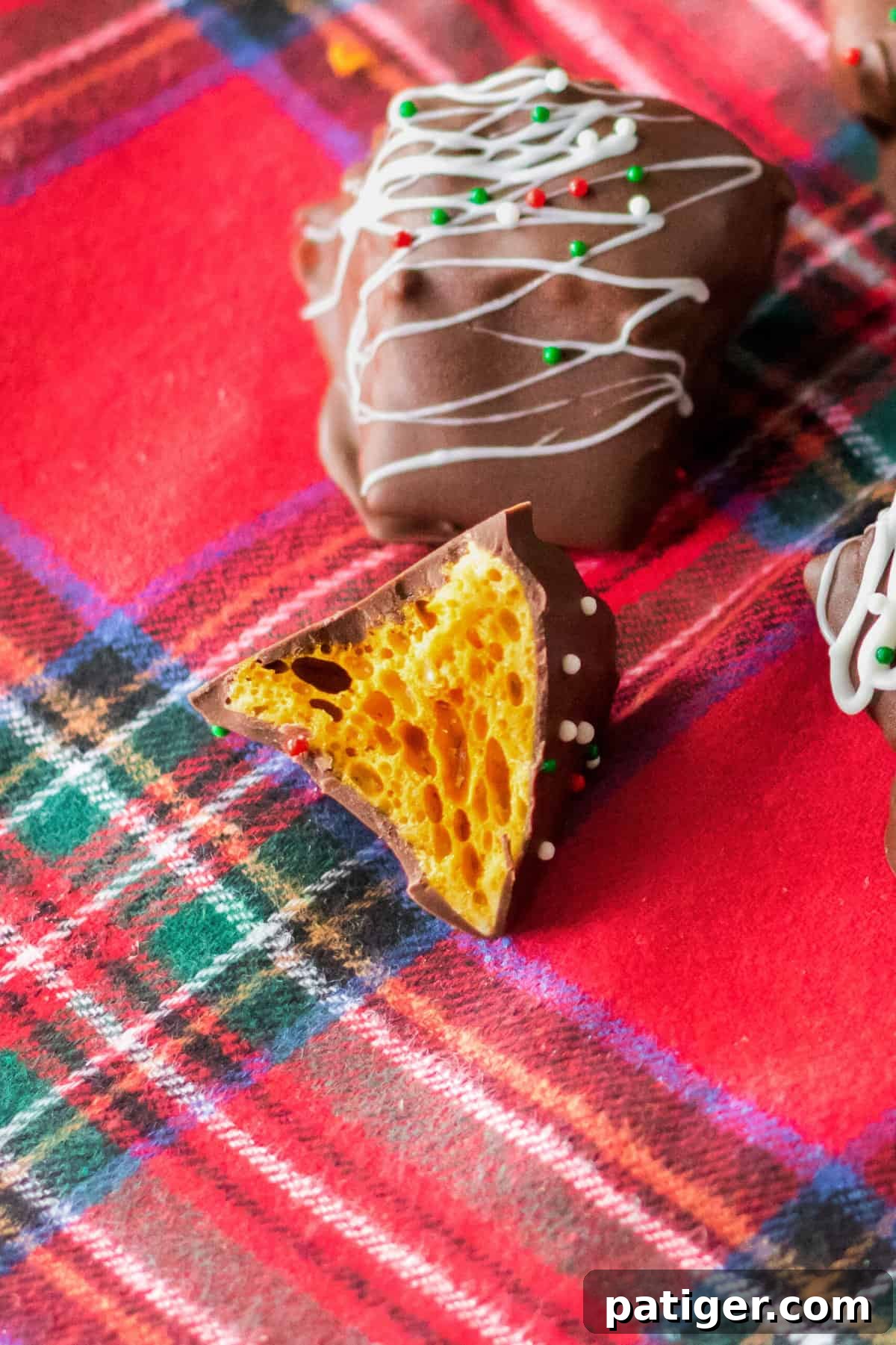
Known by a delightful array of names around the world—including hokey pokey, cinder toffee, honeycomb toffee, angel food candy, sea foam candy, and sponge toffee—this remarkable confection is universally cherished. No matter its name, it remains a candy lover’s dream, offering a unique and satisfying sweet experience that is particularly enchanting during the holiday season. Its distinctive look, reminiscent of a real honeycomb, coupled with its delicate crunch, makes it a conversation starter and a memorable treat.
If you’re a connoisseur of easy-to-make homemade candies, you’ll find this **Chocolate Covered Honeycomb Candy** a perfect addition to your repertoire. It complements other classic treats like Peanut and Almond Brittle, just like Grandma used to make, or delightful Homemade Peppermint Patties and rich Chocolate Rum Balls. These old-fashioned candies are ideal for filling up festive candy tins, perfect for sharing the joy of the season with friends and family.
Ingredients for Perfect Honeycomb Candy
This section provides detailed notes on each ingredient and potential substitution options to help you achieve the best results. For precise measurements and step-by-step instructions, please refer to the printable recipe card at the end of this post.
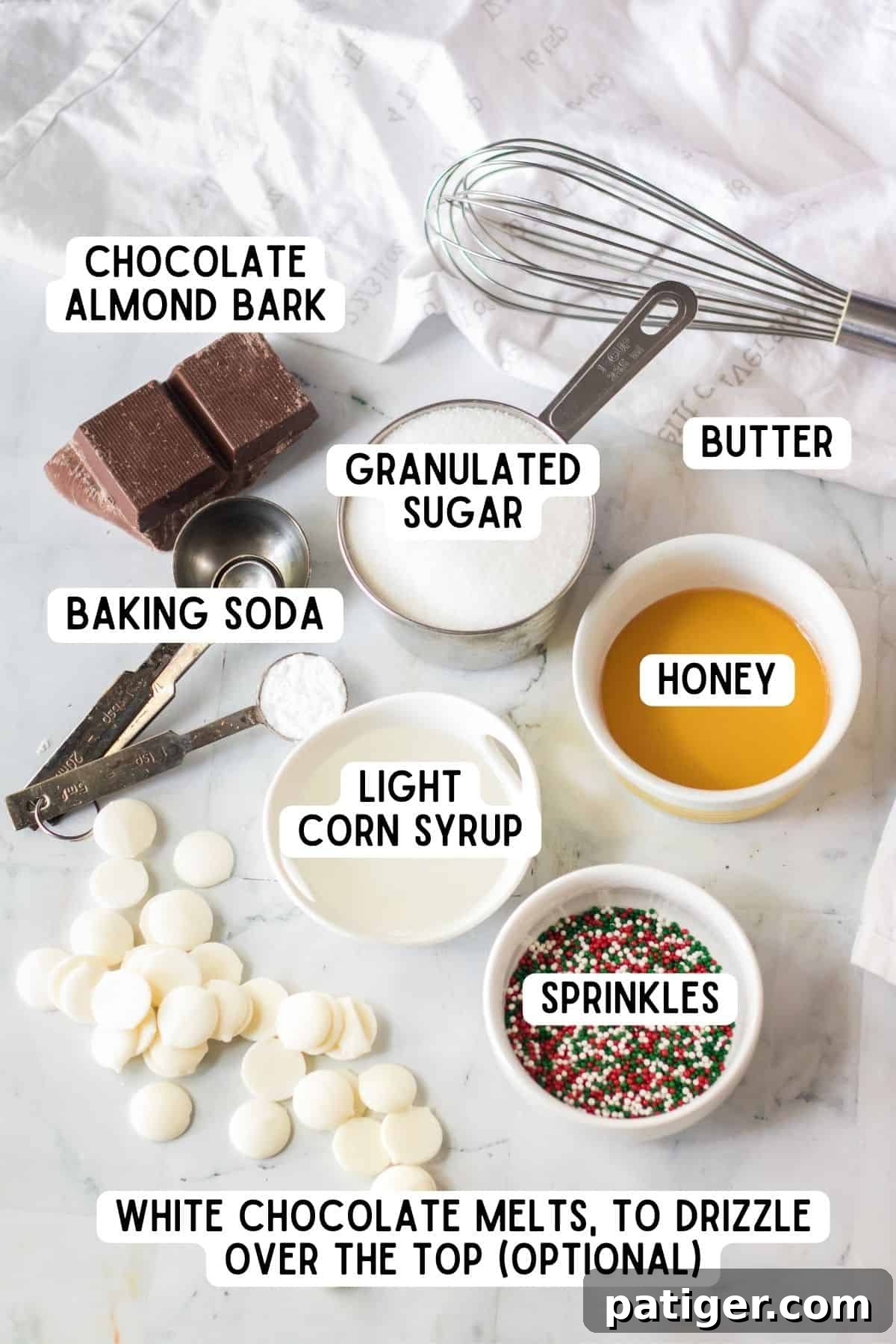
- Granulated Sugar: This forms the base of our caramel-like candy. Combined with corn syrup, honey, and water, it creates the essential sweet foundation. While brown sugar might offer a different flavor profile, it hasn’t been tested in this specific recipe, so granulated sugar is recommended for consistency in texture and color.
- Water: Crucial for dissolving the sugar and other liquid ingredients initially. As the mixture cooks and heats up, the water evaporates, allowing the sugar syrup to reach the precise hard crack stage necessary for the honeycomb’s brittle texture.
- Corn Syrup: An essential ingredient that helps prevent sugar crystallization, ensuring a smooth, clear syrup and a beautifully crisp final product. Light corn syrup is generally preferred for its neutral flavor and color, but dark corn syrup can be used if that’s what you have on hand, though it may slightly alter the candy’s color.
- Honey: This ingredient is what truly gives “honeycomb” candy its distinctive, nuanced flavor. Clover honey is a traditional and excellent choice, but don’t hesitate to experiment with other varieties like orange blossom or wildflower for subtle variations. If you prefer, or if dietary restrictions apply, you can substitute the honey entirely with additional corn syrup, though the signature honey flavor will be less prominent.
- Baking Soda: The absolute star of this recipe and the secret to its iconic bubbly texture! When added to the hot sugar syrup, baking soda reacts with the acidic components (primarily honey and corn syrup) and the heat, rapidly releasing carbon dioxide gas. These gas bubbles get trapped within the quickly cooling sugar mixture, creating the distinctive porous structure that resembles a honeycomb. Ensure your baking soda is fresh and active for the best rise and texture.
- Chocolate Almond Bark or Chocolate Melts: This provides the luxurious coating. Almond bark or confectionery melts are excellent choices because they contain stabilizers that allow them to melt smoothly and set up firm and shiny without needing tempering. You can choose from milk, semi-sweet, dark, or even white chocolate to customize your candy.
- Sprinkles and White Chocolate (Optional): These decorative elements are perfect for enhancing the festive appeal of your honeycomb candy. Drizzling with contrasting white chocolate or scattering colorful holiday sprinkles immediately after dipping makes these treats visually stunning and perfect for holiday parties or thoughtful homemade gifts.
Essential Equipment for Homemade Honeycomb
Having the right tools ready before you begin is key to successful candy making. Gather these kitchen essentials to embark on creating this delightful Christmas candy:
- 9×13 inch baking dish: This standard size is ideal for allowing the honeycomb to spread to an appropriate thickness, creating substantial pieces.
- Parchment paper: Non-negotiable for easy removal of the brittle candy from the pan without sticking. Ensure you leave an overhang to create handles.
- Heavy-bottomed pot: Essential for even heat distribution, preventing the sugar mixture from scorching or burning in spots. This is crucial for achieving the perfect caramel color and temperature.
- Wooden spoon: For initial gentle stirring and for safely incorporating the baking soda.
- Whisk: Especially useful for quickly and thoroughly mixing in the baking soda to activate its foaming action effectively.
- Candy thermometer: Your most important tool! A reliable candy thermometer takes the guesswork out of reaching the precise hard crack stage (300°F/149°C), which is absolutely critical for the candy’s texture.
- Airtight container: For proper storage to maintain the candy’s crispness and freshness.
How to Make Chocolate Covered Honeycomb Candy: A Step-by-Step Guide
This section walks you through the entire process of making this delightful candy with clear, step-by-step instructions. Detailed photographs accompany these steps in the full printable recipe card below.
Step 1: Prepare Your Baking Dish. Begin by lining a 9×13 inch baking dish with parchment paper. It’s helpful to leave a generous overhang of paper on the sides; these will serve as convenient handles later, allowing you to easily lift the cooled candy from the pan. Set this prepared pan aside. If parchment paper isn’t available, you can use aluminum foil lightly sprayed with a neutral cooking oil to prevent sticking.
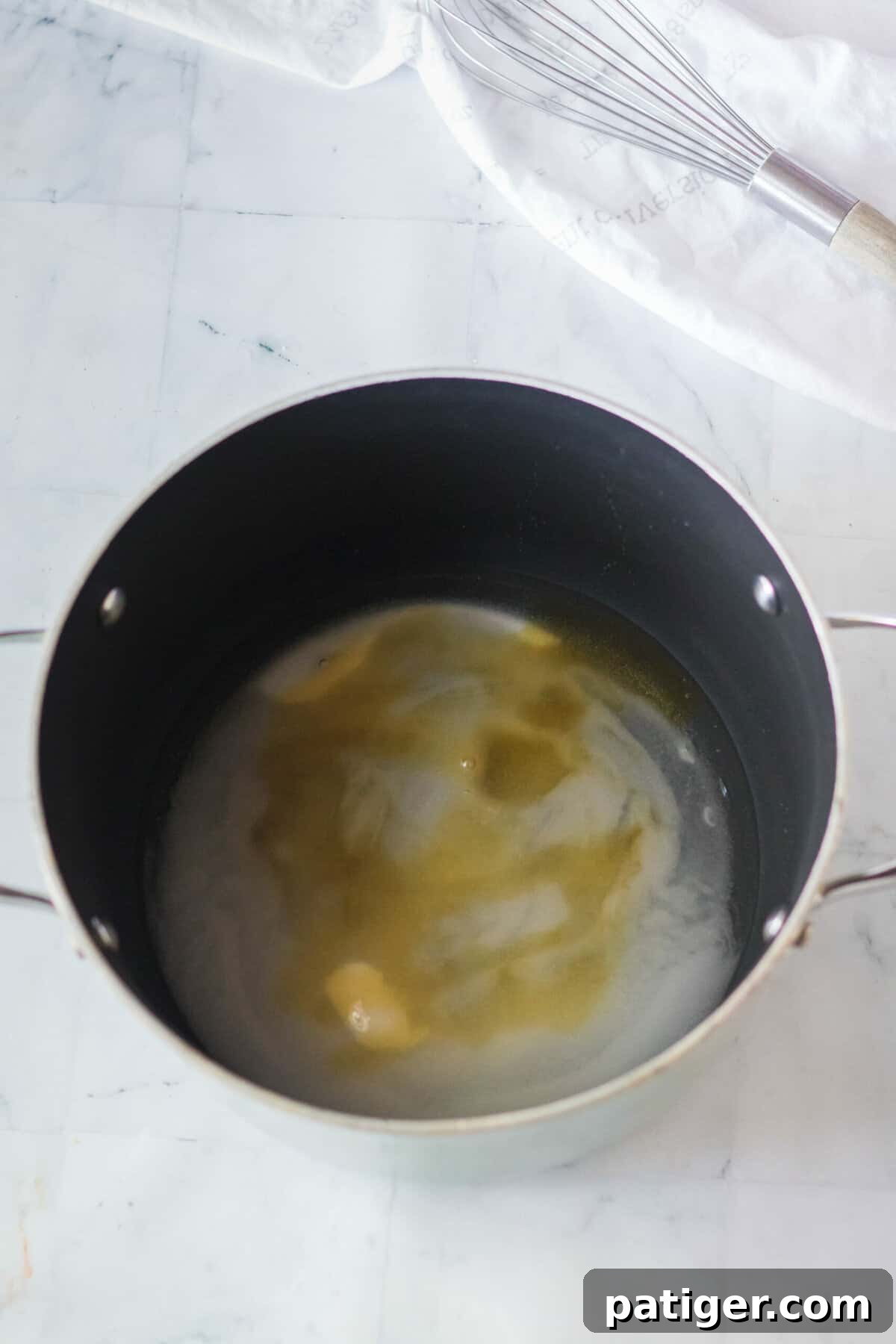
Step 2: Cook the Sugar Mixture to Perfection. Select a heavy-bottomed pot, which is crucial for even heat distribution to prevent scorching. Add the granulated sugar, water, corn syrup, and honey to the pot. Stir these ingredients gently just until they are combined. Place the pot over medium-high heat. Allow the sugar mixture to cook undisturbed until it reaches the hard crack stage, indicated by a candy thermometer reading precisely 300°F (149°C). It is vital that you do not stir the sugar mixture once it starts cooking and coming to temperature; stirring can encourage crystallization. The candy will transform into a beautiful light caramel color when it is ready, a visual cue to complement your thermometer reading.
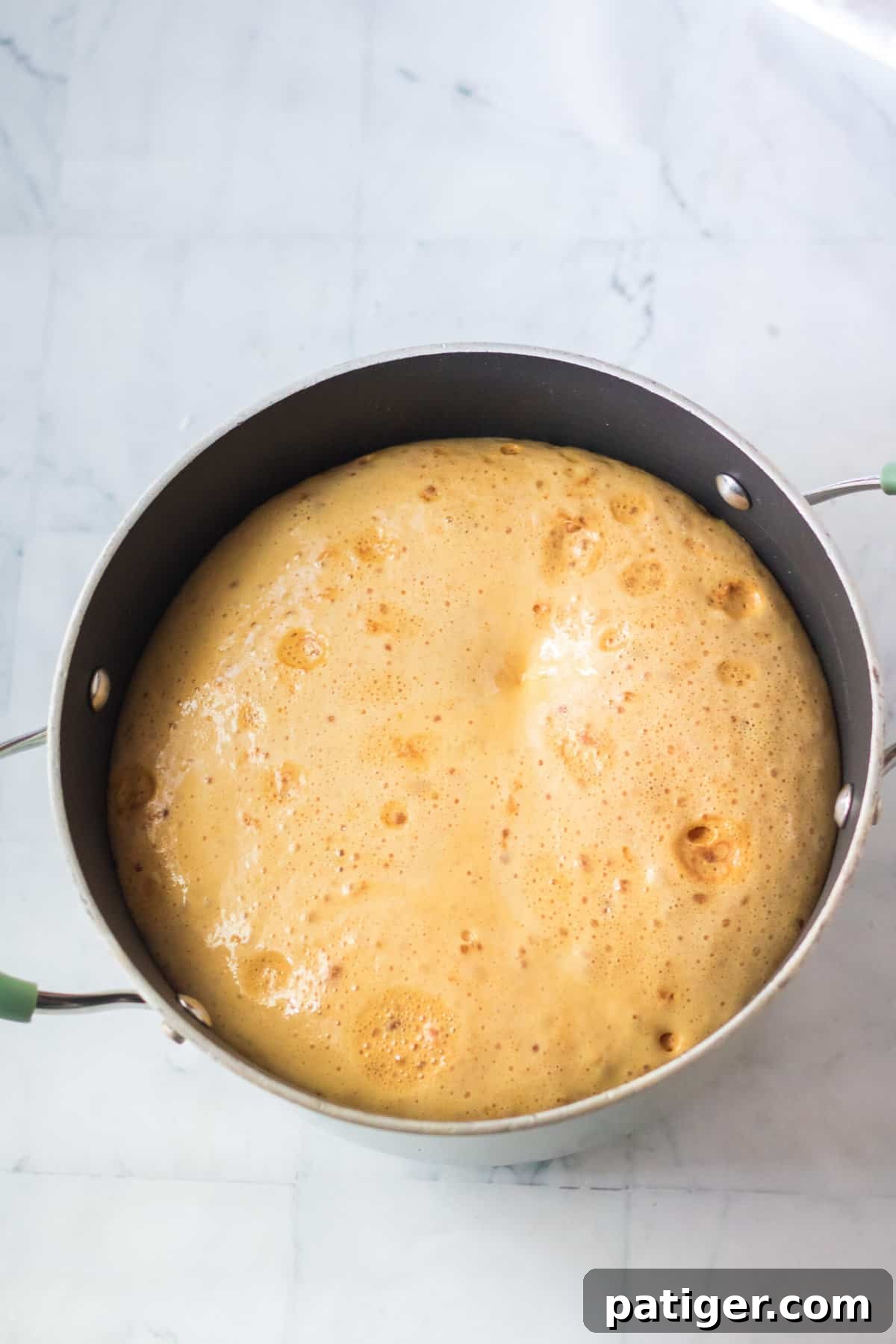
Step 3: The Magic of Baking Soda. As soon as the sugar mixture reaches the target temperature, promptly remove the pot from the heat. Immediately add the baking soda. Stir it in quickly and thoroughly with a whisk or wooden spoon until it is *just* combined. Do not over-stir, as this can deflate the precious bubbles. During this critical step, the mixture will dramatically foam up and expand, often doubling or tripling in size, thanks to the gas released by the baking soda.
Step 4: Allow to Set. With haste, pour the remarkably foamy mixture into your prepared baking sheet lined with parchment paper. Resist the urge to spread the mixture. Simply let it flow naturally and settle on its own. The baking soda is still actively creating its signature honeycomb structure, and spreading it can disrupt this delicate process, leading to a denser, less airy candy.
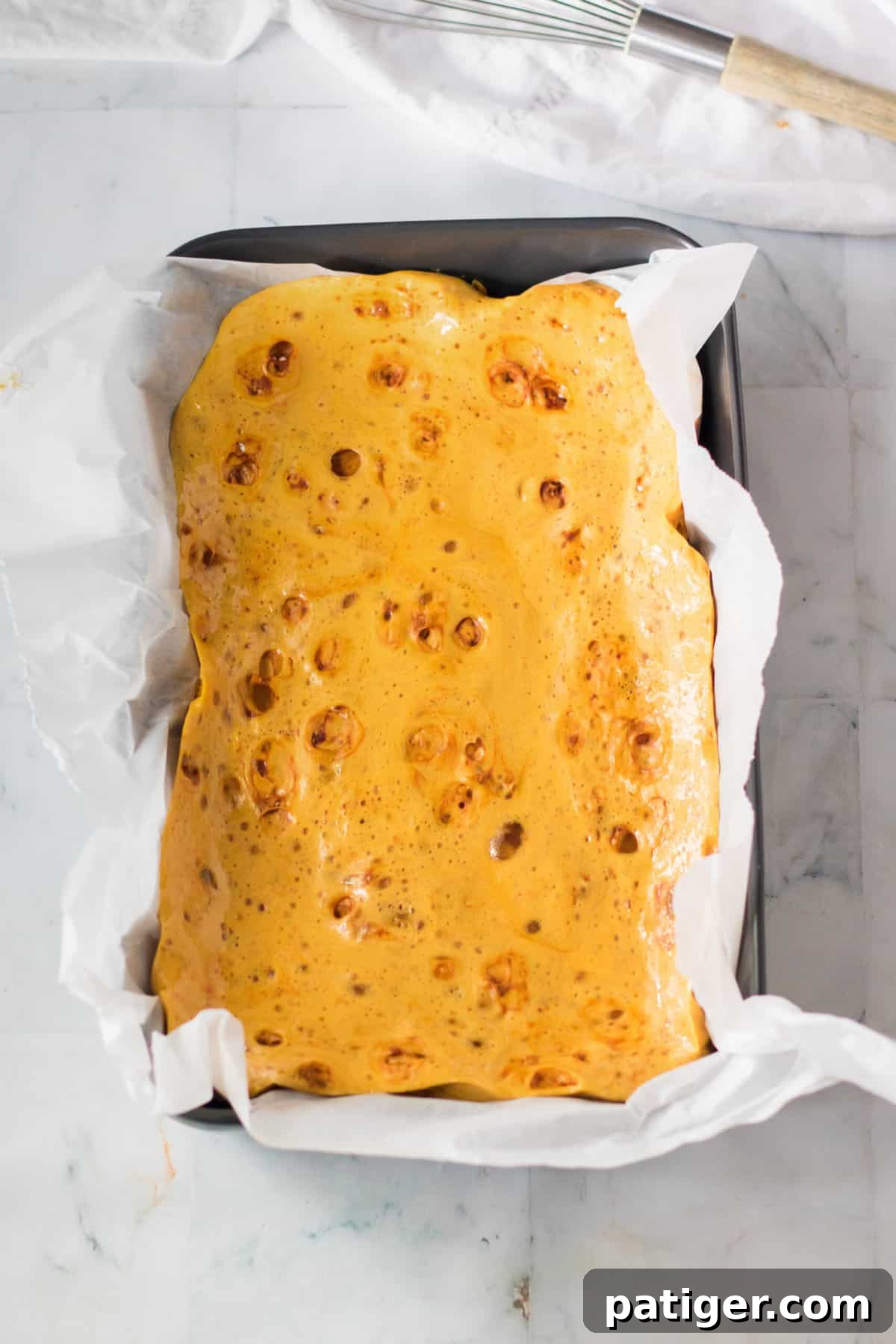
Step 5: Cool Completely. Allow the candy to cool undisturbed at room temperature until it is completely firm and brittle. This typically takes approximately one hour, but could be longer in humid conditions.
Step 6: Break into Pieces. Once thoroughly cooled and hardened, gently lift the entire slab of honeycomb out of the pan using the parchment paper handles. You can then break it into irregular, bite-sized pieces using your hands, a sharp knife, or by carefully tapping it against the countertop. The natural brittle quality will lend itself to satisfyingly jagged shards.
Step 7: Melt the Chocolate. Place your chosen chocolate almond bark or melts in a microwave-safe bowl. Heat in 30-second intervals, stirring thoroughly after each interval, until the chocolate is completely melted and beautifully smooth. Be careful not to overheat the chocolate, as it can seize.
Step 8: Dip the Honeycomb. Working quickly, use two forks to dip each piece of honeycomb candy into the warm, melted chocolate, ensuring it’s fully coated. Gently tap or shake off any excess chocolate to achieve an even, thin coating that won’t overwhelm the honeycomb’s delicate crunch.
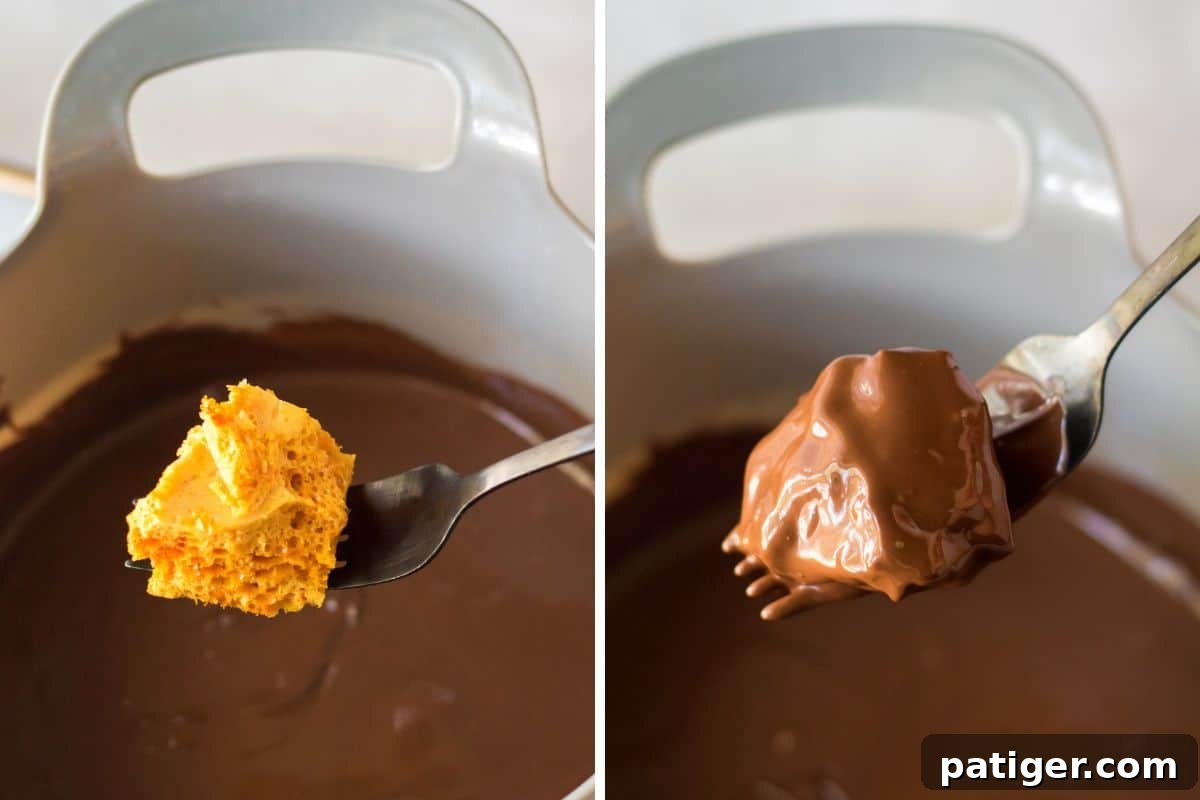
Step 9: Add Finishing Touches. Carefully place the chocolate-dipped candy pieces back onto the parchment-lined baking dish. If using, immediately scatter sprinkles over the wet chocolate before it sets. Alternatively, once the chocolate has set, you can drizzle melted white chocolate over the pieces for an elegant contrasting decoration.
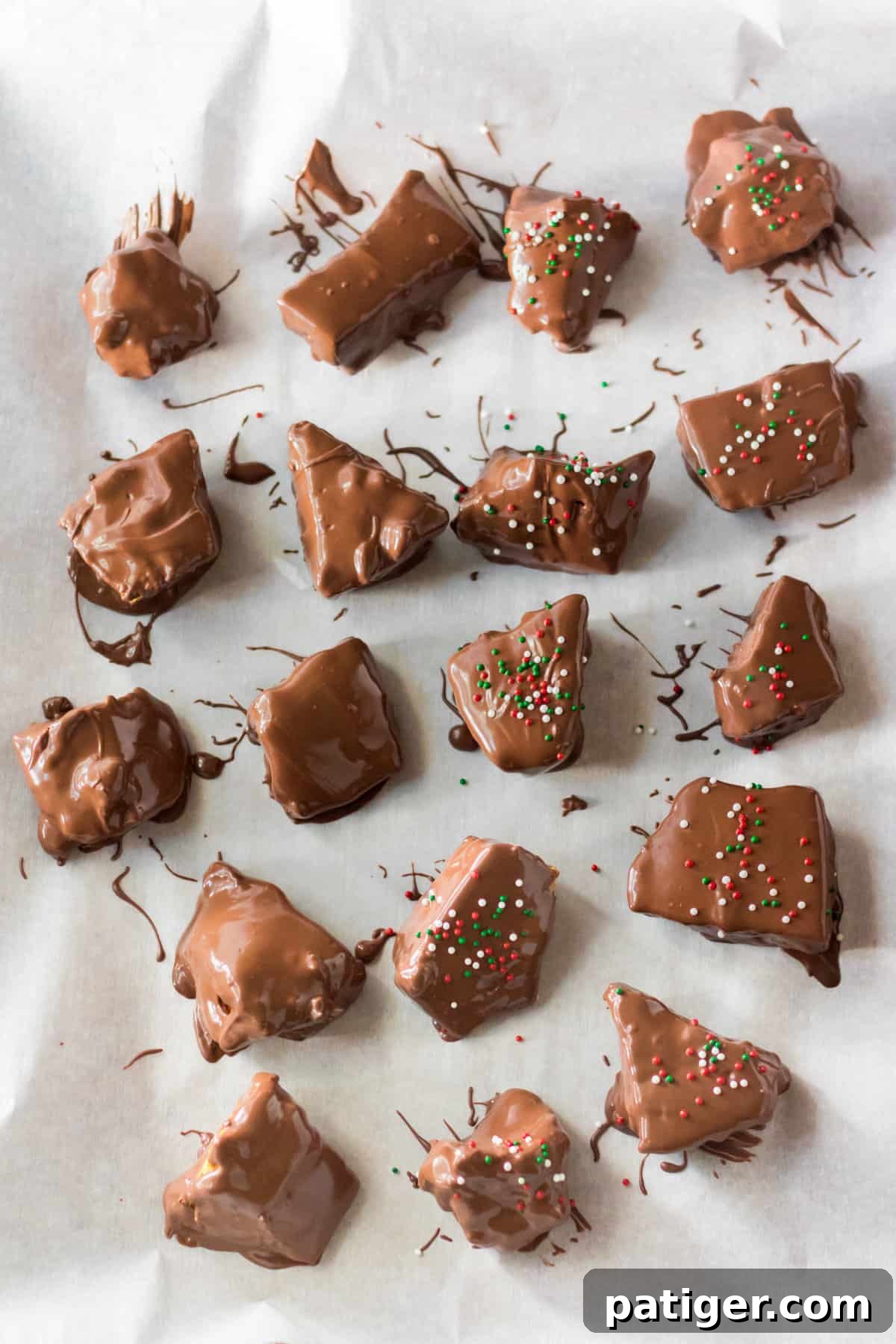
Step 10: Final Set and Serve. Allow the chocolate coating to cool and set completely. This can be done at room temperature or in the refrigerator for a quicker set. Once the chocolate is firm, your delicious **Chocolate Covered Honeycomb Candy** is ready to be served or stored in an airtight container.
Storage and Freezing Recommendations for Honeycomb Candy
To preserve the exquisite taste and signature crisp texture of your homemade honeycomb candy, proper storage is paramount. You can store this delightful treat in an airtight container at room temperature for up to 5 days. However, for the absolute best experience, honeycomb toffee truly shines when enjoyed fresh. Its texture and flavor are at their peak within the first 1-2 days after preparation.
The chocolate coating plays a vital role in protecting the honeycomb. By encasing the brittle candy, the chocolate helps to seal it, preventing it from absorbing moisture from the surrounding environment. This keeps the honeycomb lighter and crispier for a longer period. Without the chocolate coating, the delicate toffee is much more prone to becoming sticky and losing its crunch.
It is critically important to keep moisture out of your stored candy. Therefore, never leave the honeycomb candy exposed to the air. Always store it in a plastic bag with as much air squeezed out as possible, or in a truly airtight container. Ensure the lid or seal is completely secure to maintain freshness and prevent any humidity from reaching the candy.

Honeycomb Recipe Tips and Tricks for Success
Achieving perfect **Chocolate Covered Honeycomb Candy** is incredibly rewarding, and these expert tips will help ensure your success:
- Prioritize Preparation: Before you even think about turning on the stove, gather and measure all your ingredients and equipment. This candy-making process involves several time-sensitive steps where quick action is essential. Having everything organized and within reach means you won’t be scrambling for a whisk or measuring baking soda during a crucial moment, which could impact the final texture.
- Mind the Heat: Resist the temptation to crank up the heat in an effort to speed up the cooking process. Medium-high heat is the ideal setting, allowing the sugar syrup to come to temperature gradually and evenly. Cooking it too fast on high heat significantly increases the risk of scorching the sugar, which will result in a burnt taste and an undesirable dark color.
- The Whisk is Your Friend: When it’s time to incorporate the baking soda, use a whisk. A whisk is much more effective than a spoon for quickly and thoroughly distributing the baking soda throughout the hot sugar mixture. This rapid and even distribution is key to triggering a vigorous foaming action, which creates those beautiful, large air bubbles characteristic of honeycomb candy.
- Work in Batches for Gifting: If you plan to make a large quantity of this candy, perhaps for holiday gift-giving, it’s highly recommended to do so in separate, smaller batches. The mixture expands significantly when the baking soda is added, and attempting to double or triple the recipe in one go can result in an overflowing pot and a difficult-to-manage amount of foamy candy. Sticking to single batches ensures optimal rise and easier handling.
- Prevent Sticking: While parchment paper generally works wonders, sometimes honeycomb or seafoam candy can still adhere. To absolutely ensure easy release, lightly spray your parchment-lined baking dish with a neutral cooking oil before pouring in the candy mixture. This extra step provides an additional layer of non-stick protection.
- Adjust Thickness: For those who prefer a thicker, more substantial honeycomb, simply use a slightly smaller baking pan, such as an 8×8 inch square dish, instead of the 9×13 inch. This will confine the mixture to a smaller area, resulting in thicker pieces once set.
Additions and Variations to Customize Your Honeycomb Candy
This **Chocolate Covered Honeycomb Candy** recipe is wonderfully versatile, allowing for numerous creative twists and personalized variations:
- Embrace the Bare Honeycomb: While the chocolate coating adds a layer of indulgence, the pure, unadorned honeycomb is equally delicious on its own. If you prefer a simpler, less rich treat, or want to showcase the pure caramel-honey flavor, feel free to skip the chocolate dipping altogether.
- Experiment with Chocolate Types: The choice of chocolate can dramatically alter the candy’s profile. Instead of almond bark, try dipping your honeycomb in luscious milk chocolate for a sweeter, creamier finish, semi-sweet chocolate for a balanced flavor, rich dark chocolate for a more sophisticated, intense cocoa experience, or even vibrant white chocolate for a striking visual contrast and a different flavor dimension.
- Introduce a Salty-Sweet Kick: For fans of the ever-popular chocolate and salted caramel combination, elevate your honeycomb by sprinkling a pinch of coarse sea salt over the wet chocolate coating immediately after dipping. The salt crystals will adhere to the setting chocolate, providing a delightful textural contrast and enhancing the flavors with a savory edge.
- Craft a Vegan-Friendly Version: Making this treat vegan is surprisingly simple. Replace the honey with an equal amount of golden syrup or dark corn syrup, which offer similar binding and flavor properties. Then, simply dip the cooled honeycomb pieces into your favorite high-quality vegan chocolate melts to complete this plant-based delight. All other primary ingredients in the recipe are typically vegan-friendly.
- Infuse Flavor Extracts: Add a few drops of your favorite food-grade extract to the sugar syrup just before removing it from the heat. Peppermint extract is fantastic for a festive mint-chocolate honeycomb, almond extract adds a nutty depth, or orange extract can provide a bright, zesty note.
- Add a Nutty Crunch: Before pouring the foamy mixture into the prepared pan, consider stirring in a handful of finely chopped nuts like almonds, pecans, or walnuts for an extra layer of texture and flavor.
- Create Holiday Themes: Beyond traditional sprinkles, use themed sprinkles for various holidays (e.g., green for St. Patrick’s Day, pastels for Easter, red and blue for patriotic celebrations). You can also use food coloring to tint the honeycomb mixture itself before the baking soda is added for a fun surprise!
Chocolate Covered Honeycomb Candy Recipe FAQ
No, despite its name and appearance, this candy does not contain actual bee honeycomb. Its name derives from its striking resemblance to a natural honeycomb structure, characterized by numerous holes and a porous, airy texture created by the baking soda reaction. It’s an illusion of nature, crafted in the kitchen!
You’ll only need a handful of very common ingredients to make this delightful homemade candy: granulated sugar, water, corn syrup, honey, fresh baking soda, and chocolate almond bark (or your preferred chocolate melts) for the coating. Sprinkles or white chocolate drizzle are optional, but add a lovely festive touch!
Honeycomb candy and sponge candy are indeed very similar, and in some regional traditions or family recipes, they might even be considered interchangeable. However, generally, honeycomb candy is distinguished by having slightly larger, more defined air pockets and a more pronounced honey flavor, as honey is a key ingredient. Sponge candy, on the other hand, is often made primarily with corn syrup and may have a finer, more delicate crumb. For more detailed information on their subtle differences, resources like Stefanelli’s Candies provide excellent insights.
The signature bubbly, airy texture of honeycomb candy is achieved through a fascinating chemical reaction. When baking soda is added to the superheated sugar syrup, the heat causes the baking soda to rapidly decompose and release carbon dioxide gas. This gas gets trapped within the viscous sugar mixture as it begins to cool and harden, creating the numerous holes and lightweight structure that gives the candy its characteristic “honeycomb” appearance.
If your honeycomb candy ended up chewy rather than perfectly crispy and brittle, it’s highly likely that the sugar mixture wasn’t cooked long enough or didn’t reach the correct temperature. A candy thermometer is indispensable for this recipe; it should register precisely 300°F (149°C) – the hard crack stage – before you remove it from the heat and incorporate the baking soda. Insufficient cooking means there’s too much moisture remaining in the syrup, preventing it from hardening properly.
No, there’s no need to refrigerate honeycomb candy to help it set. It cools and hardens beautifully at room temperature within about an hour. Refrigeration can actually introduce moisture, potentially making the candy sticky or chewy over time, especially if not sealed properly. Once the initial candy has set, break it into pieces. After dipping in chocolate, simply let the chocolate coating set at room temperature. Once both stages are firm, store the honeycomb candy in an airtight container at room temperature to maintain its crisp texture.
More Festive Christmas Candy Recipes to Explore
If you’ve enjoyed making this **Chocolate Covered Honeycomb Candy**, you’ll love diving into these other delightful and easy-to-make Christmas candy recipes:
- Crockpot Peanut Clusters: An incredibly simple way to make delicious chocolate peanut clusters using your slow cooker.
- Peanut Butter Fritos Candy: A unique sweet and salty treat that’s surprisingly addictive.
- Reindeer Bark: A fun, festive, and colorful chocolate bark perfect for the holiday season.
- Classic English Toffee Recipe: A rich, buttery, and crunchy toffee topped with chocolate and nuts.
- Martha Washington Candy with Cherries: A delightful no-bake candy featuring coconut, pecans, and maraschino cherries.
Eager for more sweet inspirations? Be sure to check out all 50+ of my homemade candy recipes for endless delicious possibilities!

Chocolate Covered Honeycomb Candy
Author: Jaclyn
Ingredients
- 1 1/2 cups granulated sugar
- 1/2 cup water
- 1/3 cup light corn syrup
- 3 Tablespoons honey
- 4 teaspoons baking soda
- 1 pound chocolate almond bark or chocolate melts
- white chocolate melts, optional
- sprinkles, optional
Instructions
-
Line a 9×13 inch baking dish with parchment paper, ensuring some paper hangs over the sides to create handles for easy removal. Set aside.
-
In a heavy-bottomed pot, combine sugar, water, corn syrup, and honey. Stir gently to mix. Cook over medium-high heat, without stirring, until a candy thermometer reaches 300°F (149°C) and the mixture turns a light caramel color. Do NOT stir while cooking.
-
Immediately remove the pot from the heat and quickly stir in the baking soda with a whisk or wooden spoon until just combined. Avoid over-stirring.
-
Pour the foamy candy mixture immediately into the prepared parchment-lined baking dish. Do not spread the mixture; allow it to settle naturally.
-
Let the candy cool completely at room temperature, which will take approximately 1 hour, until it is firm and brittle.
-
Once cooled, use the parchment paper overhang to lift the candy from the pan. Break it into bite-sized pieces using your hands, a sharp knife, or by gently tapping it on the countertop.
-
Melt the chocolate almond bark (or other chocolate melts) in a microwave-safe bowl in 30-second intervals, stirring after each interval, until completely smooth and melted.
-
Working quickly, dip each piece of honeycomb candy into the melted chocolate, coating it completely. Tap off any excess chocolate.
-
Place the dipped candy back onto the lined baking dish. If desired, immediately add sprinkles before the chocolate sets, or wait for the chocolate to set and then drizzle with white chocolate for contrast.
-
Allow the chocolate coating to cool and set completely before serving or storing the candies in an airtight container.
Notes
- For optimal freshness and crispness, store honeycomb candy in an airtight container at room temperature for up to 5 days.
- If you don’t possess a candy thermometer, carefully watch the sugar mixture; remove it from the heat as soon as it achieves a light caramel color. Do not allow it to become dark brown, as this indicates burning.
Nutrition

Did You Make This Recipe?
Share it with me on Instagram @crayonsandcravings and follow on Pinterest @crayonsandcravings for even more!
Pin Recipe
Leave A Review