
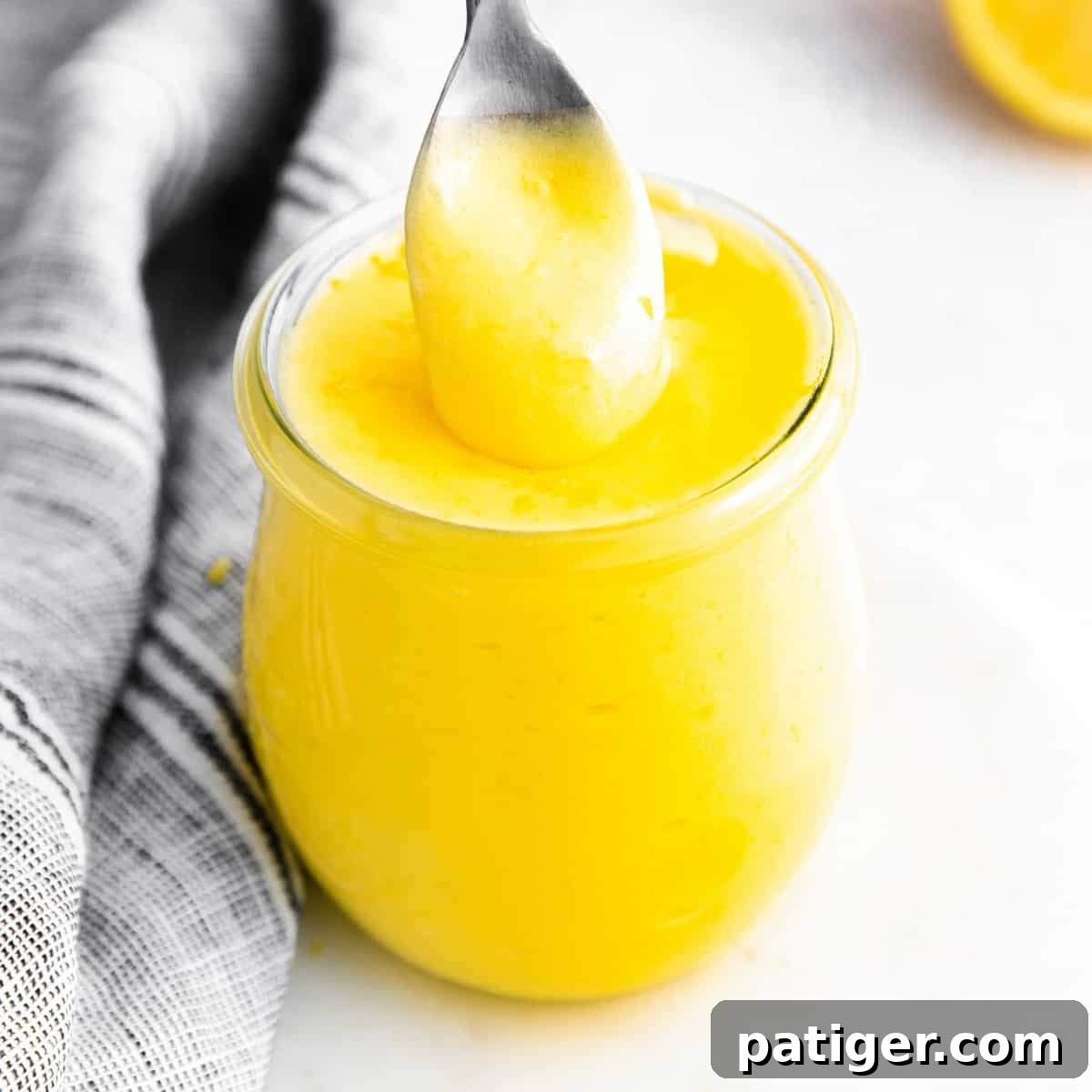
Welcome to the ultimate guide for creating luscious, vibrant homemade lemon curd! This easy-to-follow recipe uses just 5 simple ingredients and comes together in minutes on your stovetop, promising an incredibly thick, creamy, and perfectly balanced sweet-tangy spread.
For all you lemon enthusiasts out there, this recipe is a game-changer. Prepare to be amazed by the depth of flavor and velvety texture of this lemon curd. It’s so undeniably delicious, you’ll find yourself wanting to savor it straight from the jar with a spoon – and there’s absolutely nothing wrong with that! Its bright, refreshing taste and smooth consistency have consistently earned rave reviews, especially when featured as a filling in my lemon layer cake.
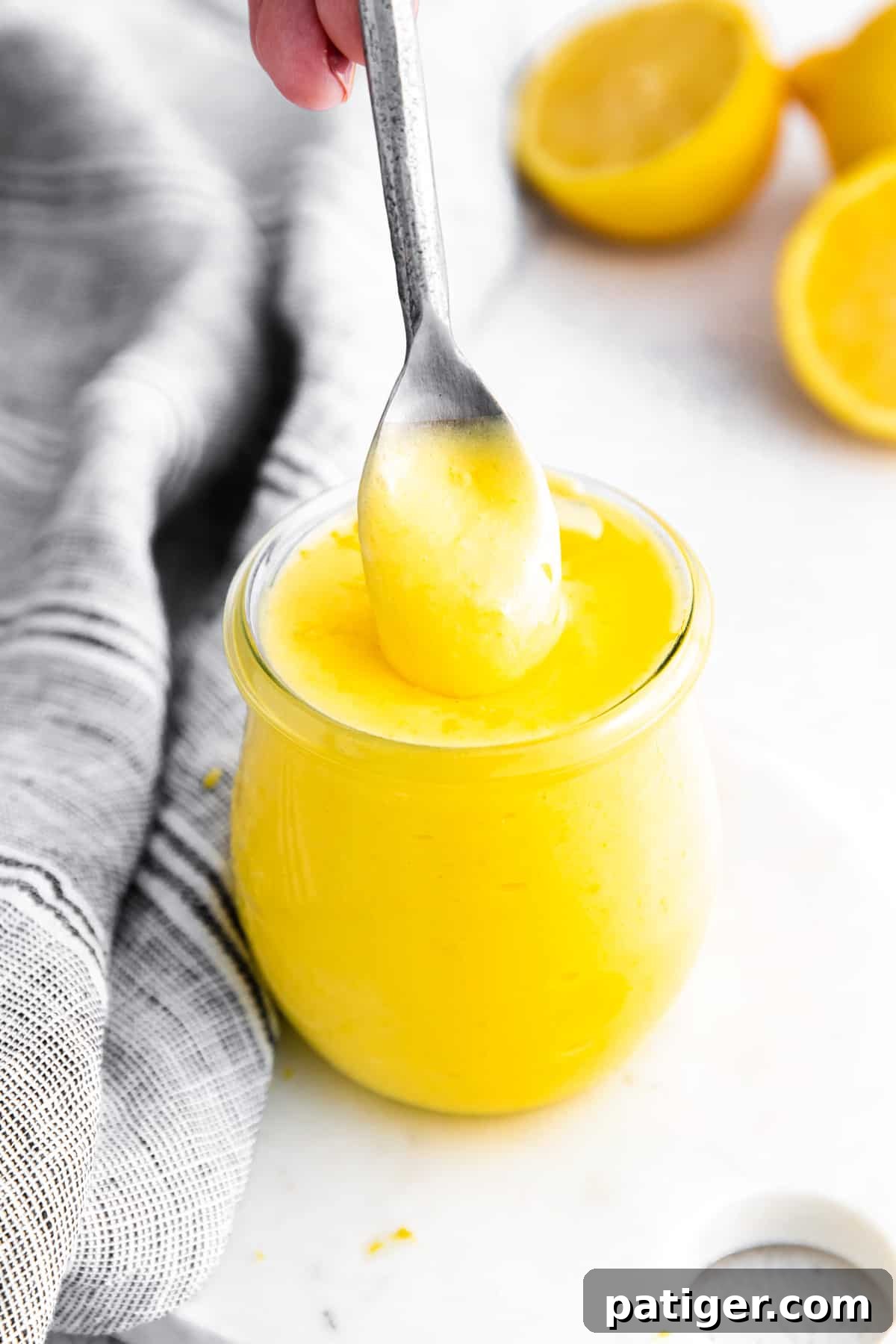
Beyond its irresistible solo appeal, homemade lemon curd is a wonderfully versatile ingredient. Imagine it generously spread atop warm scones or fluffy biscuits, enriching the flavor of your breakfast or afternoon tea. It also makes an exquisite filling for pies, tarts, parfaits, and cakes, adding a burst of sunshine to any dessert. Get ready to elevate your culinary creations with this simple yet sophisticated condiment.
Craving more lemon goodness? Be sure to explore some of my other popular lemon-infused delights: my incredibly easy lemon cake mix cookies (a consistent reader favorite!), the dreamy lemon lush, the refreshing lemon icebox cake, and the delightfully moist lemon poke cake.
Why You’ll Love This Homemade Lemon Curd Recipe
Once you experience the rich, vibrant flavors and silky texture of this homemade lemon curd, you’ll likely never want to revert to store-bought versions again. The difference is truly remarkable! While some might assume making lemon curd from scratch is a complicated endeavor reserved for professional pastry chefs, you’ll be delighted to discover just how accessible and easy it is. In fact, it’s much simpler than you might think, requiring minimal effort for maximum reward.
This recipe demystifies the process, proving that a gourmet condiment can be crafted in your own kitchen with incredible ease. The result is a bright, tangy, and utterly delicious spread that far surpasses anything you can buy, free from artificial flavors or preservatives. It’s the perfect way to infuse your dishes with authentic lemon zest and juice, creating a truly unforgettable taste experience.
The Simple 5-Ingredient Magic
The beauty of this lemon curd lies in its simplicity, relying on just five core ingredients to achieve its perfect consistency and flavor profile. These humble components, when combined with a little care, transform into a luxurious spread:
- Fresh Lemons: The star of the show, providing both zest and juice for an intense citrus flavor.
- Large Egg Yolks: Essential for richness, color, and thickening the curd to that desirable creamy consistency.
- Granulated Sugar: Balances the tartness of the lemons, creating a harmonious sweet-tangy flavor.
- Salted Butter: Adds an incredible creaminess, velvety texture, and a touch of savory balance that makes the curd irresistibly smooth.
Each ingredient plays a crucial role in developing the complex, delightful flavor and texture that defines a truly exceptional lemon curd.
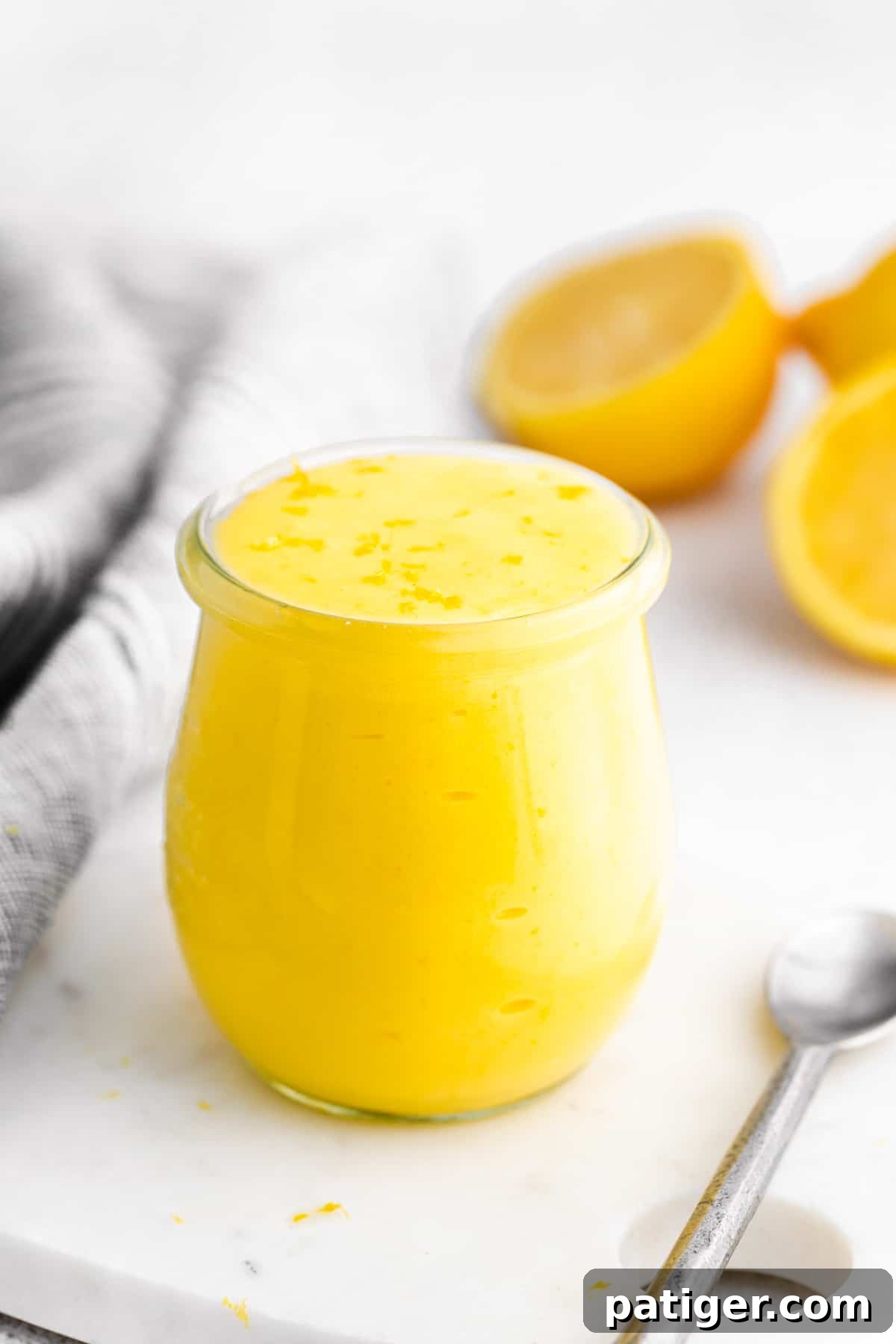
Essential Tips for Crafting the Best Lemon Curd
Achieving perfectly smooth, rich, and flavorful lemon curd is simpler than you might imagine, especially with a few key techniques. These tips will help ensure your homemade lemon curd is nothing short of spectacular:
- Zest Before Juicing: Always zest your lemons *before* you cut and juice them. It’s significantly easier to get all that aromatic zest from a whole lemon. Be meticulous to only capture the bright yellow rind, avoiding the bitter white pith underneath. The zest is packed with essential oils that contribute immensely to the curd’s vibrant lemon flavor.
- Opt for Fresh Lemon Juice: This is non-negotiable for superior flavor. Bottled lemon juice simply doesn’t compare to the bright, nuanced taste of freshly squeezed lemons. For the best results, use fresh Eureka or Lisbon lemons for their classic tartness, or Meyer lemons for a slightly sweeter, more floral note.
- Embrace the DIY Double Boiler Method: While it might seem tempting to cook the curd directly in a saucepan, doing so vastly increases the risk of overcooking, scorching, or even curdling the eggs. A homemade double boiler provides gentle, indirect heat, cooking the curd slowly and evenly to that perfect, silky consistency. We’ll detail how to set this up below, but trust us – it’s worth the extra step!
- Consider Straining for Ultimate Smoothness: I personally love the slight texture that the lemon zest adds to my curd, so I typically don’t strain it. However, if you desire an ultra-smooth, perfectly pristine lemon curd, feel free to pass it through a fine mesh strainer after cooking. This will remove any bits of zest or tiny cooked egg solids, resulting in a remarkably silky finish.
- Whisk Continuously: Throughout the cooking process, continuous whisking is paramount. This prevents the egg yolks from scrambling and ensures even heat distribution, leading to a smooth, homogenous curd.
- Don’t Rush the Cooling: Allow your curd to cool completely before covering and refrigerating. This helps it set properly and develop its full flavor and thick texture.
Mastering the DIY Double Boiler Technique
Cooking lemon curd can be a delicate process, as eggs are prone to scrambling under direct, high heat. While you can attempt to cook your lemon curd in a saucepan directly over the heat, this method makes overcooking, scorching, or even burning it almost inevitable. The key to perfectly smooth, lump-free lemon curd lies in gentle, indirect heat.
This is where the humble, yet incredibly effective, double boiler comes into play. I wholeheartedly recommend employing a make-shift double boiler system for this recipe. The consistent, gentle heat from the simmering water below works wonders, cooking the curd perfectly without the risk of scorching the delicate egg yolks.
To effortlessly create your own double boiler, simply take a heat-proof glass bowl and place it securely over a small saucepan. Fill the saucepan with 1-2 inches of water, ensuring that the bottom of your glass bowl does NOT touch the water. The steam from the simmering water will gently heat the bowl above, providing that ideal indirect cooking environment. This method ensures your lemon curd thickens slowly and evenly, resulting in an impeccably smooth and creamy texture every time.
A Chef’s Note: You might wonder why a glass bowl is specified over a traditional metal double boiler. From my experience, I actually prefer using a glass bowl. Metal bowls, especially certain types, can sometimes impart a subtle metallic taste to the curd, which can detract from its fresh, bright lemon flavor. A glass bowl ensures the pure, unadulterated taste of lemon shines through. Yuck to metallic curd!
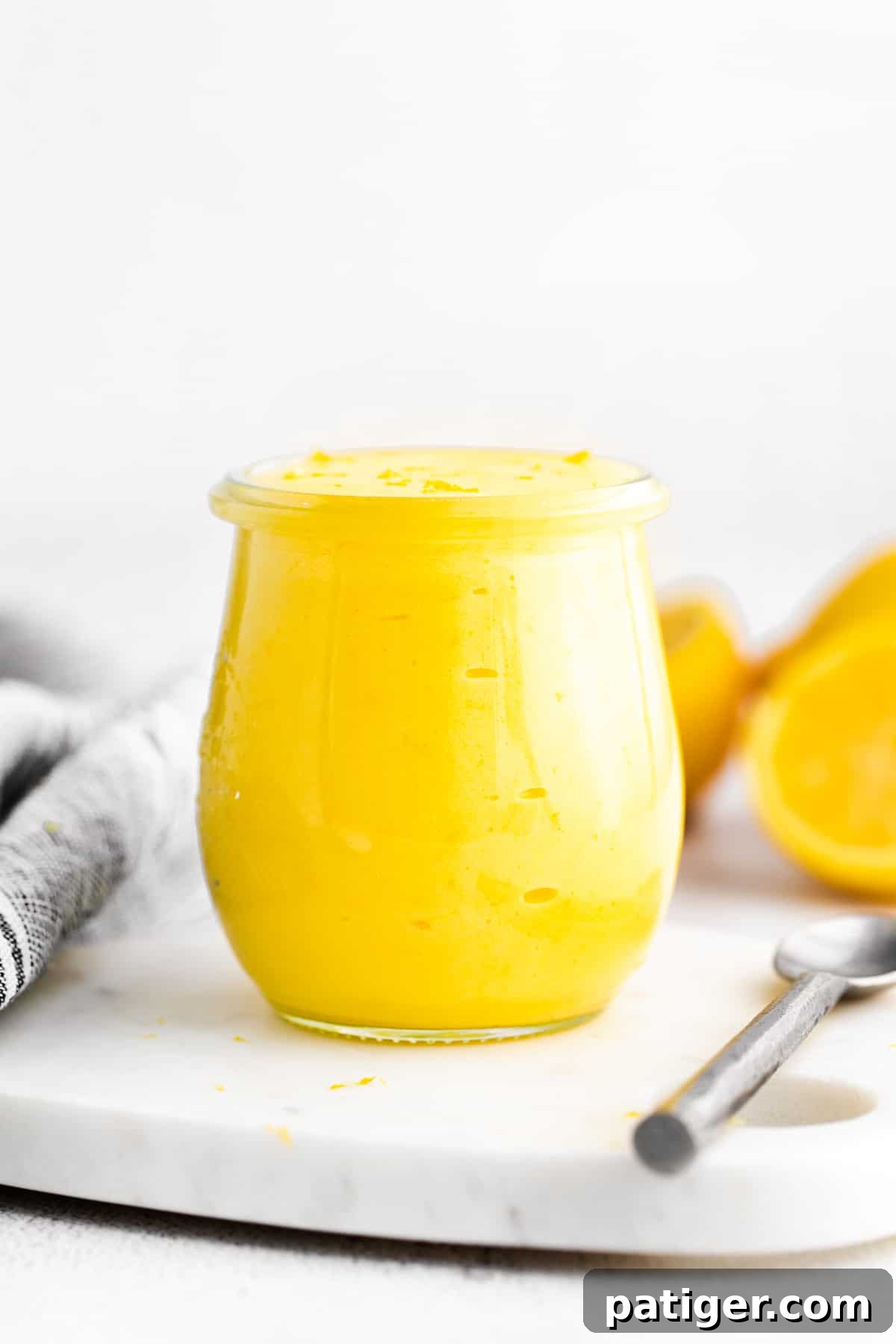
Frequently Asked Questions About Lemon Curd
Lemon curd is incredibly versatile! It’s often enjoyed as a luxurious topping on freshly baked scones, pancakes, waffles, or toast. It also serves as an exquisite filling for cakes, cupcakes, pies, tarts, and parfaits. You can swirl it into yogurt, spoon it over fresh berries, or even use it as a base for glazes on cookies and pastries. Its bright, tangy flavor adds a gourmet touch to almost any sweet treat.
When stored in an airtight container in the refrigerator, homemade lemon curd will maintain its freshness and quality for 1 to 2 weeks. For longer storage, you can freeze it in an airtight, freezer-safe container for several months. Ensure it’s completely cooled before freezing, and thaw it in the refrigerator before use.
The most common reason for thin lemon curd is insufficient heating. The egg yolks need to reach a specific temperature to properly thicken the mixture. To remedy this, gently return your curd to the stovetop over the DIY double boiler, whisking continuously. Ensure the water in your saucepan is simmering, and keep whisking until the curd is thick enough to generously coat the back of a spoon. If it seems stubbornly thin, slightly increase the heat of the simmering water (but avoid boiling fiercely) and continue whisking with patience. It often just needs a few more minutes to reach the right consistency.
While some recipes use whole eggs, this particular recipe specifically calls for egg yolks. The yolks contribute significantly to the rich, creamy texture and vibrant yellow color that defines a classic lemon curd. Using whole eggs can result in a thinner curd with a less luxurious mouthfeel. For the best results, stick to just the yolks as specified.
To prevent a “skin” from forming on the surface as your lemon curd cools, simply press a piece of plastic wrap directly onto the surface of the warm curd. This creates an airtight seal, keeping moisture in and air out. Once completely cool, you can transfer it to your storage container.

Rated 4.34 out of 5 stars by 24 votes
Classic Homemade Lemon Curd
Author: Jaclyn
5 mins
10-12 mins
15-17 mins
Approximately 1.25 cups (6 servings)
Ingredients
-
5
large egg yolks -
⅔ cup
granulated sugar -
⅓ cup
fresh lemon juice -
1 Tablespoon
lemon zest -
½ cup
salted butter, cubed and at room temperature
Instructions
-
Prepare your DIY double boiler: In a small saucepan, bring 1-2 inches of water to a gentle simmer. Place a heatproof glass bowl securely on top of the saucepan, ensuring that the bottom of the bowl does not touch the simmering water.
-
Combine ingredients: Add the egg yolks, granulated sugar, fresh lemon juice, and lemon zest to the glass bowl set over the simmering water. Whisk these ingredients together continuously. Cook the mixture for approximately 10-12 minutes, or until it visibly thickens. It should be thick enough to generously coat the back of a spoon and resemble a classic hollandaise sauce in consistency.
-
Incorporate butter: Once the curd has thickened, carefully remove the glass bowl from the heat. Add the cubed, room-temperature salted butter to the hot lemon mixture. Whisk vigorously until all the butter has completely melted and is fully incorporated, resulting in a smooth and glossy curd.
-
Prevent skin formation: Cover the surface of the lemon curd directly with plastic wrap. Press the plastic wrap gently onto the surface of the curd to prevent a “skin” from forming as it cools.
-
Cool and store: Allow the curd to cool completely to room temperature. Once cooled, remove the plastic wrap and spoon the lemon curd into an airtight container. Store in the refrigerator for up to 1-2 weeks. Enjoy!
Notes
For an even smoother curd, strain it through a fine-mesh sieve after removing it from the heat but before adding the plastic wrap.
Nutrition Information (per serving)
Calories: 273kcal | Carbohydrates: 24g | Protein: 3g | Fat: 19g | Saturated Fat: 11g | Polyunsaturated Fat: 1g | Monounsaturated Fat: 6g | Trans Fat: 1g | Cholesterol: 203mg | Sodium: 129mg | Potassium: 37mg | Fiber: 0.1g | Sugar: 23g | Vitamin A: 690IU | Vitamin C: 7mg | Calcium: 26mg | Iron: 0.4mg

Did You Make This Recipe?
We’d love to see your creations! Share a photo on Instagram and tag us @crayonsandcravings. Don’t forget to follow us on Pinterest @crayonsandcravings for more delicious recipes and inspiration!
Pin Your Creation
Leave A Review