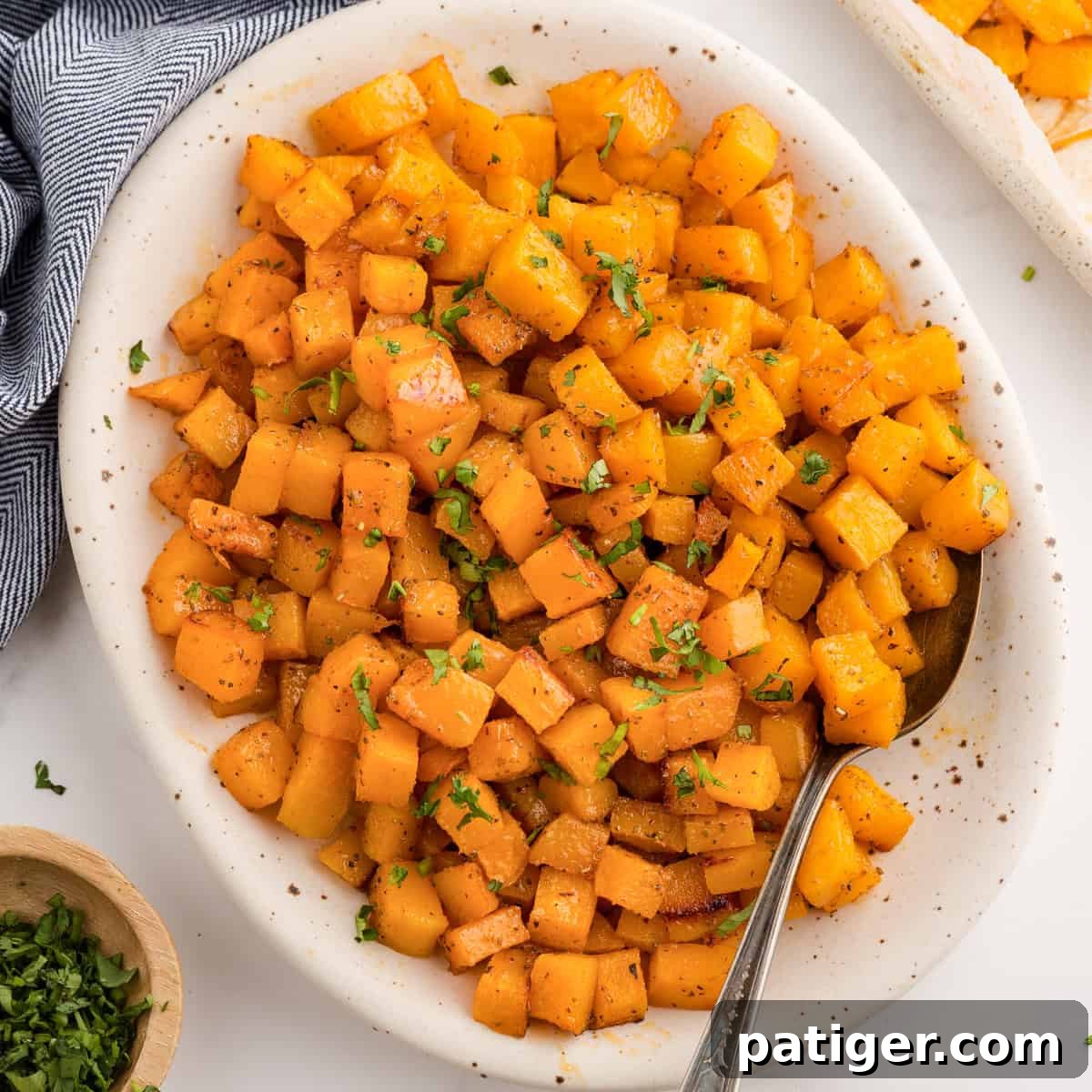
As the crisp air of autumn descends and winter’s chill begins to set in, there’s an undeniable craving for warming, comforting dishes. Few vegetables capture this feeling quite like butternut squash. When roasted, its firm flesh transforms into a tender, sweet, and deeply caramelized delight, making it an essential side dish for any seasonal meal. This roasted butternut squash recipe is not just incredibly simple to prepare, but it also delivers an impressive depth of flavor that will have everyone reaching for seconds. Its rich golden hue and inviting aroma make it a festive addition to your holiday table, yet it’s straightforward enough for a casual weeknight dinner.
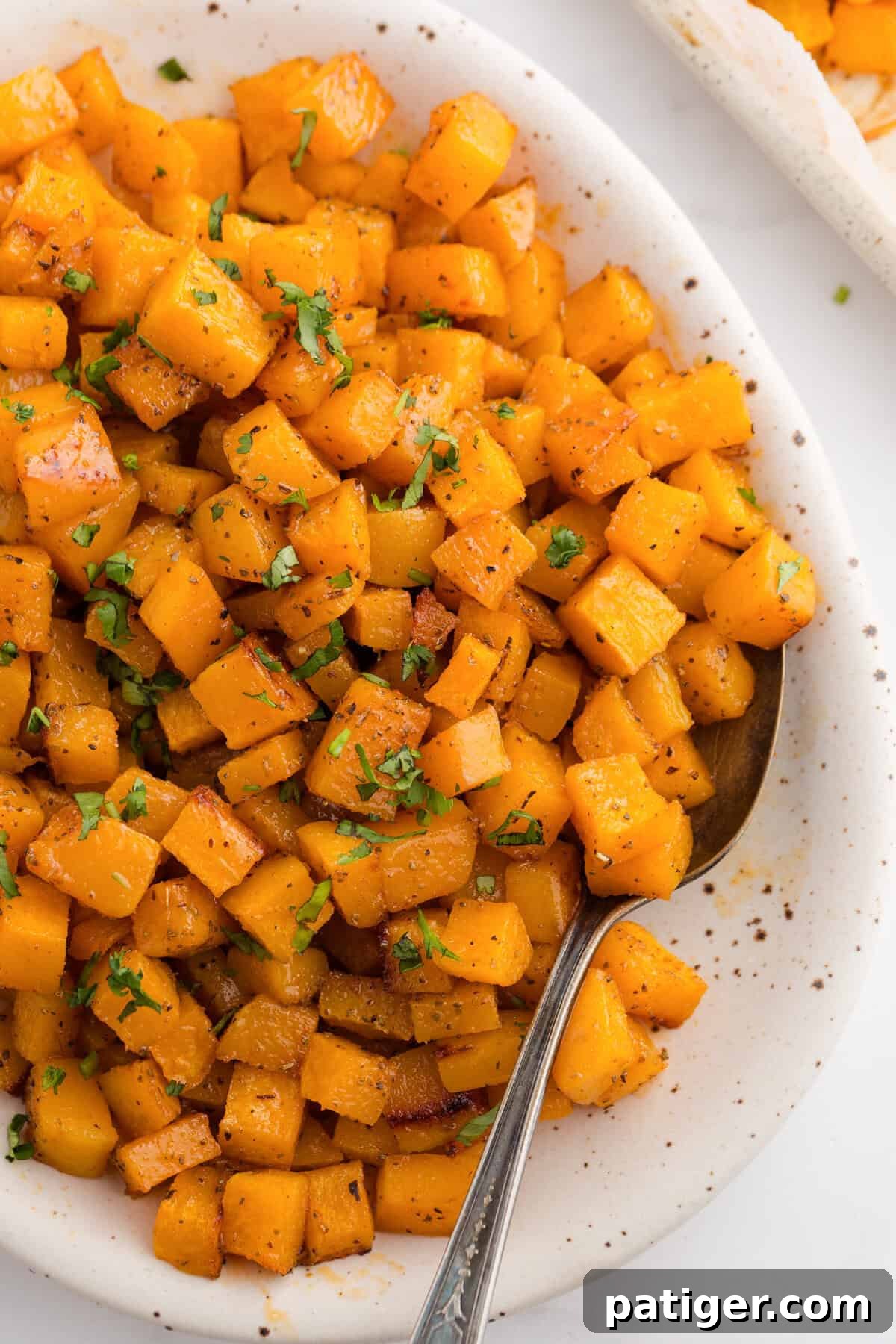
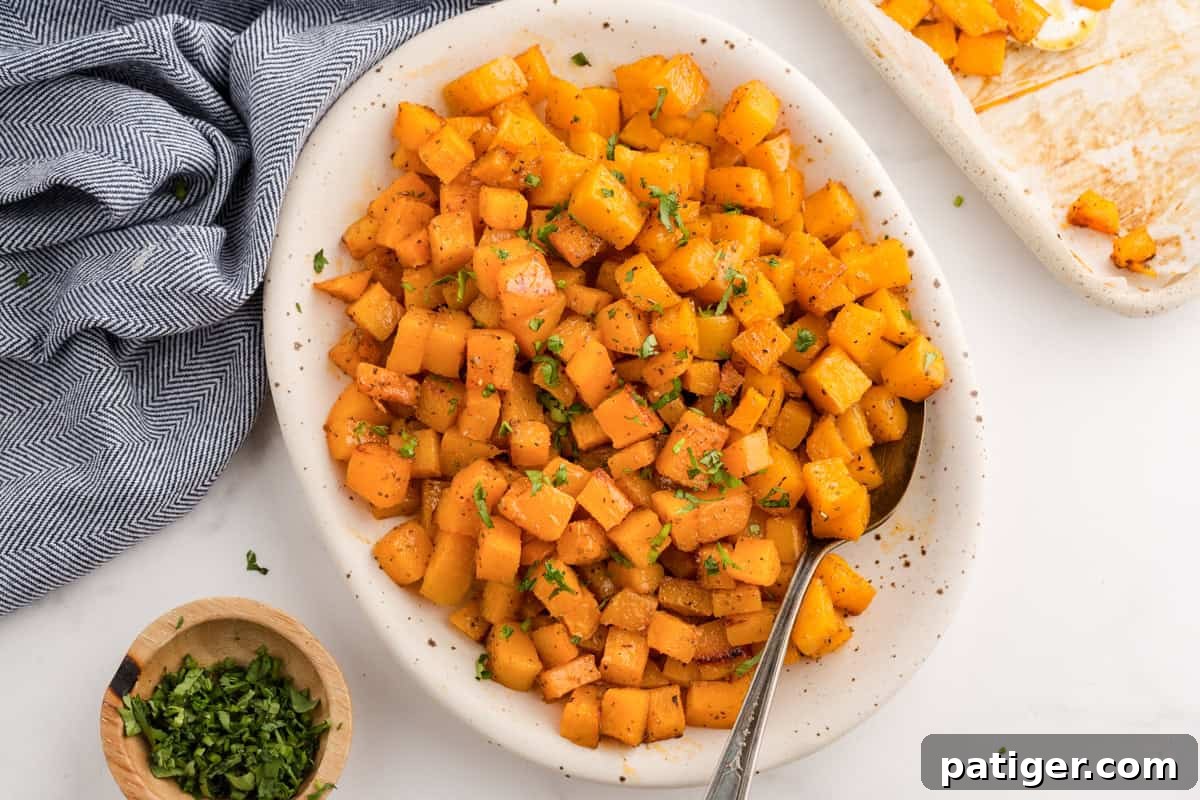
Our go-to recipe for honey-roasted butternut squash truly shines in its simplicity. It involves minimal ingredients – fresh butternut squash, quality olive oil, a touch of honey, and a harmonious blend of common pantry spices. The magic happens in the oven, where the squash cubes slowly roast to perfection, developing a beautiful caramelized exterior and a creamy interior. This method brings out the natural sweetness of the squash, enhanced by the subtle warmth of paprika, the aromatic punch of garlic powder, and the earthy notes of rubbed sage. This versatile dish effortlessly complements a variety of main courses, from succulent roasted turkey and tender baked chicken to juicy pork tenderloin, making it an ideal choice for any fall or winter gathering.
Why You’ll Love This Easy Roasted Butternut Squash Recipe
There are countless reasons to add this incredible honey-roasted butternut squash to your regular meal rotation. Here’s why this recipe stands out:
- Unforgettable Flavor Profile: Each bite offers a delightful balance of sweet, savory, and earthy notes, with irresistible caramelized edges that add a textural crunch. The natural sugars of the squash, combined with honey, create a deeply satisfying sweetness perfectly offset by aromatic spices.
- Made with Simple Pantry Staples: You don’t need exotic ingredients to create this dish. With just one fresh vegetable and a handful of everyday spices readily available in your kitchen, you can whip up a gourmet-tasting side that’s both comforting and impressive.
- Incredibly Versatile for Any Occasion: Whether you’re planning an elaborate holiday feast like Thanksgiving or Christmas, or simply looking for a wholesome and flavorful addition to your weeknight family dinner, this recipe fits the bill. It’s also fantastic for meal prep, allowing you to enjoy healthy, delicious sides throughout the week.
- Effortlessly Customizable: The base recipe is incredibly forgiving and adaptable. Feel free to experiment with different herbs, spices, or sweeteners to tailor the flavor to your personal preference or to complement your main course. We’ll share some fantastic variations below!
- Quick and Convenient: From start to finish, this dish is ready in under an hour, with most of that time being hands-off oven roasting. This makes it a perfect choice when you need a delicious yet low-effort side, freeing up your time for other preparations.
- Packed with Nutrients: Butternut squash isn’t just delicious; it’s also a nutritional powerhouse. Rich in vitamins A and C, fiber, and potassium, this dish offers a healthy boost to your diet, making comfort food both indulgent and good for you.
Essential Ingredient Notes and Smart Substitutions
This section provides detailed insights into each ingredient, along with handy substitution options to ensure your roasted butternut squash turns out perfectly every time. For exact measurements and comprehensive instructions, please refer to the printable recipe card located at the end of this post.
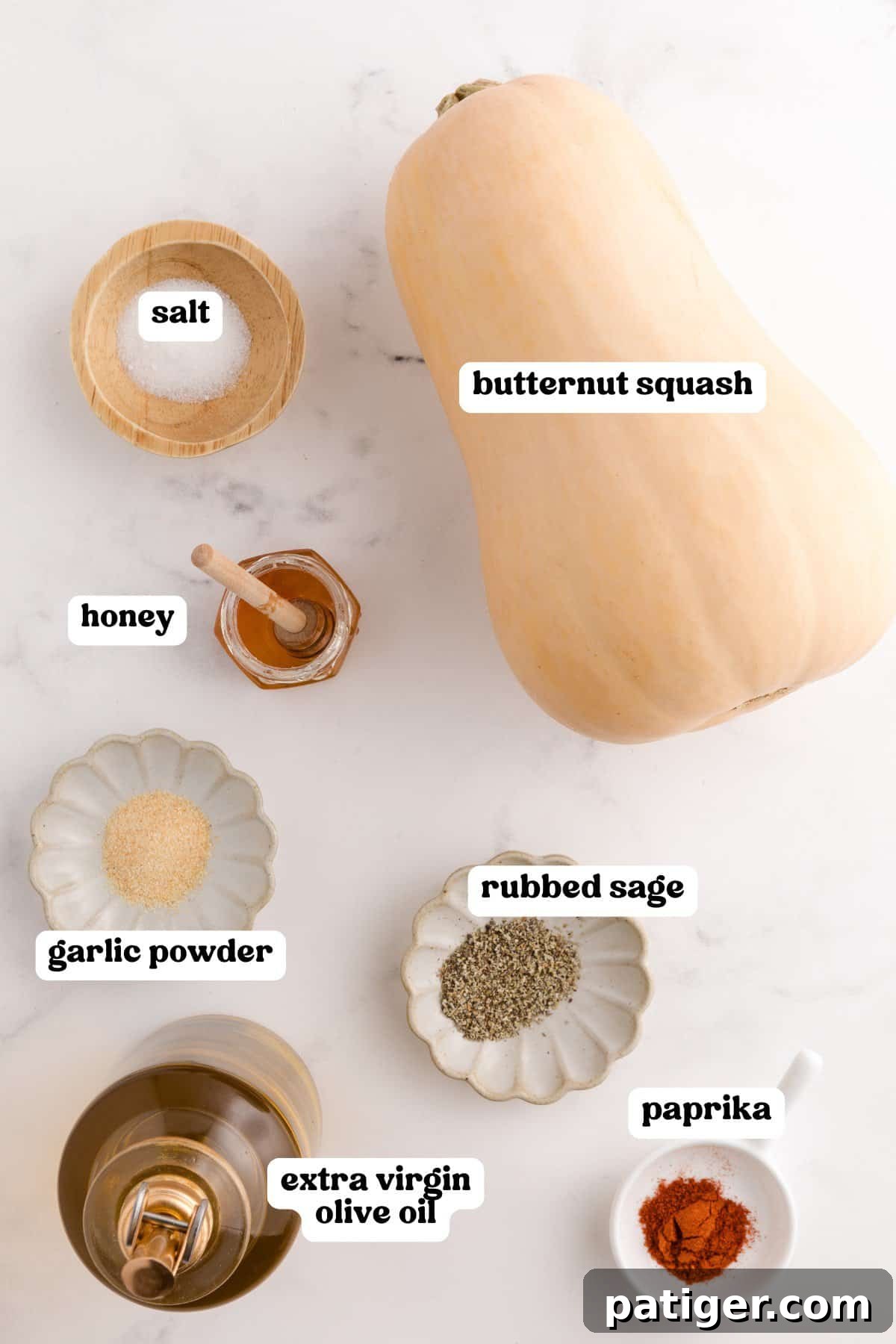
- Butternut Squash: You’ll need one large butternut squash, typically weighing around 3 pounds. When selecting your squash, look for one that is firm, heavy for its size, and free of soft spots or blemishes.
Prepping Your Squash: Start by carefully slicing off both ends of the squash. Using a sturdy vegetable peeler, remove the tough outer skin. Then, slice the squash in half lengthwise and use a spoon to scoop out the seeds and fibrous strands. Finally, cut the squash into uniform bite-sized cubes. While many recipes recommend 1-inch cubes, I find that cutting them slightly smaller, around ½ to ¾ inch, allows for more surface area for caramelization and ensures faster, more even cooking. For ultimate convenience, you can opt for pre-cut butternut squash available in most grocery stores, though fresh whole squash often offers a superior flavor and texture.
- Extra Virgin Olive Oil: This is key for achieving that desirable crispiness and golden-brown caramelization. It also acts as a carrier for the spices, ensuring they adhere well to the squash.
Substitutions: If you don’t have extra virgin olive oil, regular olive oil, avocado oil, or even melted butter (for a richer flavor) can be excellent alternatives.
- Honey: Honey provides a beautiful sweetness that complements the squash’s natural flavors and significantly aids in the caramelization process, giving the edges a delicious sticky glaze.
Substitutions: For a deeper, earthy sweetness that works wonderfully with fall flavors, maple syrup is an outstanding choice. You could also use a touch of brown sugar or agave nectar if preferred.
- Rubbed Sage, Garlic Powder, and Paprika: This trio of spices creates a warm, inviting, and savory depth without overpowering the delicate sweetness of the squash.
Sage: Offers a classic, aromatic, and slightly peppery herb flavor that is synonymous with autumn.
Garlic Powder: Provides a subtle, savory foundation, mellowing out during roasting.
Paprika: Contributes a mild, sweet peppery note and a beautiful reddish hue to the finished dish.Substitutions & Variations: Feel free to experiment with other warm herbs like fresh or dried thyme, rosemary, or a pinch of onion powder. Smoked paprika can add an extra layer of savory depth.
- Salt (and optional Black Pepper): Salt is crucial for enhancing all the flavors in the dish and drawing out the natural sweetness of the squash. A good quality kosher salt is recommended for its coarse texture and pure flavor.
Optional: Freshly ground black pepper can be added to taste for a subtle kick and added aromatic complexity.
How to Roast Butternut Squash to Perfection: A Step-by-Step Guide
Follow these simple steps to create a show-stopping side dish. This section provides detailed instructions with accompanying photos to guide you through each stage. The full, printable recipe card is available at the bottom of this post.
Before You Begin: Preheat your oven to 375°F (190°C). Line a large baking sheet with parchment paper. This crucial step prevents sticking, especially with the honey, and makes cleanup a breeze. Set the prepared baking sheet aside.
Step 1: Season the Squash for Maximum Flavor. In a large mixing bowl, combine the uniformly cubed butternut squash with the extra virgin olive oil, slightly warmed honey, kosher salt, rubbed sage, garlic powder, and paprika. Toss everything together thoroughly until every piece of squash is evenly coated with the delicious seasoning mixture. Ensuring an even coat is essential for consistent flavor and caramelization.
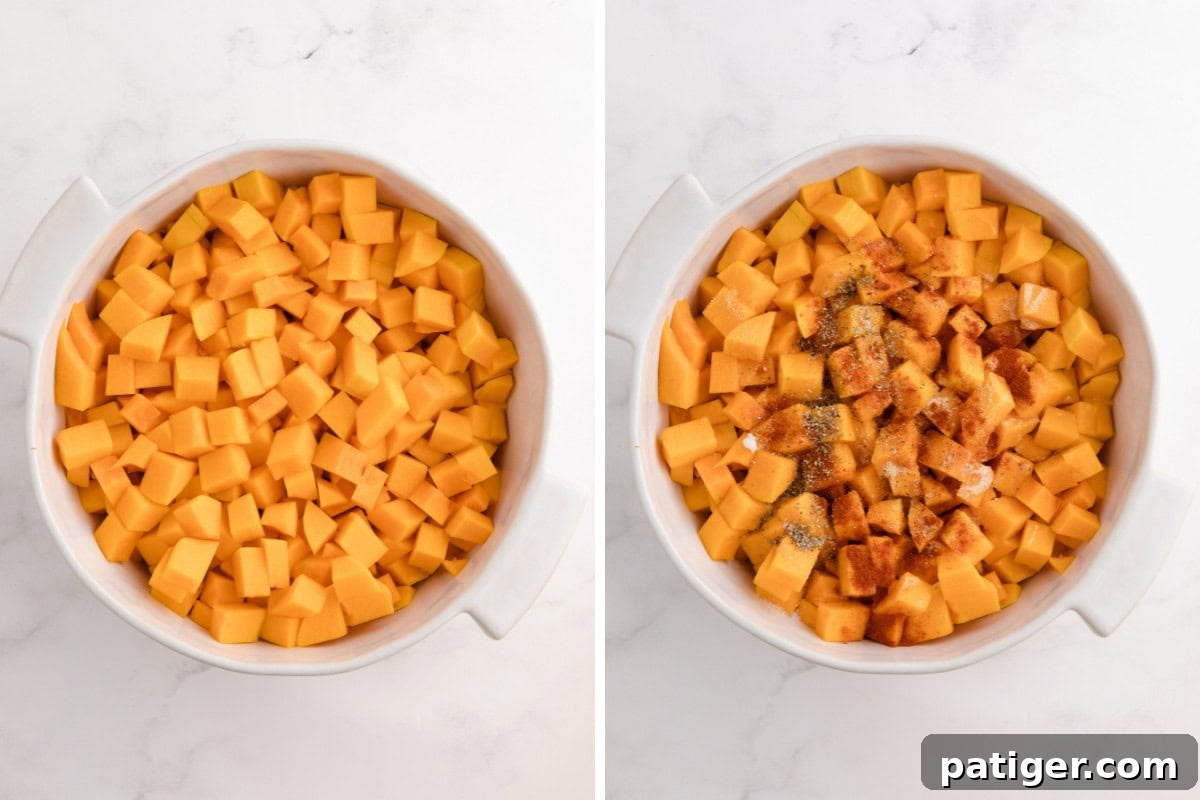
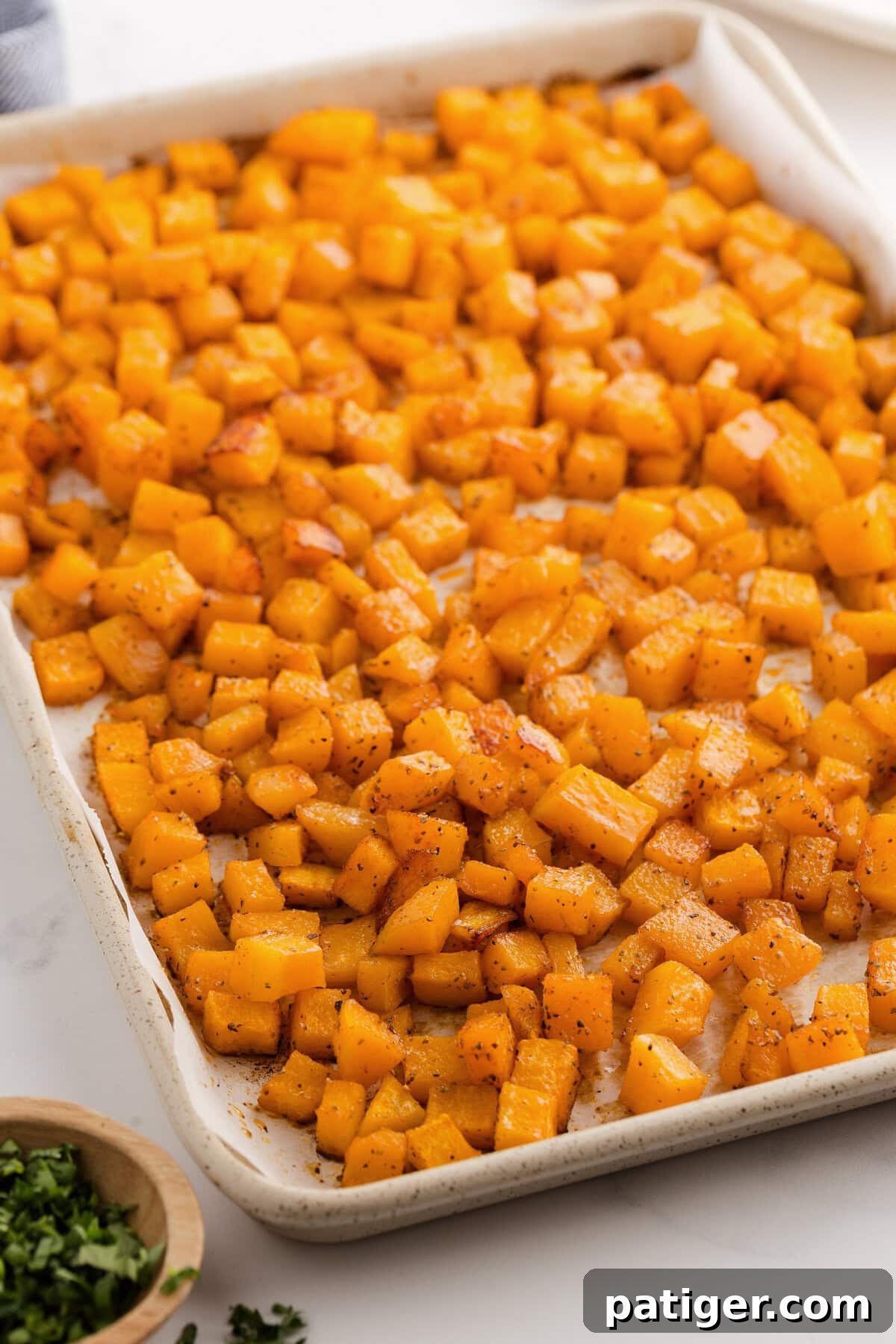
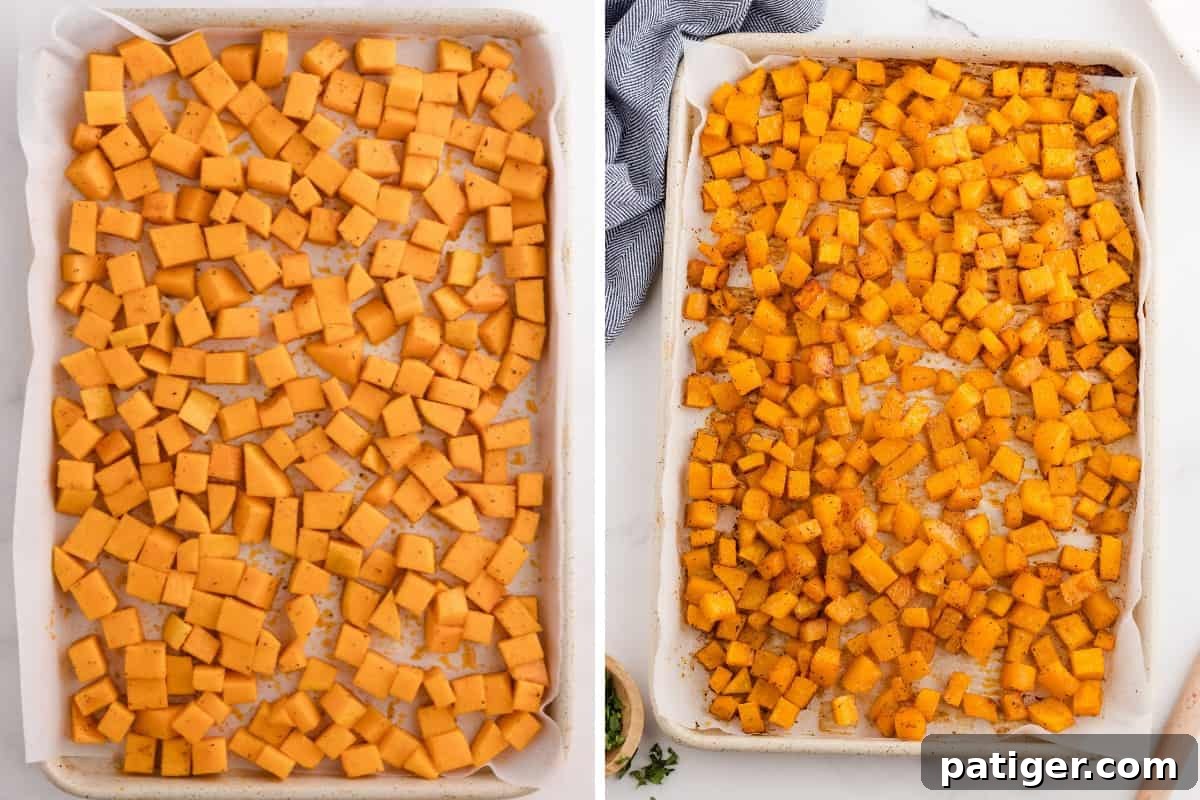
Step 2: Arrange for Optimal Roasting. Carefully spread the seasoned butternut squash cubes onto the prepared baking sheet in a single layer. It’s critical not to overcrowd the pan. If the squash pieces are too close together, they will steam instead of roast, preventing them from browning and caramelizing properly. If necessary, use two baking sheets to ensure ample space for even cooking and excellent texture.
Step 3: Roast Until Golden and Tender. Place the baking sheet (or sheets) in the preheated oven. Roast for a total of 35–40 minutes. Halfway through the cooking time (around 17-20 minutes), carefully flip the squash cubes with a spatula. This ensures both sides get a chance to caramelize evenly. Continue roasting until the squash is fork-tender throughout and boasts a beautiful golden-brown color with delicious caramelized edges.
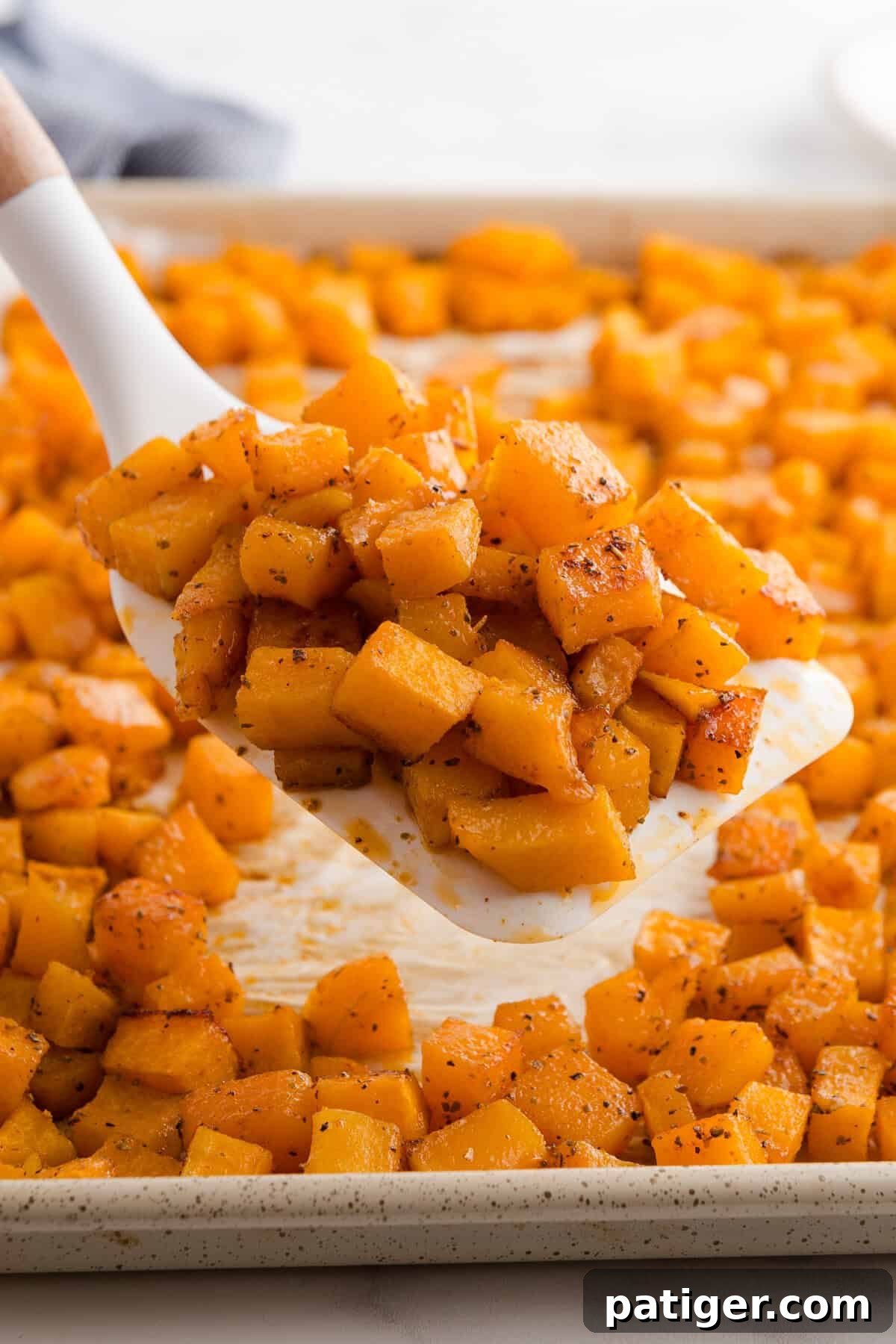
Step 4: Serve and Garnish. Once perfectly roasted, remove the squash from the oven and transfer it to a serving dish. Serve warm to enjoy its optimal flavor and texture. For an extra touch of elegance and flavor, consider garnishing with a sprinkle of fresh chopped sage or parsley, a handful of toasted pecans or walnuts for crunch, or a final flourish of freshly ground black pepper and/or flaky sea salt just before serving.
Storage and Reheating Tips for Leftovers
One of the best things about roasted butternut squash is how well it keeps, making it fantastic for meal prep or enjoying leftovers. Proper storage ensures your squash remains delicious.
Storing Leftovers: Allow any leftover roasted butternut squash to cool completely to room temperature. Once cooled, transfer the squash to an airtight container. It will keep beautifully in the refrigerator for up to 4 days. This makes it an excellent make-ahead option for busy weeknights or holiday feasts.
Reheating Instructions:
- Oven Method (Recommended for Best Texture): For crispy results, spread the leftover squash on a baking sheet and reheat in a 350°F (175°C) oven for about 10-15 minutes, or until thoroughly heated through and re-crisped.
- Microwave Method (Quickest): If you’re short on time, microwave the squash in a microwave-safe dish for 1-2 minutes, stirring halfway, until warm. Be aware that this method might result in a softer texture.
- Air Fryer Method: For an extra crispy reheat, pop the squash into an air fryer at 350°F (175°C) for 5-7 minutes, shaking the basket once or twice.
Enjoying Leftovers Differently: Don’t limit yourself to just reheating! Roasted butternut squash is surprisingly delicious cold or at room temperature. Try tossing it into a vibrant autumn salad with some crumbled goat cheese, toasted pumpkin seeds, and a light vinaigrette for a delightful and easy lunch the next day. It’s also excellent added to grain bowls, pureed into a creamy soup, or blended into a pasta sauce.
Freezing Roasted Butternut Squash: While you can freeze roasted squash, be aware that the texture may become slightly softer upon thawing and reheating due to the high water content. To minimize this, we recommend flash freezing. Place the cooled roasted squash in a single layer on a sheet tray and freeze until solid (1-2 hours). Once frozen, transfer the squash to a freezer-safe bag or container, removing as much air as possible to prevent freezer burn. It can be stored for up to 3 months. For best results, reheat from frozen in the oven rather than thawing first, which helps retain some texture.
5 Essential Tips for the Best Roasted Butternut Squash
Achieving perfectly roasted butternut squash is easy with a few key techniques. Keep these tips in mind for consistently delicious results:
- Cut Evenly for Uniform Cooking: The most crucial tip for perfectly roasted vegetables is to cut all the pieces into roughly the same size and shape. This ensures that every cube cooks at the same rate, preventing some pieces from becoming burnt while others are still undercooked.
- Utilize Sharp Tools for Safety and Efficiency: Butternut squash can be tough to cut and peel. A sharp chef’s knife and a sturdy vegetable peeler will not only make the prep work safer but also much faster and more enjoyable.
- Warm Your Honey for Better Coating: Honey, especially when cold, can be quite thick and difficult to spread evenly. A quick zap in the microwave for 10-15 seconds will loosen its texture, allowing it to coat the squash cubes beautifully and uniformly.
- Avoid Crowding the Pan for Optimal Roasting: This tip cannot be stressed enough! Spreading the squash in a single layer with a little space between each piece allows hot air to circulate freely around them. This promotes roasting, browning, and caramelization, rather than steaming, which would result in mushy squash. If your batch is large, use two baking sheets.
- Flip Halfway Through for Even Caramelization: To ensure that all sides of your butternut squash cubes develop that delicious golden-brown crust and caramelized sweetness, make sure to give them a good flip halfway through the roasting process.
- Don’t Overcook: Keep an eye on the squash towards the end of the cooking time. It should be fork-tender but still hold its shape. Overcooking can lead to mushy, unappetizing squash.
- Season Generously: Don’t be shy with the salt and spices! Butternut squash can handle a good amount of seasoning. Taste and adjust before roasting.
Exciting Additions and Flavor Variations
While this classic honey-roasted butternut squash recipe is fantastic on its own, it’s also a wonderful canvas for culinary creativity. Here are some ideas to customize and enhance your dish:
- Spicy Kick: For those who love a bit of heat, add a pinch of cayenne pepper, red pepper flakes, or a dash of chili powder to the seasoning mix. A drizzle of hot honey after roasting can also provide a delightful sweet-and-spicy contrast.
- Herbaceous Upgrade: Infuse more aromatic flavors by adding fresh rosemary or thyme sprigs to the baking sheet during the last 15-20 minutes of roasting. The heat will release their fragrant oils, creating an incredibly aromatic dish.
- Maple-Roasted Magic: Swap the honey for pure maple syrup for a rich, woodsy sweetness. A dash of cinnamon or nutmeg alongside the maple syrup can further enhance the fall flavor profile.
- Citrus Brightness: For a refreshing twist, add the zest of an orange or lemon to the squash before roasting. A squeeze of fresh citrus juice after roasting can also brighten the flavors.
- Nutty Crunch: Sprinkle with toasted pecans, walnuts, or pumpkin seeds during the last 10 minutes of roasting, or simply add them before serving, for an irresistible textural contrast.
- Savory Cheese Finish: After the squash is roasted, sprinkle it with freshly grated Parmesan cheese or crumbled feta cheese while it’s still warm. The residual heat will slightly melt the cheese, adding a salty, tangy dimension.
- Balsamic Glaze Elegance: For a gourmet touch, drizzle a store-bought or homemade balsamic glaze over the roasted squash just before serving. The sweet and tangy glaze perfectly complements the caramelized squash.
- Brown Sugar & Cinnamon: For a more dessert-like side, increase the sweetness by adding a tablespoon or two of brown sugar along with the honey and a generous pinch of cinnamon.
More Irresistible Vegetable Side Dish Recipes
If you’re looking for more delicious and easy-to-make vegetable side dishes to complete your meals, explore some of our other popular recipes:
- Brown Sugar Honey Glazed Carrots
- Caramelized Brussels Sprouts
- Roasted Garlic Parmesan Cabbage Wedges
- Southern Green Beans
- Creamed Corn
For even more classic and comforting side dish ideas, browse our extensive collection of 20+ Thanksgiving side dish recipes – perfect for any holiday gathering or special meal.
Roasted Butternut Squash
Author: Jaclyn
15 minutes
35 minutes
50 minutes
6
Ingredients
-
1
large butternut squash,
peeled and cubed (about 3 pounds) -
2
Tablespoons
extra virgin olive oil -
2
Tablespoons
honey,
warmed slightly -
1
teaspoon
kosher salt -
1
teaspoon
rubbed sage -
1
teaspoon
garlic powder -
1
teaspoon
paprika
Instructions
-
Preheat the oven to 375℉ (190°C). Line a large baking sheet with parchment paper and set aside.
-
In a large bowl, toss the cubed squash with olive oil, warmed honey, salt, sage, garlic powder, and paprika until evenly coated.
-
Spread the squash on the prepared baking sheet in a single layer, ensuring not to overcrowd the pan (use two pans if necessary).
-
Roast for 35-40 minutes, flipping halfway through, until the cubes are fork-tender and golden brown with caramelized edges.
-
Serve warm and enjoy!
Notes
Warm the Honey: A quick 10-second zap in the microwave makes honey easier to mix and ensures better coating.
Use Parchment Paper: Lining your baking sheet with parchment paper prevents sticking (especially with the honey) and makes cleanup significantly easier.
Don’t Overcrowd the Pan: For best results, roast the squash in a single layer. If you have too much squash, use two separate pans to ensure proper caramelization and avoid steaming.
Storage: Allow the roasted squash to cool completely, then refrigerate in an airtight container for up to 4 days. Reheat in a 350°F (175°C) oven or microwave until warm.
Nutrition
Calories:
80
kcal
|
Carbohydrates:
21
g
|
Protein:
1
g
|
Fat:
0.2
g
|
Saturated Fat:
0.04
g
|
Polyunsaturated Fat:
0.1
g
|
Monounsaturated Fat:
0.01
g
|
Sodium:
393
mg
|
Potassium:
457
mg
|
Fiber:
3
g
|
Sugar:
9
g
|
Vitamin A:
13453
IU
|
Vitamin C:
26
mg
|
Calcium:
62
mg
|
Iron:
1
mg

Did You Make This Recipe?
Share it with me on Instagram @crayonsandcravings and follow on Pinterest @crayonsandcravings for even more!
Pin Recipe
Leave A Review